A stain on the ceiling
A brown ring or damp patch means water is already inside. Note when it grows after rain, take a photo, and get the roof above it checked soon.
Leaks & Storm Fixes
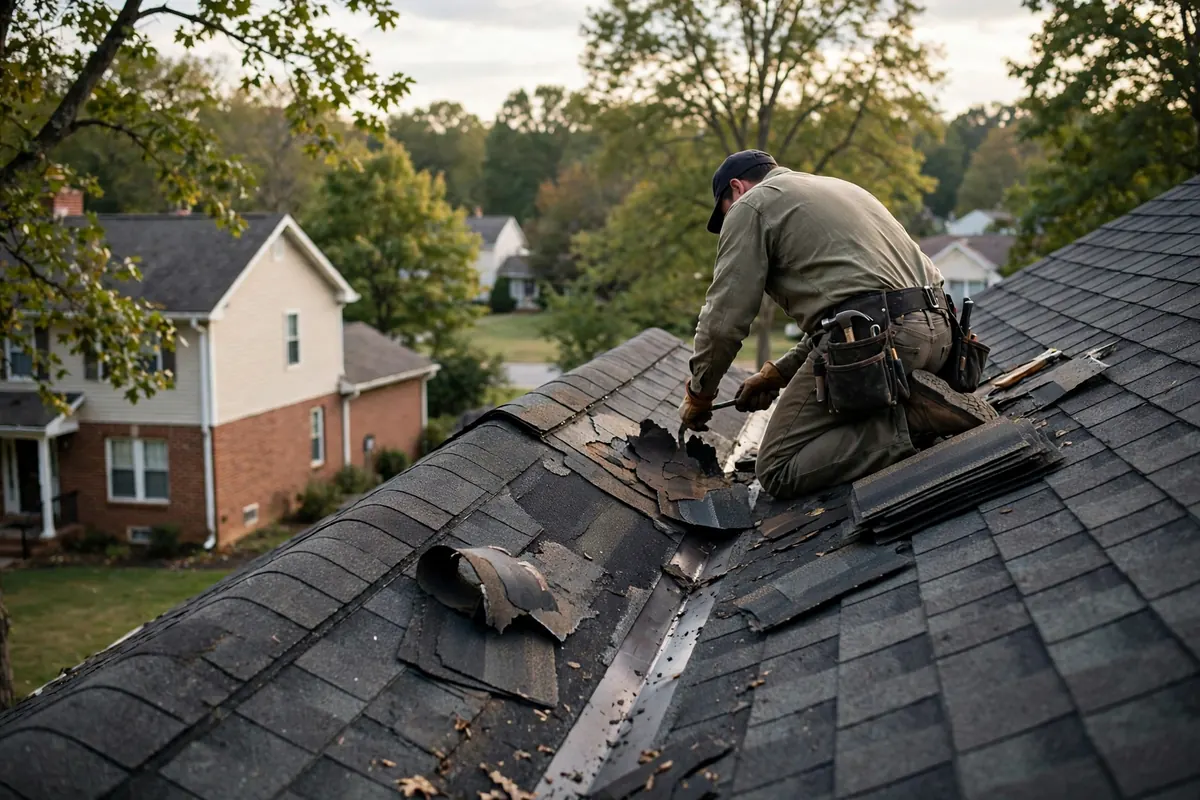
A roof repair is only a repair when it fixes the cause, not the symptom. We trace each leak to where the water actually gets in, fix that spot properly, and check the roof around it, so the same stain does not come back with the next rain.
Finding the leak
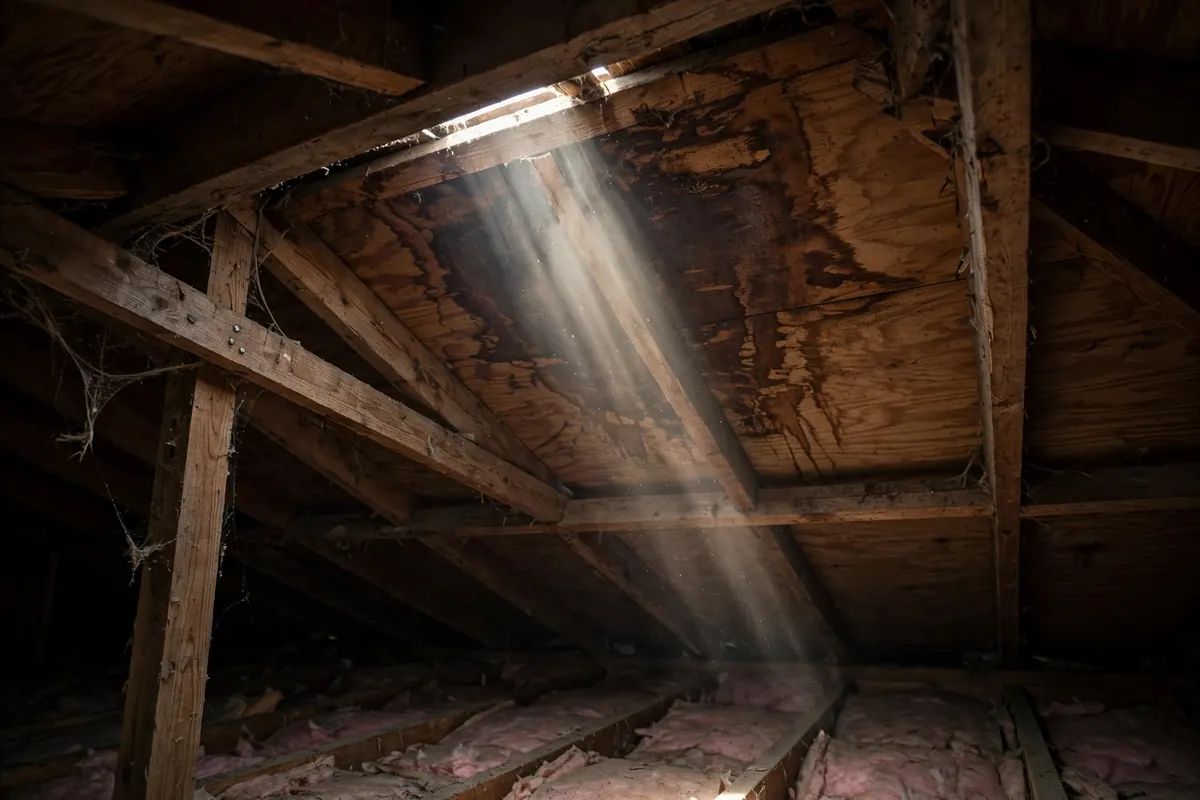
Water travels. It runs down a rafter, along the deck, and through insulation before it finally shows as a brown ring on your ceiling, often several feet from where it got in. That is why chasing the stain itself never works, and why a repair that starts at the stain usually fails with the next rain.
We trace leaks the patient way: from the attic, following the damp trail uphill to its source, and from the roof, checking the usual suspects in order. Leak detection and tracing uses water testing and hose testing on dry days, wetting one section at a time while someone watches from the attic, so the entry point shows itself instead of being guessed at.
Most Louisville leaks start in a short list of places: a cracked pipe boot, a valley where two slopes meet, step flashing beside a chimney, or a nail pop that lifted a shingle just enough to let wind-driven rain under it. Once the source is found, the fix is usually straightforward, and it holds because it addresses the real opening.
Signs you need a repair
Each of these means water is getting in, or is about to. Caught early, every one of them is a quick fix.
A brown ring or damp patch means water is already inside. Note when it grows after rain, take a photo, and get the roof above it checked soon.
Wind takes the weakest shingle first, and the bare patch it leaves soaks the underlayment with every rain. One missing shingle is a quick repair when it is caught early.
Edges that curl up or corners that lift catch the wind and let rain underneath. A few lifted shingles can turn into a torn-off section in one storm.
Flashing that has cracked, lifted, or pulled away from the brick leaves a straight path for water. Chimney flashing leaks are a repair we see again and again on Louisville roofs.
A musty attic usually means a slow leak or damp air with nowhere to go. Damp insulation loses its loft and the deck stays wet long after the rain stops.
A sudden pile of granules after a storm can mean hail bruised the shingles on one slope. The bruised spot is the weak point, and it needs a close look.
See a stain, a lifted shingle, or a drip after rain? Call and get the source found, not just the symptom covered.
Call (502) 922-5047Flashing repair
Flashing is the thin metal that seals every joint on the roof: chimneys, walls, skylights, valleys, and pipe boots. It does more work than any other layer, and it causes most leaks when it cracks, lifts, or was bent wrong in the first place. A repair that ignores the flashing usually has to be done twice.
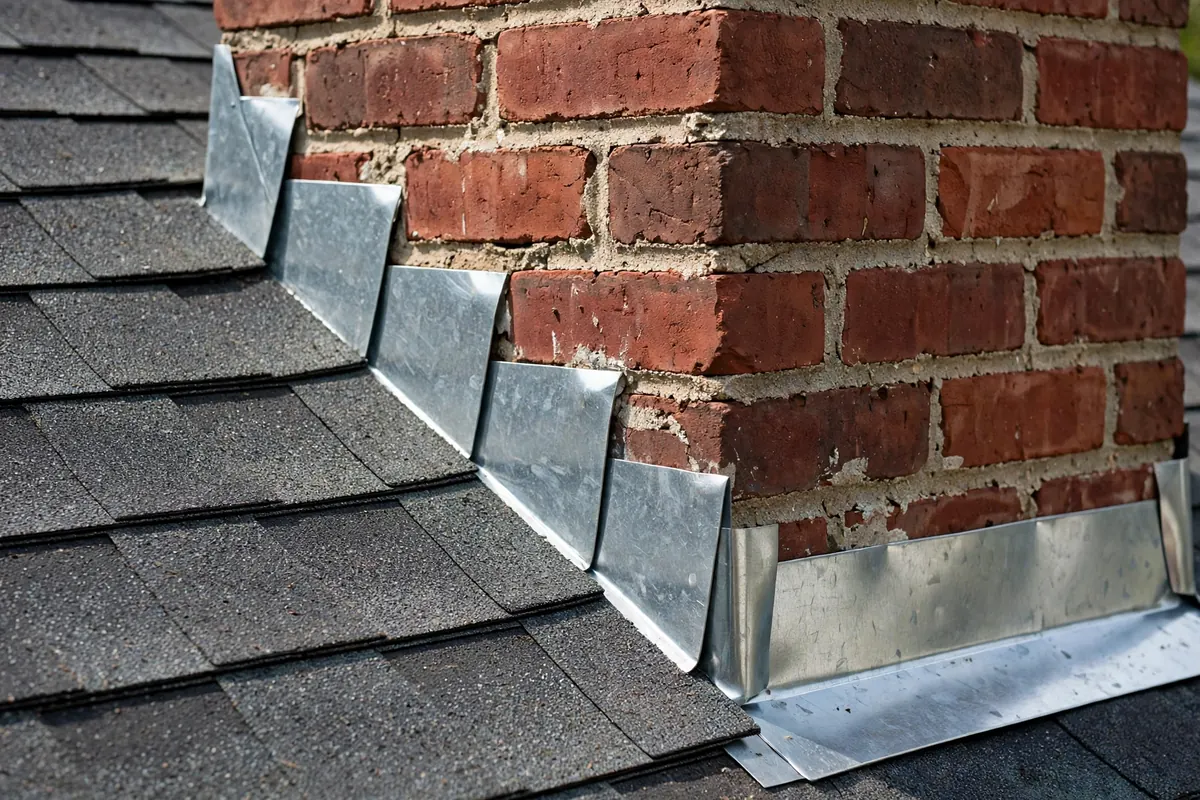
Step flashing runs up the side of a chimney or wall in small overlapping pieces, each one tucked under a shingle course, while counterflashing is set into the brick above it to cover the top edge. Valley flashing lines the inside corner where two slopes meet, carrying the heaviest water on the roof. When any of these pieces rust, crack, or pull loose, water finds the gap.
We replace failed flashing with new galvanized steel, aluminum, or copper flashing metal, bent to fit the joint it seals, and we re-seal the edges with roofing sealant where the joint needs it. A pipe boot gets swapped the same way when its rubber collar has split with age. The shingles around the repair go back down flat, and the joint is watertight again.
Shingles that curl at the edges, cup in the middle, or claw at the corners have lost their seal and their shape. We lift the damaged shingles, check the underlayment beneath them, and fit new shingles that match the course, sealed down so the wind cannot get under them again.
A nail pop pushes a shingle up from below and leaves a raised bump that breaks the seal. We pull the popped nail, drive a new coil roofing nail into solid deck beside it, and seal the spot, so the shingle lies flat and the fastener stays covered.
Know the parts
The words below come up in every repair conversation. Knowing them helps you follow what we found.
What a repair includes
A proper repair starts with the diagnosis, not the hammer. We find the source, agree the fix with you, and then do the work: damaged shingles swapped, flashing replaced or re-sealed, pipe boots changed, and the underlayment checked where the covering was lifted. The roof around the repair gets a look too, because one weak spot often has a neighbor.
Spot repair and partial re-roofing suit damage that stays in one area. One slope can be re-roofed while the rest of the roof keeps serving, when the rest is sound and the new courses tie into the old ones cleanly. That is the middle ground between a small patch and a full replacement, and it fits storm damage that hit one side of the house hardest.
A repair is not the right answer when the trouble is spread across the whole roof. Wide granule loss, curling on every slope, or leaks in several rooms mean the roof is worn out as a system, and repairs would chase it from slope to slope. When a repair is not enough, a full roof replacement in Louisville stops the cycle instead of buying another season.
First we find the source, from the attic and the roof together. Then we lift the shingles around it, replace what failed, and lay the courses back down with new flashing and sealant where the joint needs it. Finally we check the repair from the attic with a hose test when the weather allows, so the fix is proven before we leave.
People also ask
Short answers to the repair questions that come up most after a leak or a storm.
A small leak can be covered with a tarp in the rain, but a lasting repair needs a dry surface so sealant and shingles bond properly. The right move in rain is to control the water inside, then repair once the roof dries.
Light rain runs off the surface, while heavy rain is driven sideways by wind and finds gaps under lifted shingles and flashing. A leak that shows only in downpours usually sits at a joint, a valley, or a flashing edge.
Soon. A small drip soaks insulation and decking day after day, and the damage spreads far beyond the stain you see. A leak fixed in the first week is a small job; the same leak left for a season can mean rotted decking.
A small repair can wait for a dry, mild day, but a leak that is active now cannot. Water keeps soaking the deck and the insulation while you wait, and a winter of freeze and thaw turns a small opening into a bigger one. Cover it now, repair it properly on the first dry day.
A stain that keeps growing after rain means the leak is active, not old. Call before the next rain tests it again.
Call (502) 922-5047Frequently asked questions
Start inside, in the attic, and follow the damp trail uphill to its source, since the ceiling stain rarely sits under the leak. On the roof, check the pipe boots, valleys, and flashing around chimneys and skylights first. Hose testing on a dry day, wetting one section at a time, settles it when the trail goes cold.
Yes, when the trouble stays in one area and the rest of the roof is sound. One slope can be partly re-roofed so the new courses tie into the old ones cleanly. When the wear is spread across every slope, a section repair only moves the problem around, and a full replacement is the honest answer.
A repair that fixes the real cause usually lasts as long as the roof around it does. A flashing repair or a shingle swap on a mid-life roof can hold for many years. A repair on a roof that is already worn out buys less time, because the shingles around the repair keep aging at the same pace.
It includes the diagnosis first, then the fix: damaged shingles swapped, flashing replaced or re-sealed, pipe boots changed, and the underlayment checked where the covering was lifted. The roof around the repair gets a look too, and the written scope spells out what was done and what was found.
Yes, with care. Shingles are stiffer in cold weather and sealant needs a dry surface, so winter repairs run slower and some jobs wait for a mild, dry day. Emergency cover-ups go on any day, in any weather, and the lasting repair follows when the roof is dry enough to bond.
Usually it blends in well. New shingles match the old ones in style and color at first, then weather in over a season or two. On an older roof the new shingles may read slightly brighter for a while, because the old ones have faded in the sun, but the match closes with time.
Keep going
A repair often leads to a closer look, or to a bigger decision. These pages follow naturally.
A roof inspection in Louisville checks the shingles, flashing, decking, and attic, so the next repair is planned, not guessed at.
Learn more →When a repair is not enough, a full roof replacement starts the roof over from the deck up.
Learn more →Emergency roof repair in Louisville covers the opening first with a tarp, then plans the lasting fix once the roof is dry.
Learn more →Where we work
Roof repairs take us across Louisville and the towns around it, including roof repair in St. Matthews KY, roof repair in Jeffersontown KY, roof repair in Shively KY, and roof repair in Middletown KY. The full list of towns we serve is on roofing across Louisville and Kentuckiana.
A stain, a lifted shingle, a drip after rain. Call or email, describe what you see, and we will trace it to the source.