Call (502) 922-5047
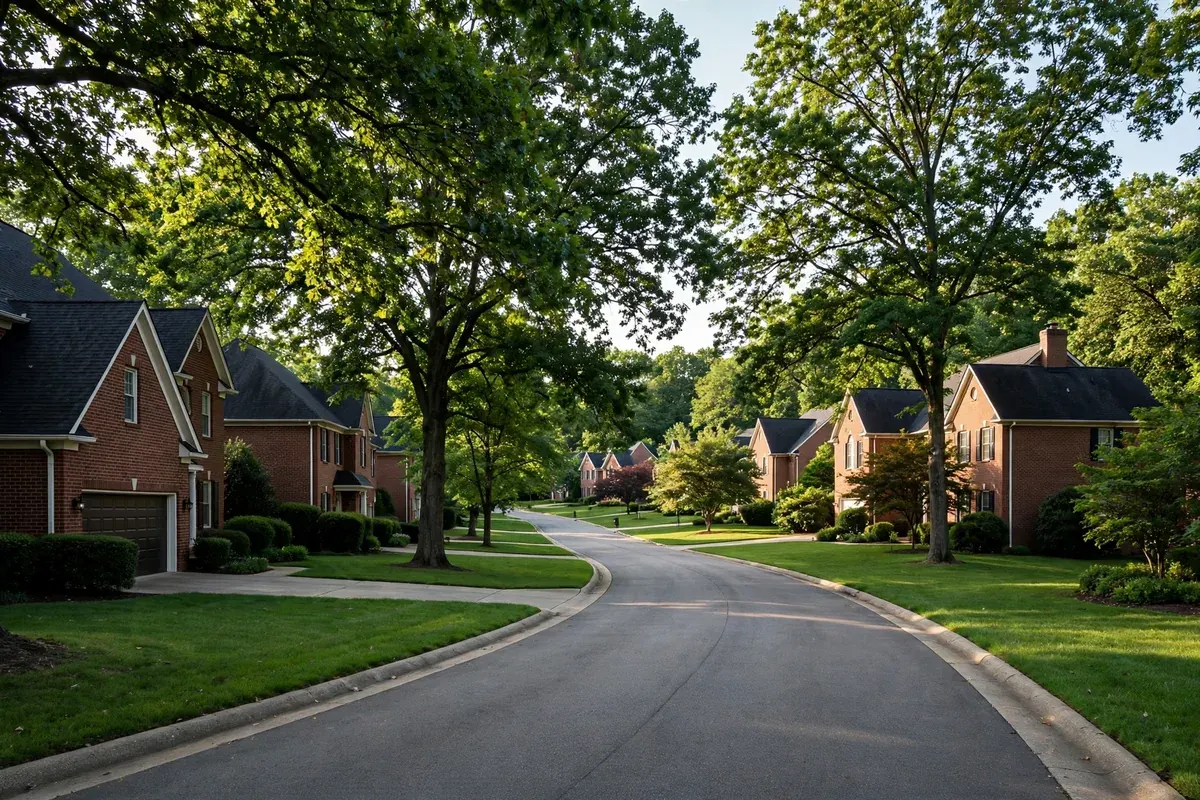
A tree-lined subdivision in Middletown, Kentucky, with two-story brick houses and pitched shingle roofs

Shelbyville Road East

Middletown Roofing Under Heavy Trees, Beside Floyds Fork

Two-story brick homes under deep tree cover, valleys that hold leaves all fall, and new builds opening toward Floyds Fork: Middletown roofs fail where the trees and the water meet. A limb, a clogged valley, or a damp attic tells us more than the age on the shingle wrapper.

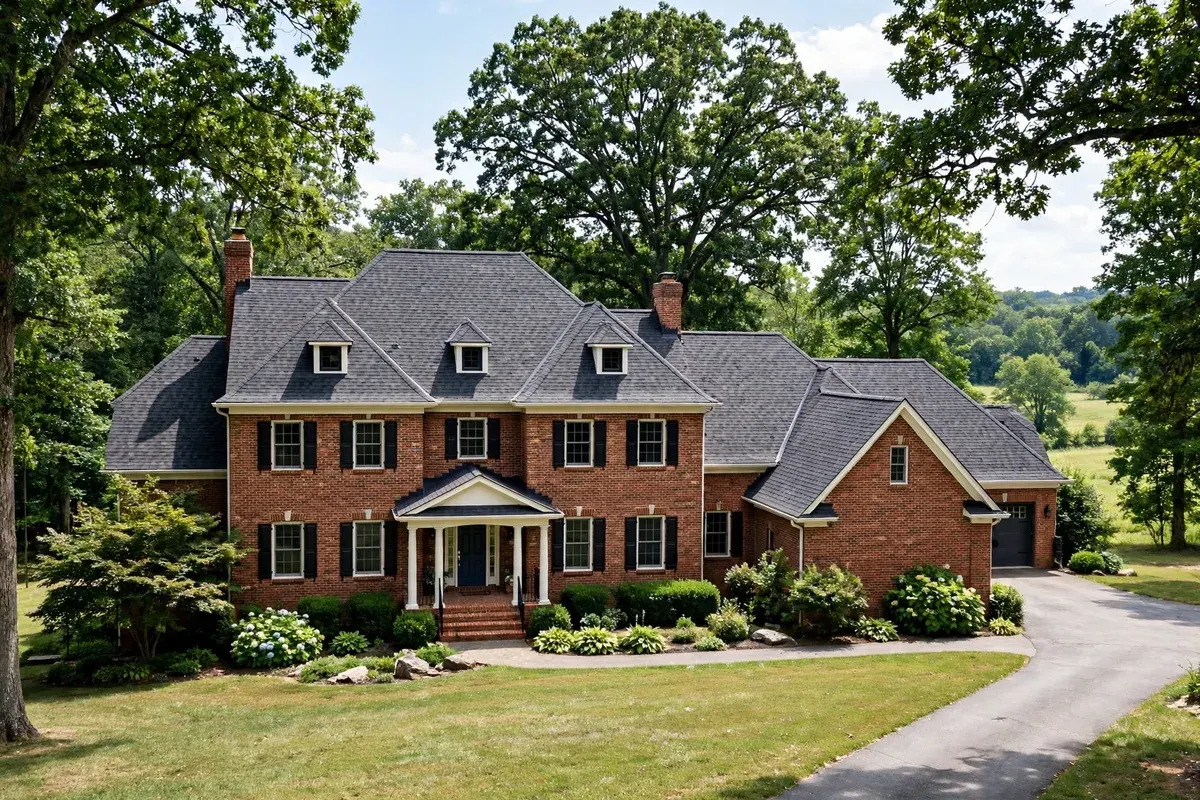
Two-story brick home in Middletown with a complex multi-valley shingle roof under mature trees

Middletown, KY

Subdivisions, Floyds Fork, and heavy tree cover

Middletown sits on Shelbyville Road about ten miles east of downtown Louisville, and it began as an early stop on the road between Louisville and Shelbyville. The historic core still lines Shelbyville Road, but most of the town's roofs belong to the subdivisions that filled in around it: Douglass Hills, Lake Forest, Copperfield, Eastgate Village, Woodland Hills, and the newer homes toward Eastwood and Floyds Fork. The Parklands of Floyds Fork runs to the east, and its tree cover sets the tone for the whole area.

Heavy tree cover is the mechanism that shapes roof work here. Mature trees shade the two-story brick homes of Douglass Hills and the ranches of Woodland Hills, and they drop limbs and leaves onto roofs every season. A falling limb can crack shingles and dent a gutter in one strike, while leaves hold moisture in the valleys and feed moss on shaded slopes. What gives it away is usually a gutter spilling over in the first heavy autumn rain, or a valley under those trees that stays wet long after the sunny slopes have dried. We clear the valley, check the flashing beneath it, and look at the deck before we call the job done.

FAQ

Middletown questions we hear most

We do. We install new roofs across Middletown, from the two-story brick homes of Douglass Hills to the newer builds toward Eastwood and Floyds Fork. A new roof starts on the deck: we check it board by board, then write up the tear-off, the layers, and the cleanup so you know the plan before work starts. Call and tell us what kind of house it is.

Architectural shingles suit most newer Middletown subdivision homes, since they handle multi-slope roofs and several valleys well and hold up to Ohio Valley hail. Metal suits the open lots toward Eastwood, since it sheds rain and hail fast. Which one fits comes down to the pitch, the valleys, and how the attic breathes, so we walk the roof before we name a material.

Valleys carry the most water on any roof, and in Middletown they also collect leaves from the mature trees overhead. Wet leaves hold moisture against the shingles and the flashing beneath them, and the valley stays damp long after the open slopes have dried. Scoop the valley clear and check the flashing under it, and most valley trouble never starts.

They can. Falling limbs crack shingles and dent gutters, leaves clog valleys and gutters, and deep shade feeds moss on north-facing slopes. The trees stay. It means the roof needs a yearly look, the valleys need clearing, and any limb hanging over the roof deserves attention before the next storm.

Often, yes. Mature trees drop leaves into every gutter each fall, and a clogged gutter spills water over the edge and back under the shingle edge. Guards keep the leaves out, but they have to be fitted so water still runs off the roof and into the gutter instead of damming at the edge. We check the gutter run and the fascia together before recommending them.

Water sitting in the valleys. Leaves pile in the valley, the valley stays wet, and the flashing beneath it wears faster than the open slopes. The stain often appears inside near a valley, far from where the water got in. Keep the valley clear and the flashing and deck under it checked, and most of it never starts.

Local trouble

Why Middletown roofs fail where they do

Middletown roofs

Falling limbs and tree debris

Mature trees drop limbs onto Middletown roofs every season, and one limb can crack shingles, dent a gutter, and open a path for water in a single strike. We check where the limb landed, the valley below it, and the gutter it hit.

Middletown roofs

Attic ventilation on large two-stories

Big two-story homes hold a lot of attic air, and poor ventilation cooks shingles from below in summer and feeds moisture in winter. Balanced intake and exhaust hold the attic near the outside temperature, so the shingles last their full span.

Middletown roofs

Storm exposure on open eastern lots

The newer lots toward Eastwood and Floyds Fork sit open, with little tree cover to break the wind. Hail and high wind hit those roofs at full strength, so a careful check after a spring storm matters more there.

Compare

Middletown roofs by era, side by side

Roof choices for Middletown homes, side by side
Roof optionWhich two-story or ranch it suitsEastern-lot wear to expect
Architectural shingles for two-story brick homes and ranchesTwo-story brick homes and ranches across townTwo-story brick homes and older ranches lose granules to hail, and the tree cover keeps the slopes damp.
Three-tab shingles for older ranches in the 1970s subdivisionsOlder ranches in the 1970s subdivisionsThin tabs in the 1970s subdivisions lift sooner in the high wind off the open eastern lots.
Standing seam metal for eastern lotsNewer builds and wind-exposed eastern lotsWind on the eastern lots tests the seams, and the flashing at valleys and dormers has to be bent to fit.
Class 4 impact-resistant shingles for tree-covered and open lotsHomes under heavy tree cover and open lots alikeBuilt for hail, though the gutters still fill with leaves under the heavy tree cover and need clearing.

Drag the table sideways on a phone; it runs wider than the screen.

A valley staying damp, or a limb hanging over the roof? Call and we will clear the valley and check the flashing under it.

Call (502) 922-5047

Neighborhoods

Where Middletown roofs change with the street

Douglass Hills Two-story brick roofs

A planned community from the early 1970s, with two-story brick homes from the 1970s to the 1990s and brick ranches with basements.

Lake Forest Two-story roofs

Larger two-story homes near Floyds Fork, with complex roofs and long gutter runs under heavy trees.

Copperfield Ranch and two-story roofs

A mix of ranches and two-stories with mature tree cover and shaded north-facing slopes.

Eastgate Village Two-story roofs

Two-story homes on the eastern edge, with newer roofs and open lots near the Floyds Fork corridor.

Woodland Hills Ranch roofs

Ranch homes under deep tree cover, where leaf load and valley moisture show first.

Beckley Woods Two-story roofs

Two-story homes near Blankenbaker Parkway, with multi-slope roofs and several valleys to keep clear.

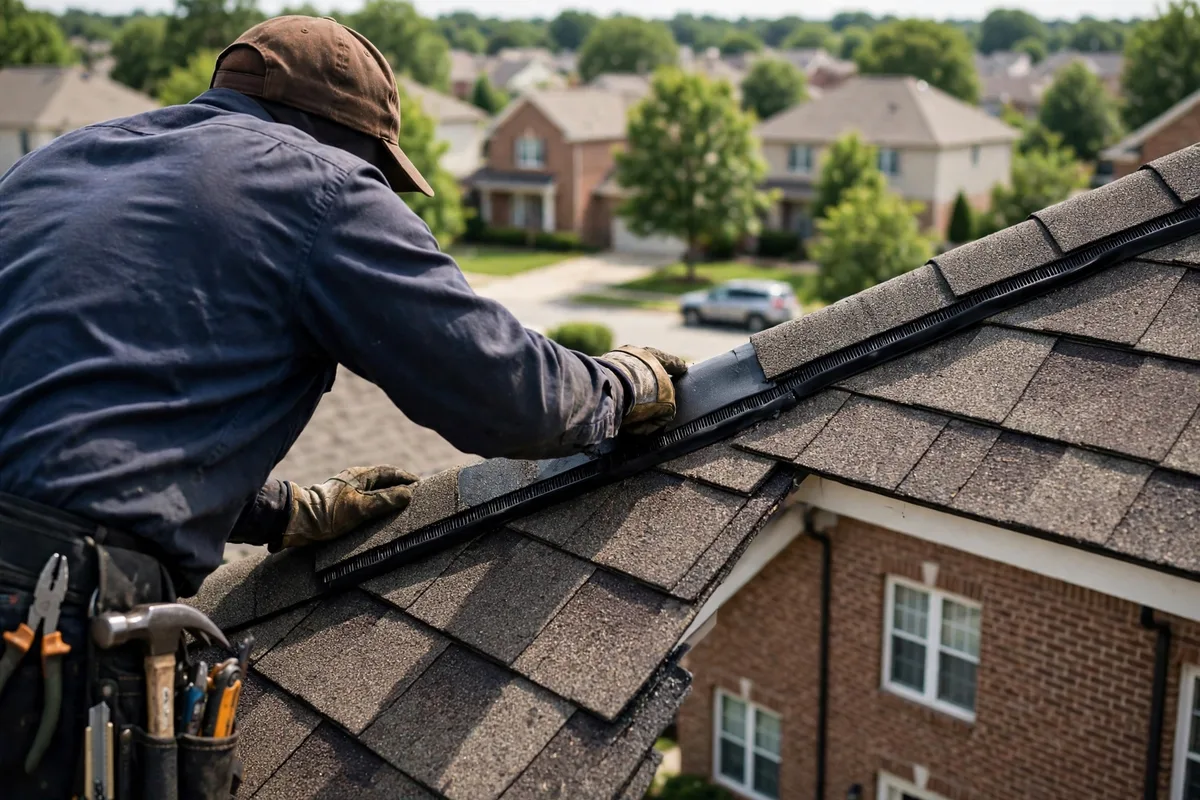
Roofer checking attic ventilation at a ridge vent on a Middletown two-story home

Homes & roofs

Two-story brick homes and newer builds

Middletown housing runs wide: ranch homes, traditional two-story homes, farm homes, patio homes, condominiums, and townhomes. Douglass Hills is a planned community incorporated in the early 1970s, and its two-story brick homes and basement ranches filled in through the 1990s. Newer homes sit toward Eastwood and Floyds Fork, where subdivisions like Landis Lakes and the Hills of Beckley Station add open floor plans and walkout basements on sloped lots. Shelbyville Road is the main corridor, with Aiken Road, Tucker Station Road, Old Henry Road, and Blankenbaker Parkway carrying the residential traffic.

Roof work in Middletown changes street by street. The 1970s two-story brick homes of Douglass Hills are now at the age where granule loss, curling tabs, and flashing wear show across whole slopes, and their basements mean the lower roof edges and wall flashing deserve a careful check of the roof. The newer builds toward Eastwood and Floyds Fork have younger roofs but more complex shapes, with several valleys that collect leaves and hold moisture. Both kinds of roof face the same storm exposure, since the open lots at the eastern edge give wind and hail a clear run.
Coverage

Where Middletown starts and ends

Middletown is a historic area in Jefferson County on Shelbyville Road, roughly ten miles east of downtown Louisville.

40243

The 40243 ZIP covers Middletown, and 40223 overlaps the area as well.

Services

Services that fit Middletown homes

Roof Replacement

Douglass Hills two-story brick homes get a full tear-off when granule loss and curling show across whole slopes, with valley flashing rebuilt under the trees.

Learn more →

Roof Inspection

We check the valleys for trapped leaves, the deck for soft spots, and the attic for heat, then say plainly what a Middletown roof needs next.

Learn more →

Attic Ventilation

Big two-story attics in Middletown run hot in summer and damp in winter; we balance the airflow so the shingles last their full span.

Learn more →
See All 17 Roofing Services

Or email us about the valley that stays damp or the limb over the roof.

Nearby towns

Next towns out Shelbyville Road

Anchorage sits just north on La Grange Road, and Jeffersontown runs west on Shelbyville Road, so Middletown roof work often crosses into one of those two towns.

Clear the valley before the next fall rain

A valley that stays damp, a limb that came down in the last storm, or a two-story attic that runs hot in summer, call or email and tell us what you see from the ground, and we will tell you what needs a ladder.