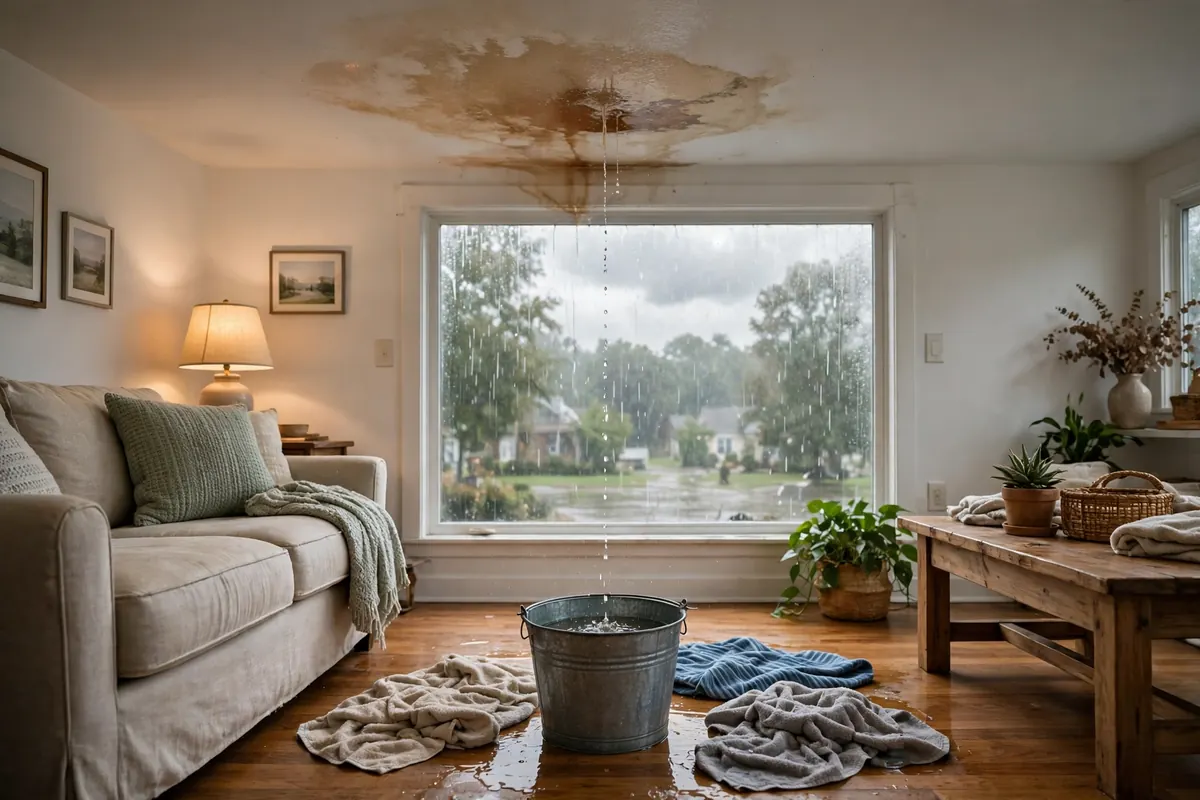
Water dripping through the ceiling
An active drip means the water has already crossed the deck and the insulation. Buckets help inside, but the roof needs covering outside.
Urgent Leak Response
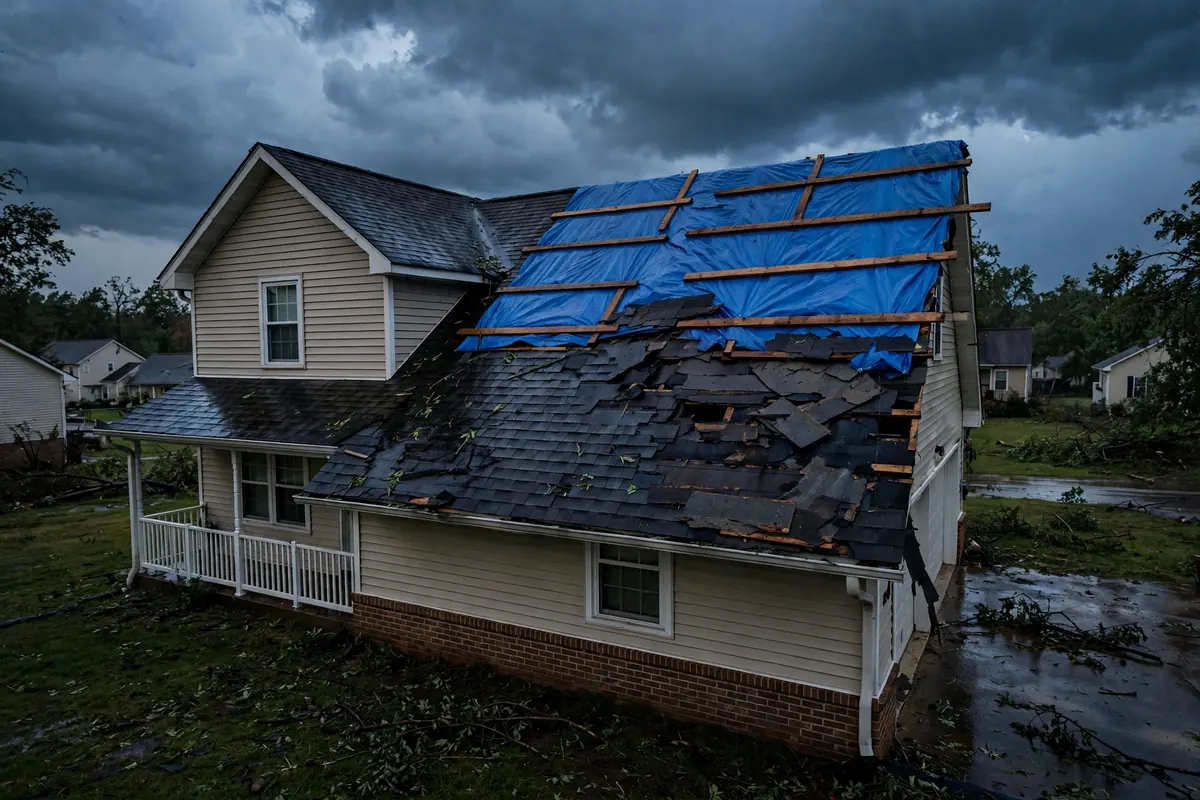
When a storm opens your roof, water does not wait for office hours. We cover the opening first, stop the water getting in, and then plan the lasting repair with you once the roof is dry and the full damage is known.
What counts as an emergency
A roof emergency is water coming in now, or a roof open to the sky. An active drip through the ceiling, a section of shingles torn off by wind, a tree limb through the deck, or a skylight that has given way in a storm all count, because every hour of rain through an opening adds damage to the deck, the insulation, and the rooms below.
A slow stain that has been there for months is a different job. It needs a repair, and it needs one soon, but it is not an emergency in the same sense, because the water is not actively pouring in. The test is simple: if water is coming in right now, or the roof is open to the next rain, call now.
Leaks at valleys, flashing, and penetrations during active rain are the most common emergency call, because those joints are where water concentrates. A chimney flashing leak can pour water into a wall in one storm, and a failed pipe boot can drip steadily through a ceiling all night. Both get covered first and fixed properly second.
Act now
Each of these means water is getting in, or the roof is open to the next rain.
An active drip means the water has already crossed the deck and the insulation. Buckets help inside, but the roof needs covering outside.
Wind-torn shingles or a missing section leave the underlayment and deck exposed. The next rain goes straight in.
A limb through the deck is an open hole and a structural question at once. It needs a tarp and a close look at the boards around it.
A skylight that has failed in wind and rain pours water into the room below. Cover it first, then sort the seal and the flashing.
A ceiling that sags under a leak is holding water, and it can come down. Move clear of it and call for the roof to be covered.
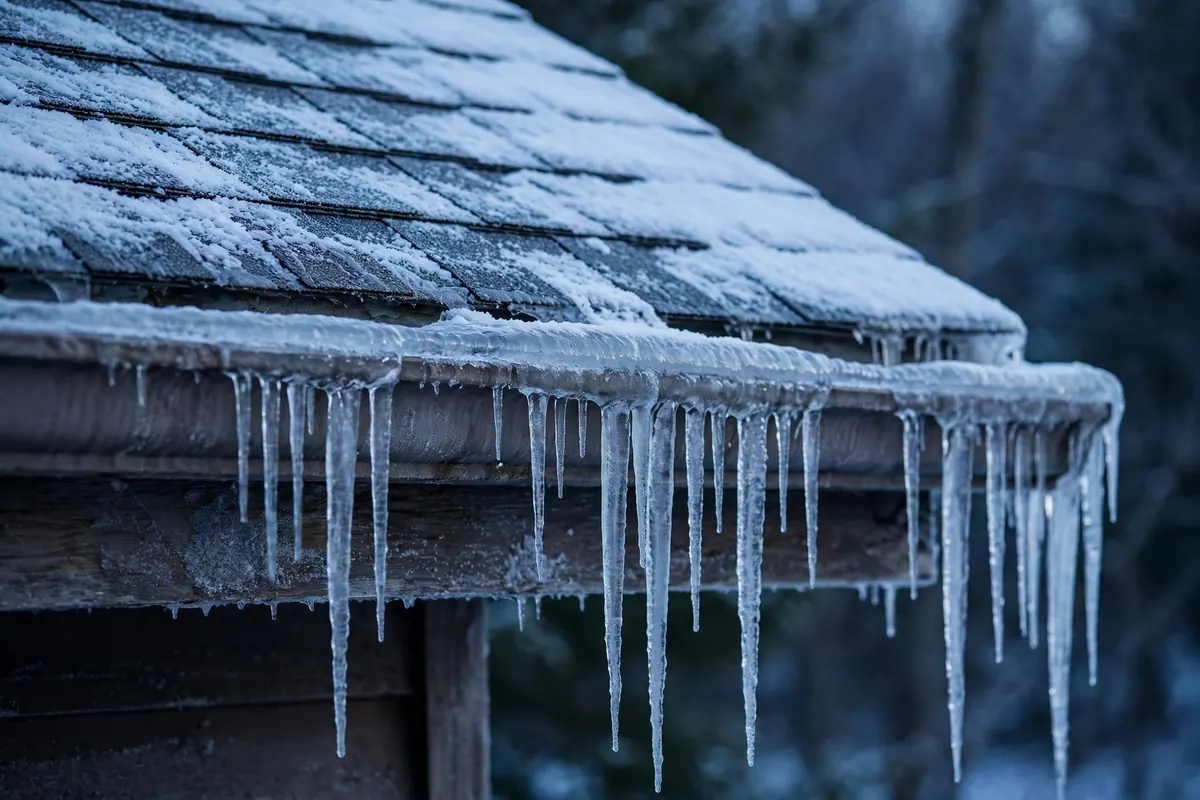
An ice dam that is backing water into the house in a cold snap needs the water path stopped and the dam dealt with safely, not chipped at from below.
Water coming in right now? Call and get the roof covered before the next rain.
Call (502) 922-5047Tarping, done right
Emergency tarping and temporary weatherproofing is a cover, not a repair. A proper tarp runs over the ridge and down past the damaged area on both sides, held by wooden battens screwed through the tarp into the deck, so wind cannot peel it back. A tarp nailed only at the edges, or draped over the damage without reaching the ridge, will not hold in the next gust.
The tarp buys time for the lasting repair, and it buys it well: a well-set tarp keeps the next several rains out while the roof dries and the full scope is agreed. What it cannot do is fix the damage underneath, and it should not stay on the roof longer than the weather forces it to, because trapped damp under a tarp feeds the same rot it was meant to stop.
Working on a wet, damaged roof takes the right footing and the right gear. Ladder stabilizers and roof brackets hold the ladder steady, and a fall-protection harness and roof anchor keep the roofer safe on a slick slope. That is why we ask owners to stay off the roof: the work up there is for a roofer with the right footing, not a ladder in the rain.
Ice dams form when a warm attic melts snow on the roof and the meltwater refreezes at the cold eave, building a ridge that traps more water behind it. The trapped water backs up under the shingles and into the house. The safe fix is steam removal, which melts the ice without chipping at shingles, and the lasting fix is airflow and insulation in the attic, which breaks the cycle at its source.
The emergency visit
Five steps, in order, from the call to the plan for the lasting fix.
Step 1
Tell us what you see: where the water is, what the storm did, and whether the roof is open. That shapes what we bring.
Step 2
A tarp goes over the damage, over the ridge, and past the edges, held by battens, so the next rain stays out.
Step 3
Once the roof is covered, we look at the deck and the structure around the damage, so the plan matches the real scope.
Step 4
Dated photos of the opening, the deck, and the water inside give you a clear record for the repair and for your insurer.
Step 5
Once the roof is dry, we agree the full repair in writing, and the emergency cover comes off as the real work goes on.
Safety first
Wet shingles are slick, damaged decking can give way underfoot, and a fall from a roof turns a roof problem into a hospital visit. OSHA fall-protection requirements for roofing work exist because roof work is genuinely dangerous, and they are the reason our crews work with harnesses, anchors, and stabilizers on every job.
Everything you can do from the ground helps: buckets under drips, towels on the floor, furniture moved clear, and dated photos of every stain and damaged spot. Everything that needs doing up there can wait for the roofer. The emergency visit exists so you do not have to climb.
Once the roof is covered and dry, the lasting repair follows the same path as any other repair. Roof repair in Louisville fixes the flashing, the shingles, and the deck at the source, and a full roof inspection after the emergency checks the rest of the roof for damage the storm left behind.
People also ask
Short answers to the urgent questions that come up when water is coming in.
Control the water inside first: buckets under drips, towels on the floor, furniture moved clear. Then take dated photos of every stain, stay off the roof, and call a roofer to cover the opening. The tarp stops the next rain, and the lasting repair follows once the roof is dry.
A well-set tarp can hold for a while, but it is a cover, not a repair. It should come off as soon as the roof is dry enough for the lasting work, because trapped damp under a tarp feeds the same rot it was meant to stop. Weeks is too long when the weather allows a repair.
It depends on the weather and the roof. A roofer can tarp a roof in rain, but climbing a wet, damaged roof in the dark is not safe, and the tarp may have to wait for first light. Call anyway: the call sets the visit in motion and the advice on the phone helps right away.
Call the roofer who set it. A tarp held by battens screwed into the deck rarely blows off, but a hard gust can lift a corner or tear the sheet. The fix is a reset or a fresh tarp, and the roof underneath stays covered while the lasting repair is planned.
An open roof does not wait for a convenient day. Call and get it covered now.
Call (502) 922-5047Frequently asked questions
Call a local roofer who does emergency tarping and repair, and describe what you see: where the water is, what the storm did, and whether the roof is open. That shapes what the crew brings and how fast the visit can run. Your insurer comes after the roof is covered and the damage is documented.
Water coming in now, or a roof open to the sky. An active drip through the ceiling, a section torn off by wind, a limb through the deck, or a skylight that has given way in a storm all count. A slow stain that has been there for months needs a repair soon, but it is not the same kind of emergency.
It depends on the storm and the queue. After a big storm, emergency calls stack up across the city, and crews work through them in order of how open each roof is. Calling early puts you in the queue, and the advice on the phone helps you control the water while you wait.
The crew covers the opening first with a tarp that runs over the ridge and past the damage, held by battens, so the next rain stays out. Then they check the deck and photograph the damage, and once the roof is dry, the lasting repair is agreed in writing and the cover comes off as the real work goes on.
A tarp can go on in the rain, since covering the opening is the urgent job. A lasting repair needs a dry surface so sealant and shingles bond properly, so that work waits for a dry spell. The emergency visit exists to bridge the gap between the storm and the dry day.
Stay clear of the limb and the roof under it, and call a roofer. The limb needs clearing before the damage under it can be seen, and the deck around the impact needs a close look for cracks. A tarp covers the opening while the limb is cleared and the full scope is agreed.
Keep going
The emergency is the first step. These pages take it from there.
Roof repair in Louisville fixes the flashing, shingles, and deck at the source once the roof is dry.
Learn more →A full roof inspection after the emergency checks the rest of the roof for damage the storm left behind.
Learn more →Storm damage roof repair in Louisville documents hail and wind damage and repairs it properly.
Learn more →Where we work
Emergency calls come in from Louisville and the towns around it, and we answer them in emergency roof repair in St. Matthews KY, emergency roof repair in Jeffersontown KY, emergency roof repair in Shively KY, emergency roof repair in Middletown KY, emergency roof repair in Sellersburg IN, emergency roof repair in Hillview KY, and emergency roof repair in Taylorsville KY. See roofing across Louisville and Kentuckiana for the full list of towns we serve.
Call and get the roof covered first, then we will plan the lasting repair with you once the roof is dry.