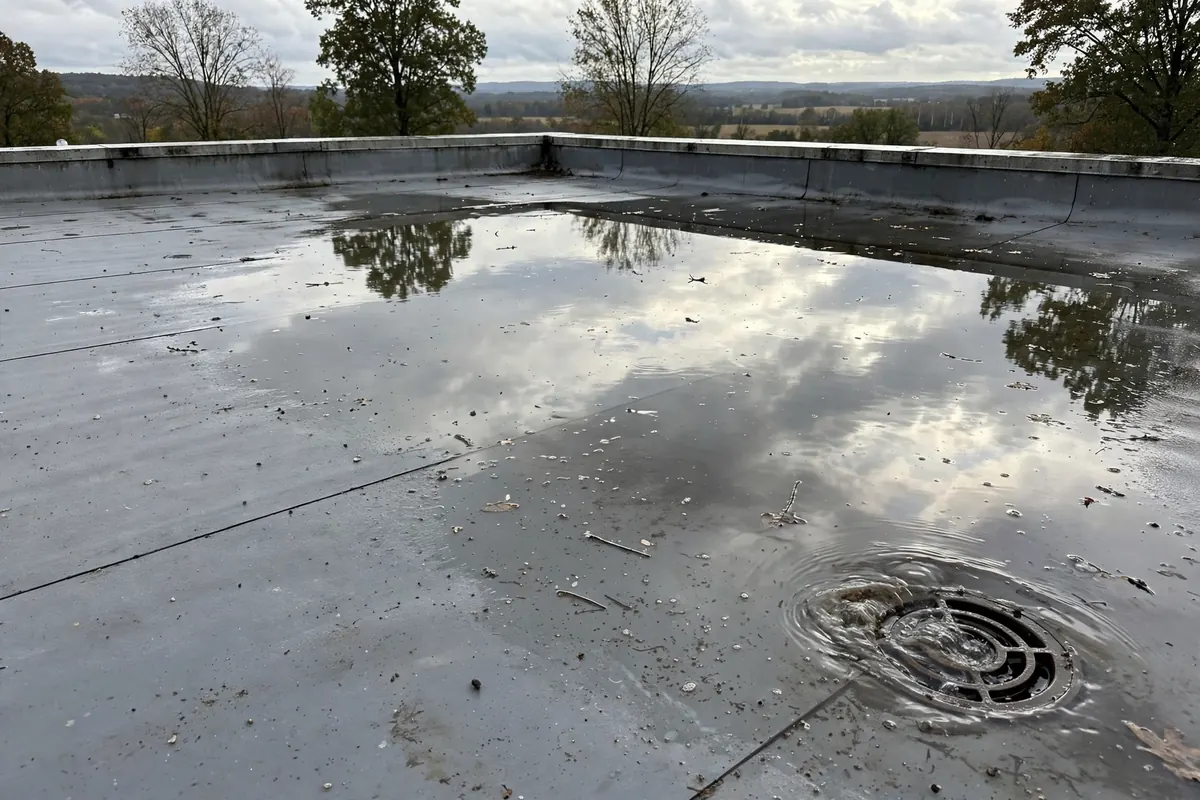
Water standing days after rain
Ponding that lasts more than two days means the fall or the drains are wrong. Standing water ages the membrane and finds weak seams.
Membranes & Coatings
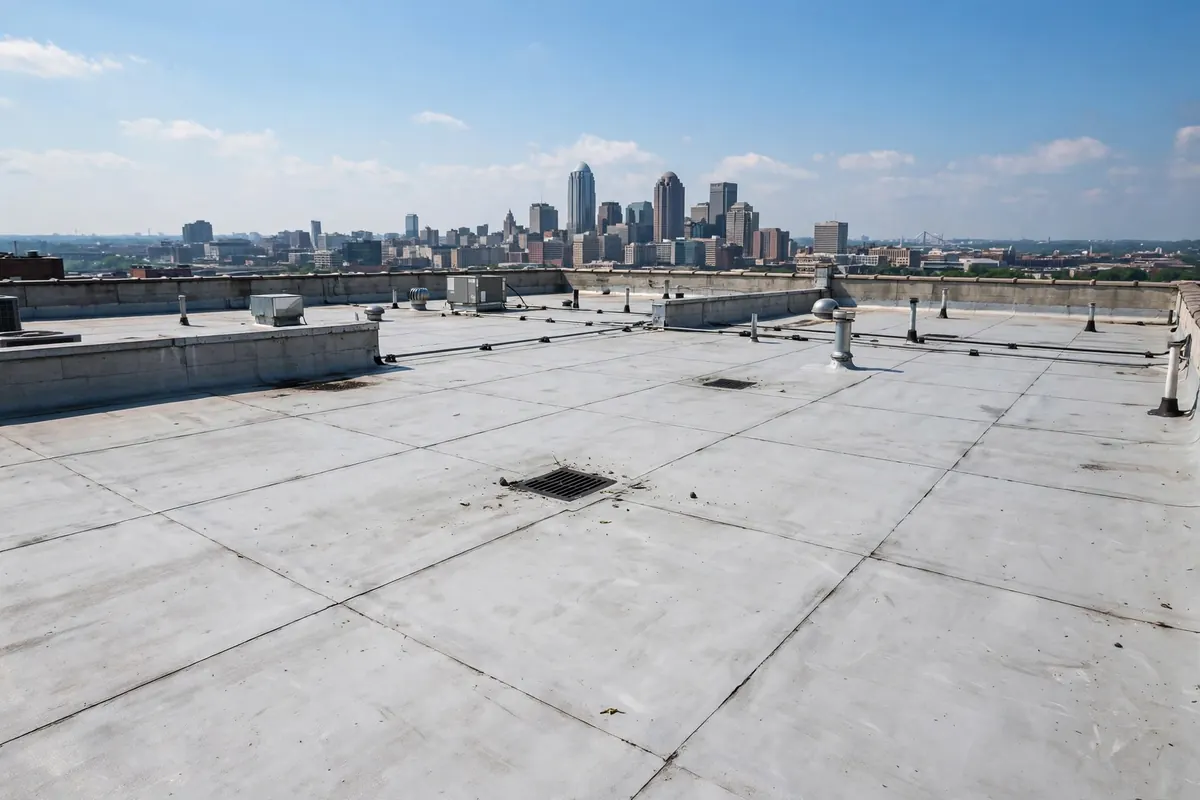
A flat roof is a different job from a pitched roof, because water has nowhere to run on its own. We build membrane and coating systems that move water to the drains, seal every seam, and hold up through Louisville summers and freeze-thaw winters.
Why flat roofs fail
A pitched roof sheds water by gravity. A flat or low-slope roof cannot, so it relies on a slight fall toward the drains and a sealed membrane to carry the water away. When the fall is wrong or a drain clogs, ponding water sits on the membrane for days, and standing water finds every weak seam and every small puncture.
Ponding water is the first thing we look for, and the most common reason a flat roof leaks. Membrane shrinkage pulls at the seams as the material ages, seam failure opens the joints, and punctures from foot traffic or a dropped tool give water a straight path through. Each one is fixable when it is found early, and each one gets worse when it is left.
Louisville weather adds its own pressure. Humid summers keep a flat roof damp long after rain, and freeze-thaw winters turn standing water into ice that pries at seams and drains. A flat roof here needs a membrane and a drainage plan that are built for that cycle, not just for a dry day.
Signs of trouble
Flat roof trouble hides in the seams and at the drains. These signs are the ones to watch for.
Ponding that lasts more than two days means the fall or the drains are wrong. Standing water ages the membrane and finds weak seams.
Seam failure shows as lifted edges and open joints along the membrane. A lifted seam is an open door for the next rain.
Blisters mean trapped moisture or air under the membrane. They grow with heat and split when they get big enough.
Membrane shrinkage pulls the material tight and cracks it at the edges and around penetrations. The cracks start small and spread.
Leaks that show at a drain or a vent usually mean the flashing or the seal around it has failed, not the field of the roof.
A stain under a flat roof means water has crossed the membrane and the deck. The entry point is often far from the stain.
Water standing on your flat roof days after rain? Call and get the membrane and drains checked.
Call (502) 922-5047Materials and methods
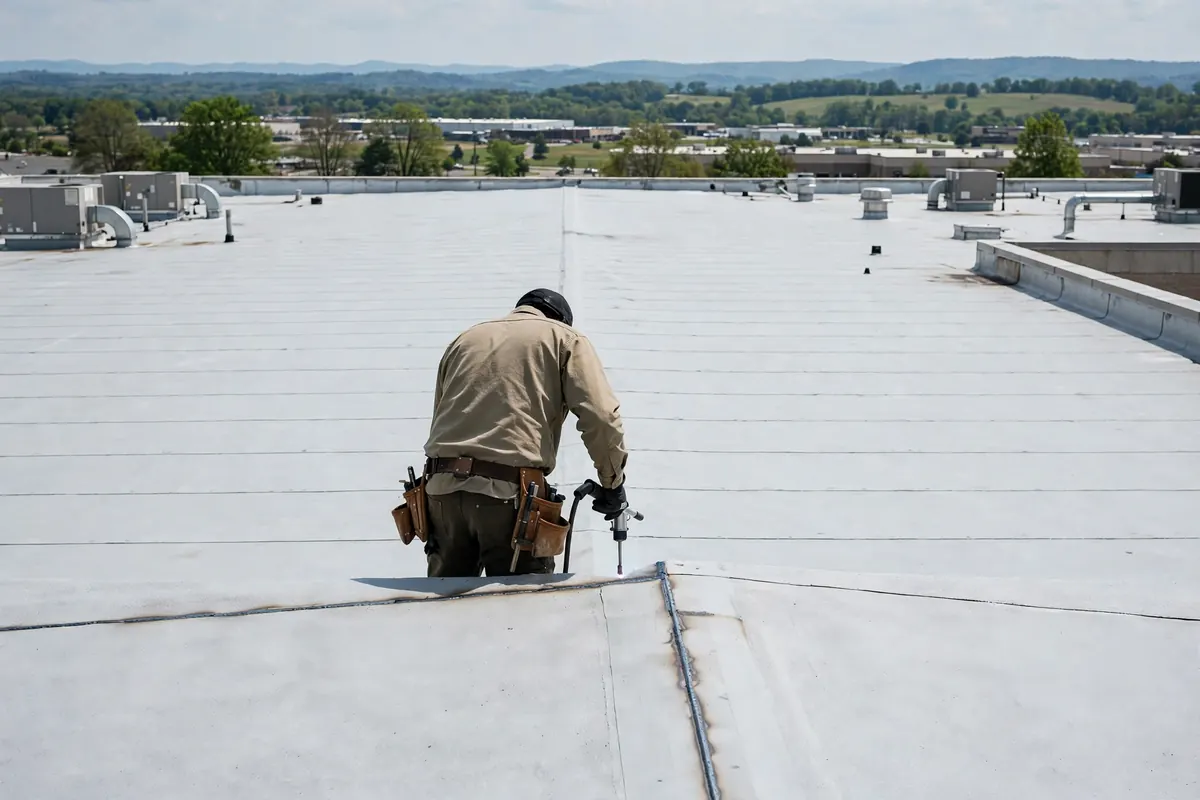
TPO single-ply membrane is the most common choice for Louisville flat roofs today: a light-colored sheet that reflects sun, heat-welded at the seams so the joints hold as one piece. EPDM rubber membrane is the dark, flexible alternative, laid in large sheets with taped or glued seams, and it suits roofs that move a little with temperature. Modified bitumen, torch-down or self-adhered, layers asphalt and reinforcement into a tough, thick surface that handles foot traffic well.
Built-up roofing, layers of felt and asphalt topped with gravel or a cap sheet, is the older method, and it still serves on roofs that already carry it. The choice between them depends on the roof: its size, its slope, how much foot traffic it takes, and what is already down there. There is no single best flat roofing material for every Louisville home, only the best one for your roof.
Roof coating application gives a sound membrane a fresh, reflective skin. Silicone and acrylic roof coatings seal small cracks and slow the wear, and they suit a membrane that is aging but still solid. Spray foam adds insulation and a seamless coat in one pass, shaped to fall toward the drains, and it suits roofs where the insulation below has failed.
Single-ply membranes, TPO and EPDM, go down as large sheets with few seams, and their seams are welded or taped shut. Modified bitumen goes down in layers, each one bonded to the last, which makes it thicker and more forgiving under foot traffic. A roof that gets walked on often, for servicing vents and units, usually suits modified bitumen or a walkway pad over single-ply.
Materials compared
Five systems, each with its own strengths. The right one depends on your roof, not on a ranking.
| Material | How it goes down | Best for | Watch out for |
|---|---|---|---|
| TPO single-ply | Heat-welded sheets | Most flat roofs, reflects sun | Seams need a skilled welder |
| EPDM rubber | Glued or taped sheets | Large roofs, moves with temperature | Seams and edges need care |
| Modified bitumen | Torch-down or self-adhered layers | Roofs with foot traffic | Heavier, needs a sound deck |
| Built-up roofing | Layered felt and asphalt | Existing BUR roofs | Older method, heavier build |
| Silicone coating | Rolled or sprayed over membrane | Sound membranes that need a fresh skin | Cannot fix ponding or failed seams |
Scroll sideways to see the full table.
Repair or replace
A flat roof can often be repaired when the trouble is local: a split seam, a puncture, a failed drain seal, or a small blistered patch. The repair cuts out the bad section, welds or bonds in new membrane, and seals the joint, and the rest of the roof keeps serving. That is the right answer when the membrane is otherwise sound and the seams around the repair hold tight.
A coating can extend a sound membrane, but it cannot save a failed one. Silicone and acrylic coatings seal small cracks and slow the wear, yet they do nothing for ponding water, shrunken seams, or a membrane that has cracked across the field. When the membrane has failed in several places, or the deck below is wet, a new membrane is the honest answer, and a coating would only hide the trouble for a season.
The decision comes down to what the roof looks like up close: the membrane, the seams, the drains, and the deck below. A roof inspection in Louisville that includes the flat roof gives you that picture, and commercial roofing in Louisville covers the same systems at business scale, with flat roof maintenance in Louisville keeping the drains and seams checked between visits.
People also ask
Short answers to the flat roof questions that come up most on porches, additions, and shops.
Yes, but gently and rarely. Foot traffic punctures membranes and wears the surface, so walkways and pads belong on the paths people actually use. A roof that gets serviced often needs a walkway pad over the membrane, or a tougher system such as modified bitumen.
Drains are joints, and joints are where flat roofs fail. The seal around the drain cracks with age, debris clogs the bowl, and ponding water sits against the seal for days. Clearing the drain and resealing the joint usually fixes it, when the membrane around it is still sound.
A flat roof that holds water is a flat roof asking for a look. Call and get the membrane and drains checked.
Call (502) 922-5047Frequently asked questions
It depends on the roof. TPO suits most flat roofs, because its light color reflects sun and its heat-welded seams hold tight. EPDM suits large roofs that move with temperature, while modified bitumen suits roofs that take foot traffic. The slope, the size, and what is already down there decide it.
Because the fall toward the drains is too shallow, or a drain is clogged. Flat roofs rely on a slight slope and clear drains to move water away, and when either fails, ponding water sits on the membrane for days. The fix is drainage first: clear the drains, then correct the fall where it is wrong.
A well-built flat roof often lasts about 20 to 30 years in Louisville, depending on the membrane and how well the drains and seams are kept. Ponding water and neglected seams shorten that life fast, while a membrane that drains well and gets checked each year holds up far longer.
It can often be repaired when the trouble is local: a split seam, a puncture, or a failed drain seal. The repair cuts out the bad section and welds or bonds in new membrane. When the membrane has failed in several places, or the deck below is wet, a new membrane is the honest answer.
Silicone coatings suit Louisville best where ponding is a factor, because silicone holds up under standing water better than acrylic. Acrylic suits roofs that drain well and need a reflective, fresh skin. Either way, a coating only helps a membrane that is still sound underneath.
A pitched roof sheds water by gravity, while a flat roof relies on a sealed membrane and drains to move water away. That makes the membrane, the seams, and the drains the whole job on a flat roof, where a pitched roof spreads the work across shingles, flashing, and slope.
Keep going
Flat roofs connect to bigger buildings and to regular care. These pages follow.
Commercial roofing in Louisville covers the same membrane systems at business scale, with maintenance plans to match.
Learn more →Flat roof maintenance in Louisville keeps the drains clear and the seams checked between visits.
Learn more →Roof repair in Louisville fixes split seams, punctures, and failed drain seals at the source.
Learn more →Where we work
Flat roofs take us across Louisville and the towns around it, to flat roofing in Prospect KY, flat roofing in Fern Creek KY, flat roofing in Okolona KY, flat roofing in Valley Station KY, and flat roofing in Jeffersonville IN. The full list of towns we serve is on roofing across Louisville and Kentuckiana.
Tell us about the ponding, the seams, or the leak, and we will take a close look at the membrane and the drains.