Dixie Highway and US 60 junction Ranch and Cape Cod roofs
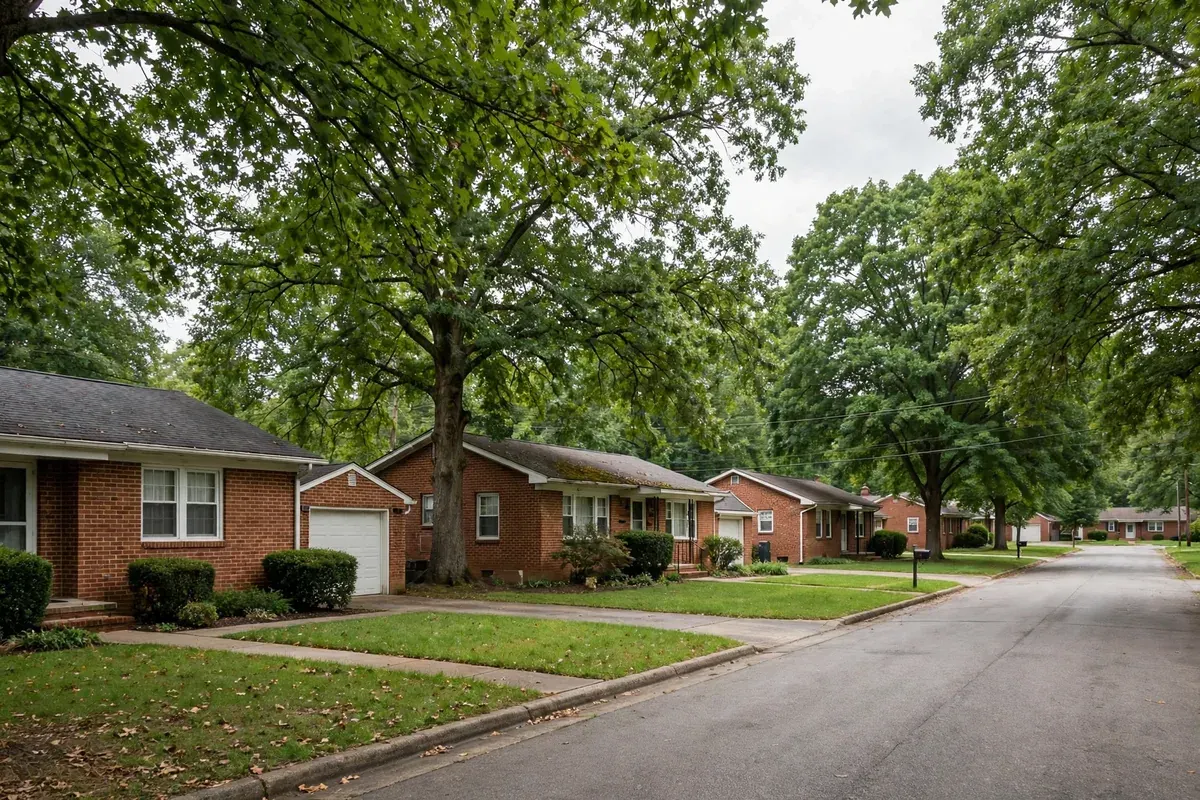
The city center, where mid-century brick ranches and Cape Cods line the two main roads.
Dixie Highway Roofing
Shively bungalows and ranches carry low-pitch roofs that hold snow and feed ice dams in winter, and their aging shingles have seen decades of storms. We work on roofs across town, and we trace every leak to its source before we touch a shingle.
Shively, KY
Shively sits about five miles southwest of downtown Louisville, centered on the junction of US 60 and Dixie Highway, and it has kept its own city government, police, and fire departments since it incorporated in 1938. The town grew fast in the 1950s, when it was the fastest-growing city in the state, and its population peaked near 19,000 in 1970. The houses from that boom are still the backbone of the town: 1940s to 1960s brick ranches and Cape Cods, many of them still carrying aging shingle roofs.
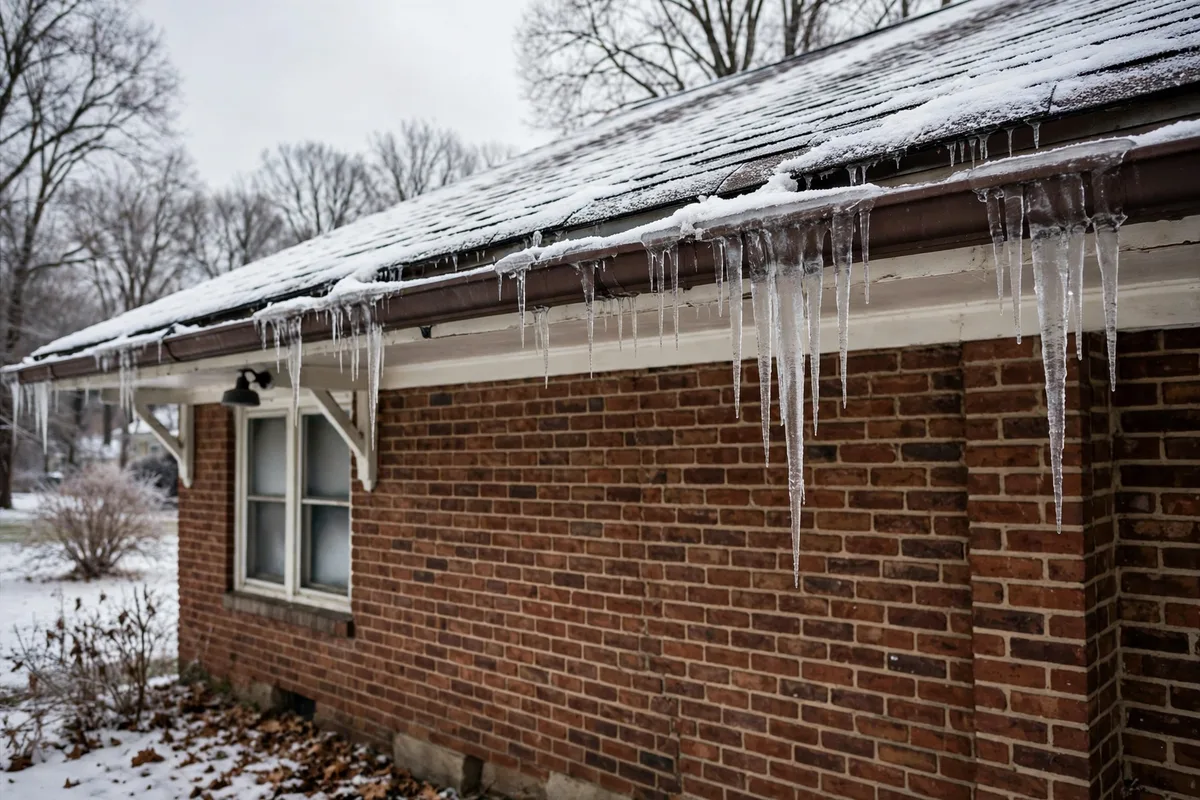
Low pitch is the mechanism that shapes roof trouble here. Many Shively bungalows and ranches have gentle slopes and low-slope sections over older additions, and gentle slopes shed snow and rain more slowly than steep ones. In winter, attic heat melts snow near the ridge, the meltwater runs down to the colder eave, and it refreezes into an ice dam that traps water behind it. The trapped water backs up under the shingles and into the house, often showing up as a stain near an outside wall. Sound attic ventilation and ice and water shield at the eaves break that cycle.
Neighborhoods
The city center, where mid-century brick ranches and Cape Cods line the two main roads.
The creek corridor, where older homes sit low and gutters, drainage, and flashing matter most.
The community's name before 1902, after St. Helen Catholic Church, founded in 1897, with bungalows nearby.
Around Parkview Methodist Church, whose land was donated in 1816, with post-war ranches on quiet streets.
The area just west of town, with the same mid-century brick ranch stock as Shively itself.
The Louisville neighborhood just north of Shively, with small-lot bungalows and camelback houses.
Snow sitting on a low-pitch roof or a stain near the wall? Call and we will start in the attic.
Call (502) 922-5047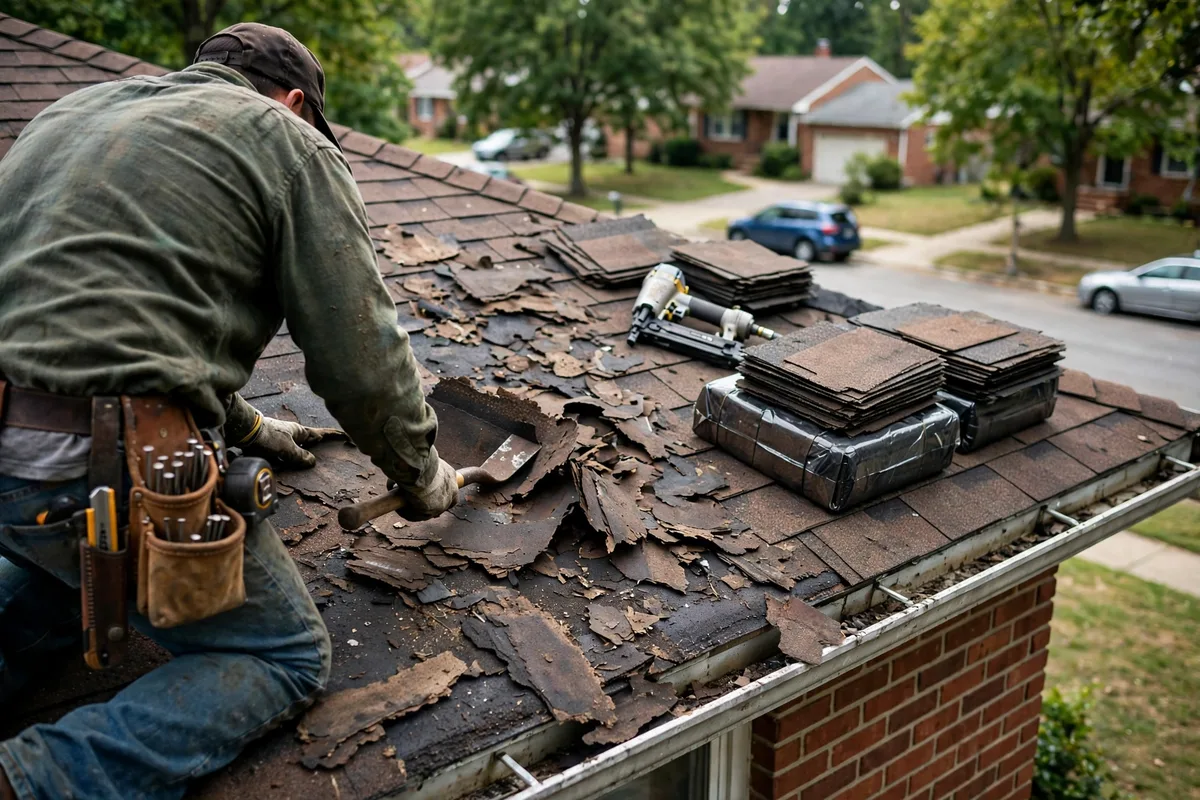
Homes & roofs
Shively housing is mostly mid-century, and the sources name few subdivisions, so area names tell the story better than subdivision names. The town's growth in the 1950s filled its streets with brick ranches and Cape Cods, and the same stock runs south into northern Pleasure Ridge Park. Eight whiskey distilleries operated here after Prohibition, including Early Times and the maker of Old Forester, and Michter's opened a new distillery in the city in 2015. Mill Creek runs through the city, and its watershed has a local flooding history, which is one more reason gutters and drainage get attention here.
Roof age is the plain fact of Shively. Most of these homes are now on second or third shingle roofs, and the older three-tab shingles on many of them are reaching the end of their run, with granule loss, curling tabs, and flashing that has worked loose at chimneys and walls. Low-slope sections over additions hold water longer and wear faster. A careful check of the deck matters here, since older decking can be soft near the eaves where ice dams have pushed water under the shingles winter after winter. Houses built before 1970 can hold asbestos in old roofing felt and shingles, and the EPA guidance on debris and damaged buildings explains the care to take during tear-off.
Local trouble
Shively roofs
Gentle slopes and older additions hold snow longer, and attic heat melts it from below. That meltwater freezes again at the colder eave and holds the rest of the water back, under the shingles. Ventilation balance and ice and water shield at the eaves stop the cycle.
Shively roofs
Many Shively roofs still carry three-tab shingles near the end of their run. Granule loss, curling, and bald patches are the signs, and a repair buys less time with each passing season.
Shively roofs
The creek watershed has a flooding history, so gutters and downspouts that move water cleanly away from the house matter more here than on higher ground. Clogged gutters spill water against the foundation and the lower walls.
Roof choices
Architectural shingles. Architectural shingles suit most Shively brick ranches and Cape Cods. They handle the gentle slopes well and hold up to Ohio Valley hail, though the Mill Creek damp keeps the shaded slopes wet. The watch is on the granules and the north-facing slopes, where moss takes hold first.
Three-tab shingles. Three-tab shingles still cover many older Shively roofs, and most of them are near the end of their run. The thin tabs curl at the edges and lift in the wind off Dixie Highway, and each season that passes leaves less room for a patch to hold.
Standing seam metal and algae-resistant shingles. Standing seam metal fits the low-slope sections and the homes near Mill Creek, where flashing has to be bent to fit every joint and wall. Algae-resistant shingles suit the shaded slopes under mature trees, though the gutters and the vents still deserve a careful check, since shade keeps everything damp.
Around town
The junction of Dixie Highway, US 31W, and US 60 is the center of Shively, with the city's boundaries running roughly from Millers and Bernheim Lane in the north to Rockford Lane in the south. St. Helen Catholic Church dates to 1897, and Parkview Methodist Church to 1816. Mill Creek winds through the town, and the old distillery buildings recall the eight whiskey distilleries that worked here after Prohibition. The roofs over all of it, houses, churches, and distillery buildings alike, face the same southwest Louisville weather.
Coverage
Shively is a home-rule city in Jefferson County, incorporated in 1938, about five miles southwest of downtown Louisville.
The 40216 ZIP covers Shively and parts of southwest Louisville; older records also list 40256 for the area.
FAQ
We do. We repair roofs across Shively, from the brick ranches near the Dixie Highway junction to the bungalows around St. Helen's and Parkview. We start in the attic, since that is where most Shively leaks begin, then trace the water to the eave or the flashing that let it in.
Start in the attic. Ice dams form when attic heat melts snow near the ridge and it refreezes at the colder eave, so balanced ventilation and insulation that keeps attic air near the outside temperature are the real fix. Ice and water shield at the eaves protects the deck while the ventilation catches up. Never chip ice off a roof, since that breaks shingles.
An ice dam holds meltwater back until it runs under the shingles and into the house, usually showing as a stain near an outside wall. There is no hole in the middle of the roof. Water is moving uphill under the shingle edge, so the answer is ventilation, insulation, and shield at the eave, not another coat of sealant.
There can be. Houses built before 1970 can hold asbestos in old roofing felt and shingles, and that changes how a tear-off is handled. The EPA guidance on debris and damaged buildings explains the care to take during tear-off, and we follow that guidance when we open up an old Shively roof.
Most Shively homes need sound flashing at chimneys, walls, and low-slope joints, the same as any mid-century ranch, but the low pitches here make flashing work harder, since water moves slowly and sits longer at the joints. Step flashing and counterflashing that are sealed and seated properly keep water out of the wall.
Walk the ground and look for missing tabs, lifted ridge caps, and granules in the gutters, and check the attic for damp insulation or daylight through the deck. Take dated photos of anything you find. Then call for a close look, since hail bruising hides well from the ground and shows up months later as a leak.
Services
Eave leaks traced to the ice dam that caused them, flashing resealed at chimneys and walls, and low-slope sections patched on Shively bungalows and ranches.
Learn more →A low-pitch-aware look at a Shively roof: shingles, flashing, deck, and attic, written up in plain words with the ice-dam risk spelled out.
Learn more →Tear-offs for Shively ranches whose three-tab shingles have reached the end of their run, with the deck checked near the eaves where ice dams have worked it hardest.
Learn more →Ventilation and insulation that keep a Shively attic near outside temperature, so snow stops melting from below and the eaves stay clear.
Learn more →Or contact a Louisville roofer about how old your three-tab shingles are and what the last winter did to them.
Nearby towns
Valley Station runs south down Dixie Highway from Shively, and Pleasure Ridge Park follows it toward the river, and a Shively visit often takes in all three on the same trip.
A low-pitch roof holding snow, a leak at the eave in cold weather, or three-tab shingles at the end of their run. Tell us what the last winter did to yours, by phone or email, and we will start in the attic.