Missing shingles on the ground
Shingles in the yard mean bare patches overhead. Even one missing shingle over a seam can soak the underlayment and the deck below.
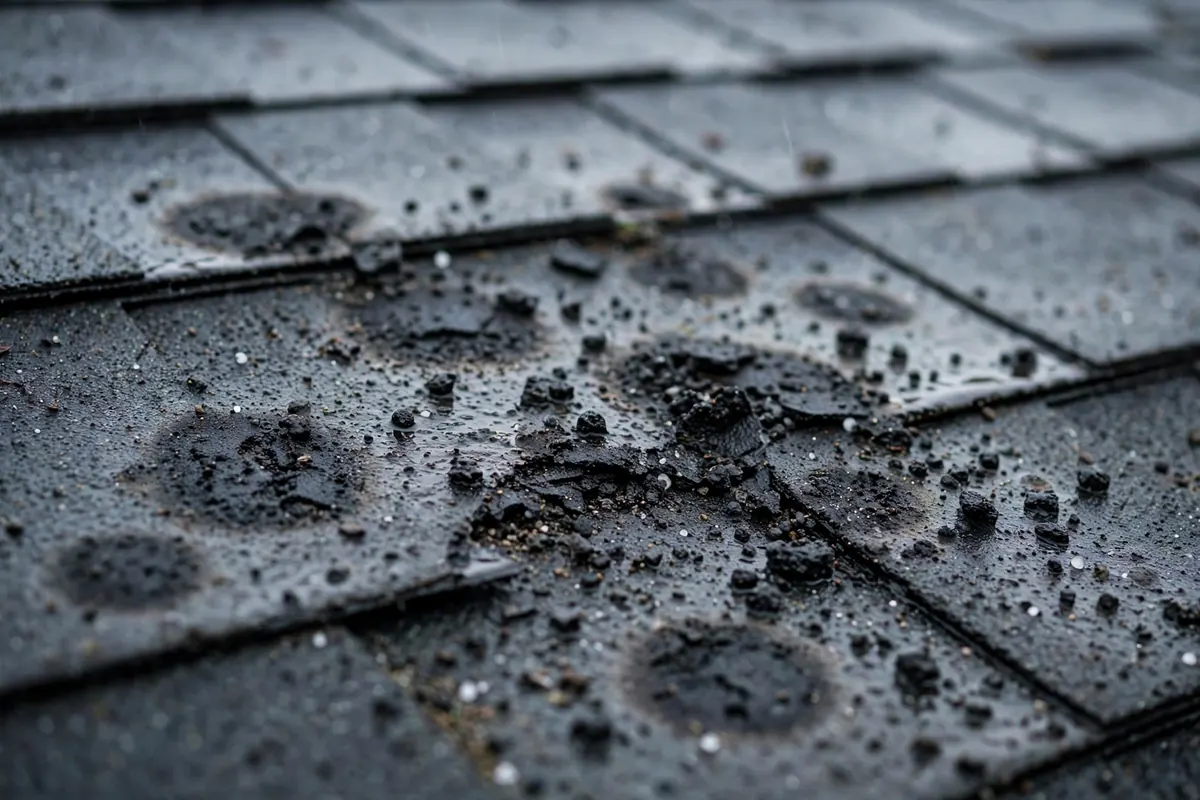
Hail & Wind Damage
Louisville spring storms hit fast and leave damage that hides. We find hail bruises and wind-lifted shingles, document them with photos, and repair the roof properly, so the storm that passed through does not keep costing you months later.
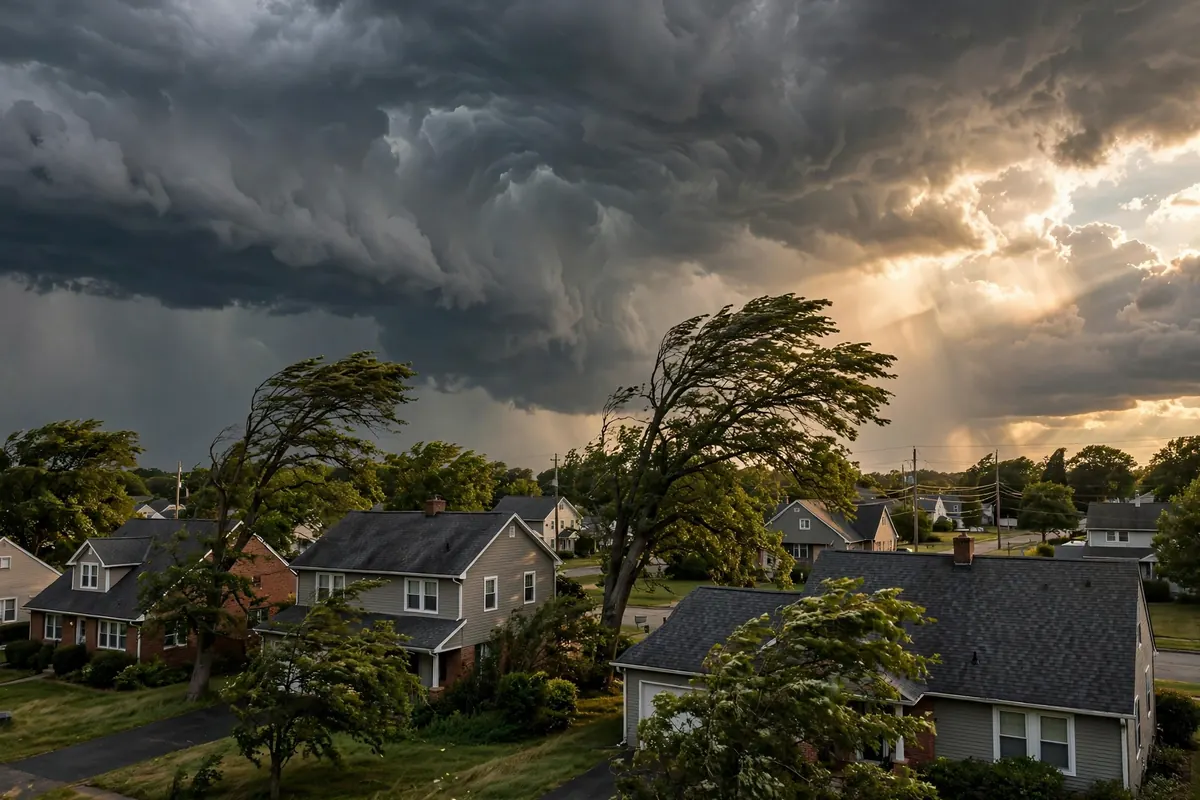
Hail damage
Louisville sits in the Ohio Valley, where spring storms roll in off the river and drop hail, wind, and driving rain on the same roofs year after year. A spring storm can pepper a whole block with hail while the next street over stays dry, and the damage hides under the granules where eyes from the ground cannot reach it.
Hail impact damage bruises the shingle mat under the granules. The bruise may not show for months, then granules shed and the spot turns soft. That slow reveal is why a roof earns a close look after hail, even when the street view shows nothing wrong.
Wind uplift works differently: it lifts tabs that were already loose and tears at the ridge and the rakes first. The first leak after a storm usually starts at a joint, not in the open field, so we check the flashing and valleys first, then the open slopes. The National Weather Service office in Louisville follows these storms as they move up the Ohio Valley, and its forecasts give homeowners the earliest warning.
After the storm
Walk the yard and look up after every big storm. These signs are all visible without a ladder.
Shingles in the yard mean bare patches overhead. Even one missing shingle over a seam can soak the underlayment and the deck below.
Hail that dents soft metal hit the shingles too. Dented gutters are the easiest hail clue to spot from the ground.
A sudden pile of granules after a storm means hail bruised the shingles and knocked the coating loose across a slope.
Larger hail cracks tile and splits shingle tabs outright. The crack is an open door for the next rain.
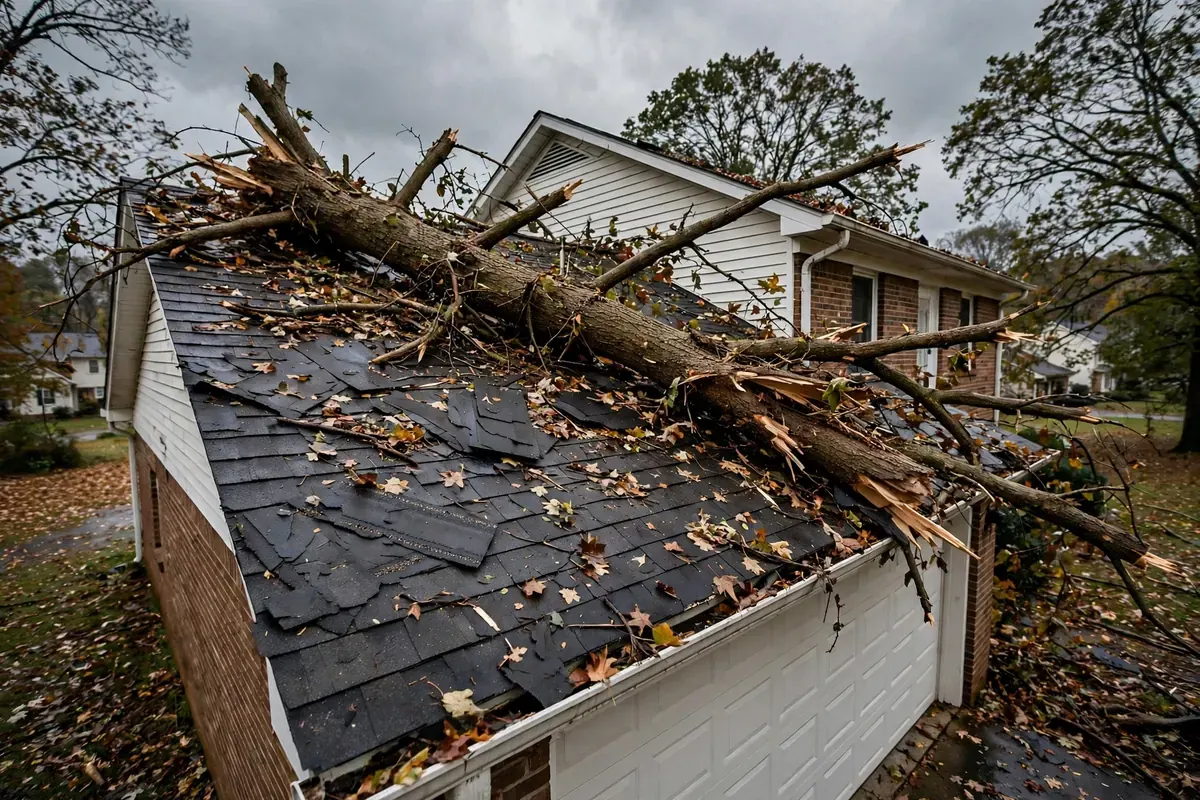
A sagging section after a storm can mean a fallen limb cracked the deck, or water is pooling where the structure gave way.
Storm-fallen tree limbs and debris impact can crack shingles and dent flashing. Limbs need clearing before the damage under them can be seen.
A storm just passed over your roof? Call and get the damage found and documented before the next rain.
Call (502) 922-5047Right after the storm
Storm damage is stressful, and the order of the steps matters. Do them in this order and the rest gets easier.
Step 1
Buckets under drips, towels on the floor, and furniture moved clear. A small leak spreads fast across drywall.
Step 2
Dated photos of stains, missing shingles, and dents, inside and out, before anything is moved or covered.
Step 3
Walk the yard and look up. Missing shingles, a sagging section, and branches on the roof are all visible without a ladder.
Step 4
A roofer covers the open area and checks the deck, so the next rain does not turn a small opening into a bigger repair.
Step 5
Once the roof is dry and documented, agree the full repair in writing, then talk with your insurer about the claim.
Assessment and records
Storm damage assessment and documentation starts with a full walk of the roof, slope by slope, marking every bruise, lift, crack, and dent. Hail bruises get circled in chalk so the pattern shows in photos, and wind damage gets measured slope by slope, because the pattern across the roof tells how hard the storm hit.
Flat roofs get the same treatment with different eyes: membrane punctures, seam failure, and shrinkage show as splits and lifted seams, and ponding water marks where the drainage failed. A flat roof that held water after the storm needs its seams and drains checked before the next rain.
The record matters as much as the repair. Dated photos, a written list of what was found and where, and a clear scope of the repair give you a straight record to show your insurer. Help with a roof insurance claim in Louisville follows naturally from that record, and the photos are the part of the claim that speaks for itself.
Emergency tarping and temporary weatherproofing come first when the roof is open to the sky, and emergency roof repair in Louisville handles that first response. The lasting repair follows once the roof is dry and the full damage is known, so the fix matches the real scope instead of the first guess.
How soon, and what to watch
Soon, and sooner when the roof is open. A missing shingle or a cracked tile lets every rain soak the underlayment and the deck below, and the damage spreads with each storm that follows. A tarp buys time, but it is a cover, not a repair, and it should not stay on the roof longer than the weather forces it to.
Hail damage is the quiet exception: a bruised shingle can sit for months before it sheds granules and turns soft. That delay is exactly why the inspection matters right after the storm, while the bruises are fresh and the pattern is clear. Waiting until a stain shows on the ceiling means the water has already been inside for a while.
One caution that never changes: stay off the roof after a storm. Wet shingles are slick, damaged decking can give way underfoot, and a fall turns a roof problem into a hospital visit. Everything that needs doing up there can wait for a roofer with the right footing.
People also ask
Short answers to the storm questions that come up most in the days after hail or high wind.
Yes. A hail bruise sits under the granules, so the shingle can look whole while the mat below is broken. Run a hand over the slope and feel for soft spots, and check the gutters for granules washing off. A roof that passes a look from the street can still fail a close look on the roof itself.
Hail around the size of a quarter can bruise asphalt shingles, while smaller hail usually marks the surface without breaking through. The real test is the roof itself: bruises, cracked tile, and granule loss tell the story better than the size of the stones on the ground.
The next rain does not wait for a decision. Call and get the storm damage checked while it is still fresh.
Call (502) 922-5047Frequently asked questions
Look for dents in gutters and downspouts, granules washing out of the downspouts, and shingles that feel soft or bruised when pressed. A close look on the roof finds the bruises under the granules that eyes from the ground miss. When in doubt, an inspection after the storm settles it with photos.
Start inside: put buckets under active drips, move rugs and furniture clear, and take dated photos of every stain and damaged spot. Outside, stay off the roof and look from the ground for missing shingles or a sagging section. Then call a roofer to tarp the open area and check the deck.
As soon as the roof is dry enough to work on, and sooner when the roof is open to the sky. A missing shingle or cracked tile lets every rain soak the deck below, and the damage spreads with each storm. Hail bruises can wait a little longer, but the inspection should happen right after the storm.
It often covers sudden storm damage, such as hail or wind tearing shingles off, but every policy reads differently and wear from age is usually excluded. Read your policy, note your deductible, and keep photos and receipts from the storm. Your insurer decides what the policy covers, so talk with your agent before work starts.
Yes. Hail punctures membranes and cracks the surface of flat roofs, and the damage shows as splits, lifted seams, and ponding where the membrane gave way. A flat roof inspection after hail checks the seams and drains as well as the field, since the seams are the weak point.
One slope can often be repaired or partly re-roofed while the rest of the roof keeps serving, when the rest is sound and the new courses tie into the old ones cleanly. Storms hit one side hardest, and the repair matches the damage instead of replacing a roof that still has years in it.
Keep going
Storm damage rarely ends with the storm. These pages pick up where this one leaves off.
Help with a roof insurance claim in Louisville turns the photos and records from the storm into a clear claim.
Learn more →Emergency roof repair in Louisville covers the opening first with a tarp, then plans the lasting fix.
Learn more →A roof inspection in Louisville gives the storm damage a full, documented look, slope by slope.
Learn more →Where we work
Storm damage repair runs across Louisville and the towns around it, including storm damage roof repair in St. Matthews KY, storm damage roof repair in Jeffersontown KY, storm damage roof repair in Shively KY, storm damage roof repair in Middletown KY, storm damage roof repair in Jeffersonville IN, and storm damage roof repair in Mount Washington KY. See roofing across Louisville and Kentuckiana for the full list of towns we serve.
Call or email, tell us what the storm did, and we will find the damage, document it, and repair it properly.