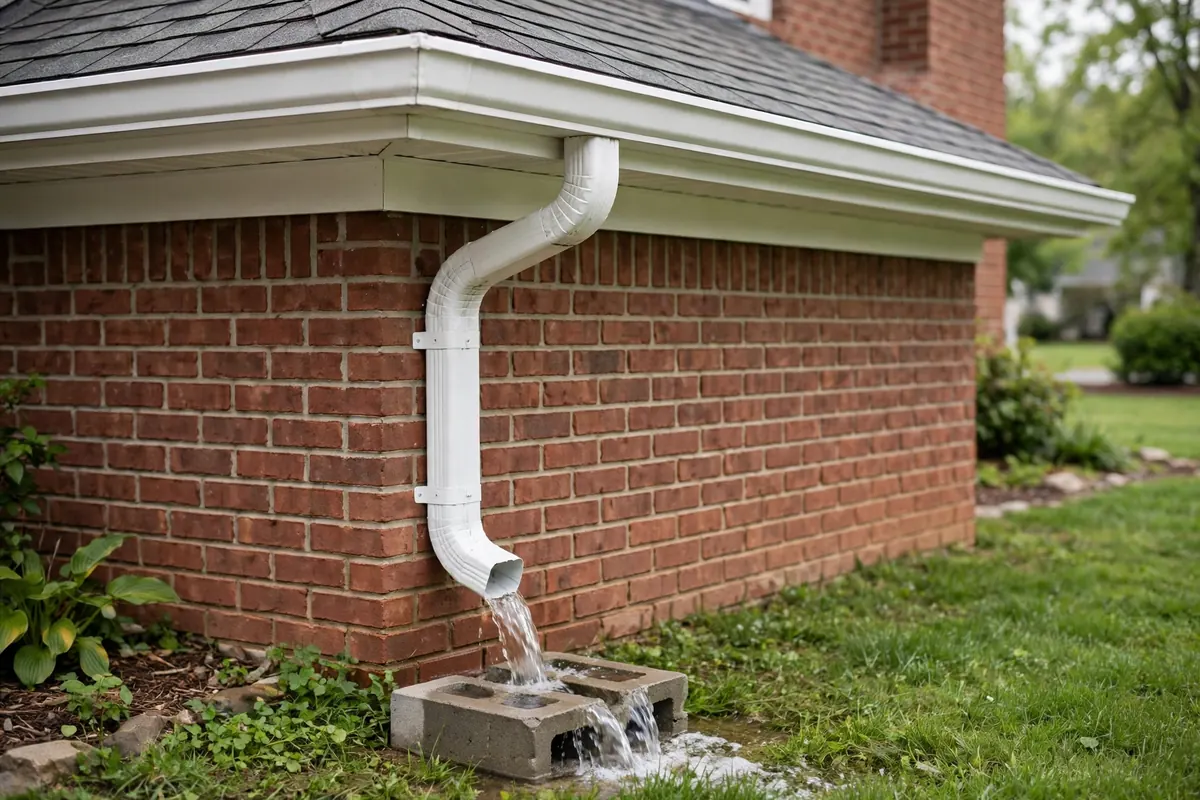
Water spilling over the edge
Overflow in rain means a clog or a wrong slope. The water that spills runs down the wall and onto the foundation instead of away from it.
Water Handling & Guards
Gutters are part of the roof, not an afterthought. They carry every drop the roof sheds away from the walls and the foundation, and when they fail, the house takes the damage even when the shingles are perfect.
Why gutters matter
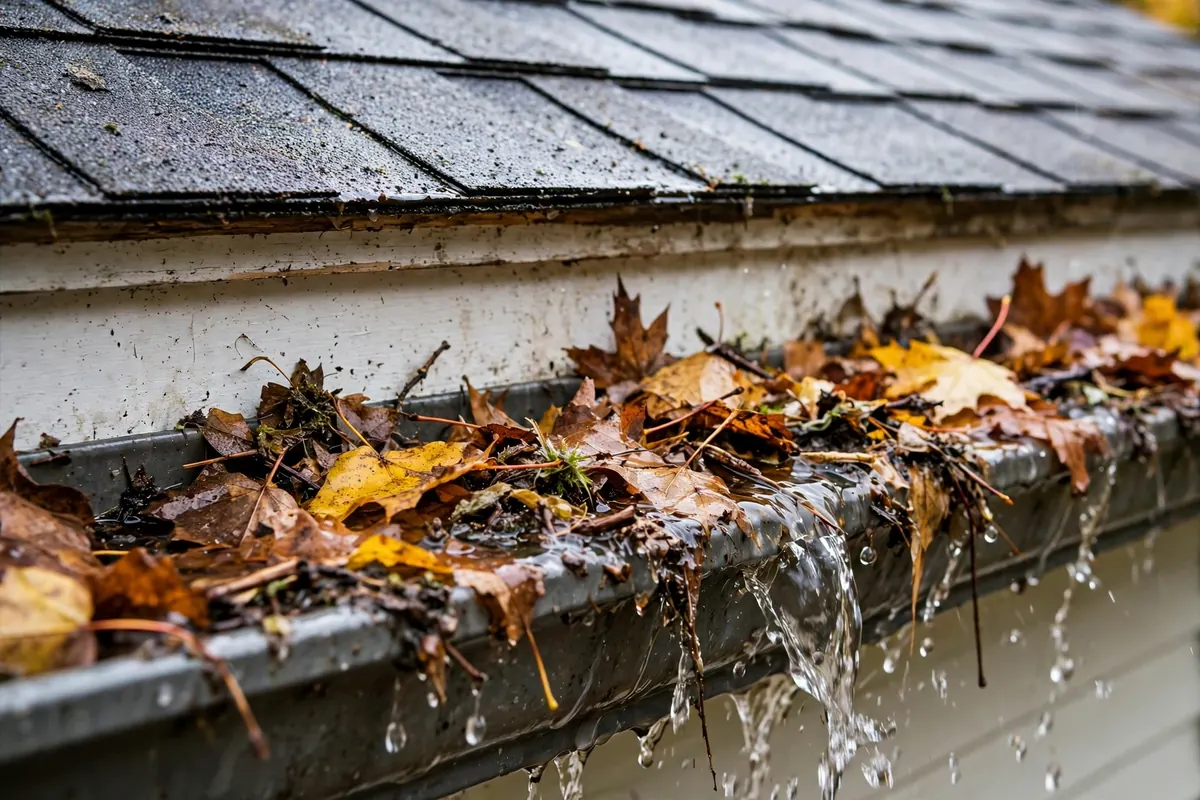
The shingles can be perfect and the house still takes damage, because the water has nowhere else to go. A roof without working gutters pours water straight down the walls and onto the foundation, staining siding, rotting fascia, and wetting the ground beside the house with every storm.
Louisville makes gutters work hard. Spring storms dump heavy rain in short bursts, fall maples and oaks fill the troughs with leaves, and winter freeze-thaw turns a clogged gutter into a block of ice that pulls away from the fascia. A gutter that looks fine in July can fail in the first cold rain of November.
Clogged gutters and overflowing downspouts are the most common gutter trouble we see, and the fix is usually simple: clear the trough, check the slope, and make sure the downspouts and elbows run clear to the ground. Gutters, downspouts, and elbows work as one path, and a clog anywhere in it backs the water up to the roof edge.
Signs of trouble
Each of these means water is not getting away from the house the way it should.
Overflow in rain means a clog or a wrong slope. The water that spills runs down the wall and onto the foundation instead of away from it.
A gutter that sags is carrying more weight than it should, usually water and wet leaves. Gutter hangers that have pulled loose need refitting.
Rust and seams that drip mean the metal is giving up. A seam that drips in every rain will not heal itself.
Gutters that lean away from the fascia often mean the fascia is rotted or the roof edge is failing. Water then runs down the wall.
Puddles beside the house after rain mean the downspouts are not carrying water far enough away, or an elbow is clogged or disconnected.
Granules in the gutter say as much about the shingles as they do about the gutter. Heavy granule loss means the roof surface is aging fast.
Gutters overflowing in every rain? Call and get the trough, slope, and downspouts checked.
Call (502) 922-5047Materials and guards
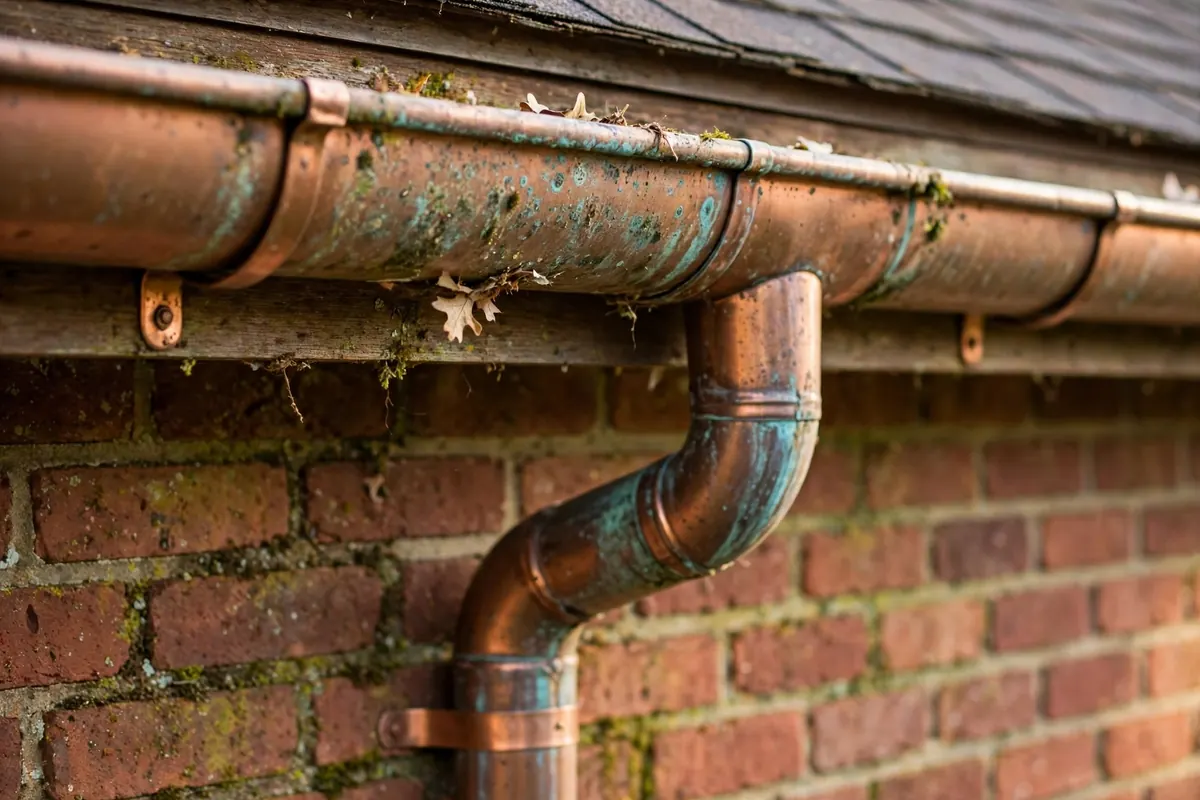
Seamless aluminum gutters are the standard on Louisville homes: one continuous run with no seams to leak along the length, formed on site to fit the house exactly. Copper gutters suit historic and premium homes, weathering to a warm patina and lasting for decades, and they pair well with slate and standing seam metal roofs.
Gutter guard mesh and screens keep most leaves out and cut cleaning down to a rare chore, but no guard keeps everything out, and fine debris still settles in the trough. Guards suit homes under big trees best, and they suit them most when the gutters underneath are sound and sloped right first. A guard over a sagging, wrong-sloped gutter only hides the problem.
Size matters too. Most Louisville homes run five-inch gutters, while larger roofs and steep slopes need six-inch troughs and bigger downspouts to carry a spring downpour without overflowing. The right size is the one that matches the roof area feeding it, not the one that happened to be on the house.
Gutters hang from the fascia, and the fascia hangs on the roof edge, so rotted fascia lets gutters sag and pull away from the house. Soffit and fascia repair goes with gutter work whenever the boards are soft: new fascia boards, vented soffits that keep air moving into the attic, and wall flashing where roof meets siding, so water cannot run behind the boards it is meant to protect.
A chimney cap keeps rain out of the flue and off the chimney crown, and it sits in the same water path as the gutters: rain that hits the chimney runs down to the flashing and then to the eave. A missing or cracked cap lets water into the chimney, and the flashing below it takes the load. We fit caps as part of the roofline, not as an afterthought.
Gutters compared
The right gutter is the one that matches the roof feeding it and the house it hangs on.
| Gutter type | What it is | Best for | Watch out for |
|---|---|---|---|
| Seamless aluminum, 5 inch | One run, no length seams | Most Louisville homes | Dents from ladders and limbs |
| Seamless aluminum, 6 inch | Wider trough, bigger downspouts | Large and steep roofs | Needs sturdy fascia and hangers |
| Copper | Copper troughs and downspouts | Historic and premium homes | Higher outlay, patina changes the look |
| Gutter guards, mesh | Mesh over the trough | Homes under big trees | Fine debris still settles inside |
| Gutter guards, screen | Screen over the trough | Lighter leaf fall | Needs lifting to clean below it |
Scroll sideways to see the full table.
Cleaning and care
Gutter cleaning is the cheapest roof care there is, and the most skipped. A leaf blower and gutter scoop clear the trough, the downspouts get flushed, and the elbows get checked for the clogs that hide inside them. Done each fall after the maples and oaks drop, and each spring after the storms, cleaning keeps the whole water path open.
A clean gutter protects more than the gutter. It keeps water off the fascia, so the boards stay sound and the gutters stay hung. It keeps water away from the foundation, so the ground beside the house stays dry. And it keeps the roof edge dry, so the drip edge and the first course of shingles do not sit in standing water.
New gutters can be installed without replacing the roof, and they often are. The gutter hangs from the fascia and ties into the drip edge, so a gutter swap is a roofline job, not a roofing job. When the roof itself is being replaced, roof replacement in Louisville is the natural time to do the gutters too, since the drip edge and the fascia are already exposed. And where the wall meets the roof, siding repair in Louisville follows the same water path the gutters are meant to control.
People also ask
Short answers to the gutter questions that come up most under Louisville trees.
Twice a year is a sound rhythm: once in late fall after the maples and oaks drop, and once in spring after the storms. Homes under heavy tree cover need a third clearing in mid-fall. A gutter that overflows in rain is overdue, whatever the calendar says.
Yes, and those homes are where guards earn their keep. Mesh and screens keep most maple and oak leaves out of the trough, so the gutters stay open through the fall. Fine debris still settles inside, so a check each fall stays on the calendar, but the heavy clearing becomes a rare chore.
Yes, on a dry day above freezing. Cold makes sealant slower to set and metal stiffer to work, so winter gutter work runs slower, but a sagging or leaking gutter does not wait for spring. A gutter that is pulling away from the fascia needs refitting whenever it is found.
No, most downspouts run above ground onto a splash block or an extension that carries the water away from the foundation. Underground drains suit homes where the water has to cross a walkway, but they clog out of sight, so the above-ground path is easier to keep clear.
Water spilling over the edge in every rain means the path is blocked. Call and get the gutters cleared and checked.
Call (502) 922-5047Frequently asked questions
When they sag between hangers, pull away from the fascia, rust through, or drip at seams that will not seal. A gutter that overflows even when it is clean has the wrong slope or the wrong size for the roof feeding it. Gutters that are sound but dirty need cleaning, not replacing.
They stop most leaves and cut cleaning down to a rare chore, but no guard keeps everything out. Fine debris, seeds, and shingle granules still settle in the trough. Guards suit homes under big trees best, and they work best when the gutters underneath are sound and sloped right first.
Usually a clog, a wrong slope, or a gutter that is too small for the roof feeding it. Leaves and wet debris block the trough, sagging breaks the slope toward the downspout, and a spring downpour overwhelms a five-inch gutter on a large, steep roof. Clearing the trough and checking the slope finds the cause.
Most Louisville homes run five-inch gutters with standard downspouts. Larger roofs and steep slopes need six-inch troughs and bigger downspouts to carry a spring downpour without overflowing. The right size matches the roof area feeding the gutter, not the size that happened to be on the house.
Yes. Gutters hang from the fascia and tie into the drip edge, so a gutter swap is a roofline job, not a roofing job. When the roof itself is being replaced, that is the natural time to do the gutters too, since the drip edge and the fascia are already exposed and easy to reach.
No. Guards keep most leaves out and cut cleaning down to a rare chore, but fine debris still settles in the trough and downspouts still clog at the elbows. Plan on a check each fall, with the guards lifted where the design allows, so the trough below stays clear.
Keep them clear and sloped right, so water runs out instead of standing in the trough. A clogged gutter holds water that turns to ice in a cold snap, and the ice pulls the gutter away from the fascia. Clearing the leaves in fall is the fix that stops the freeze.
Keep going
Gutters connect to the roof above and the walls beside them. These pages follow the water.
Roof replacement in Louisville is the natural time for new gutters, since the drip edge and fascia are already exposed.
Learn more →Siding repair in Louisville follows the same water path the gutters control, where the wall meets the roof.
Learn more →Roof maintenance in Louisville keeps the gutters clear and the roof edge dry, season after season.
Learn more →Where we work
Gutter work runs across Louisville and the towns around it, including gutters in Prospect KY, gutters in Fern Creek KY, gutters in Okolona KY, gutters in Valley Station KY, and gutters in Clarksville IN. For every town we serve, see roofing across Louisville and Kentuckiana.
Call or email, tell us what the gutters are doing in the rain, and we will check the trough, the slope, and the downspouts.