A drip from the skylight in rain
Water dripping from the frame or the shaft in rain means the seal or the flashing has failed. The entry point is usually at the top edge, not the bottom.
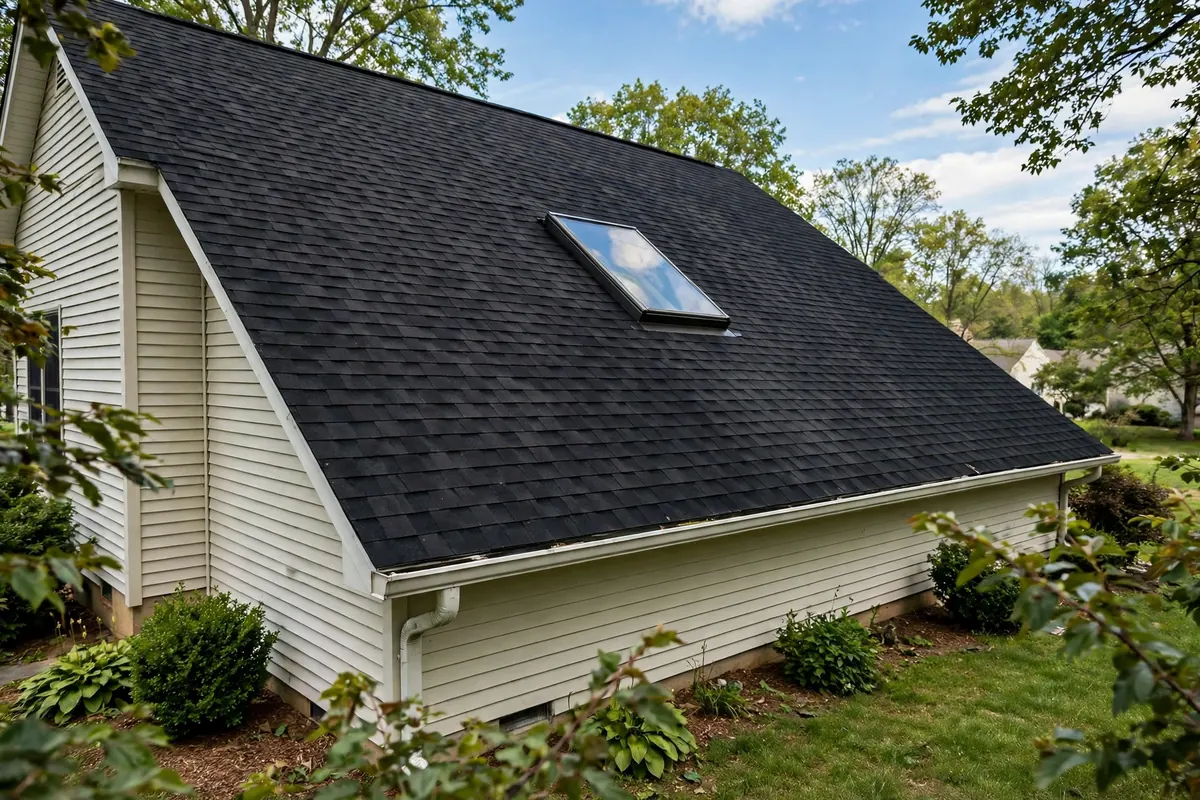
Leaks & New Skylights
A skylight is a hole in the roof with glass in it, and it only works when the seal and the flashing around it are right. We fix leaking skylights at the source, replace the ones that are past saving, and add new ones to roofs that never had them.

Why skylights leak
Skylight seal failure and condensation cause most skylight trouble, and the two get confused often. A failed seal lets rain in around the glass or the frame, while condensation forms when warm, damp indoor air meets the cold glass and drips back into the room. The stain looks the same from below, and the fix is different, so the first job is telling them apart.
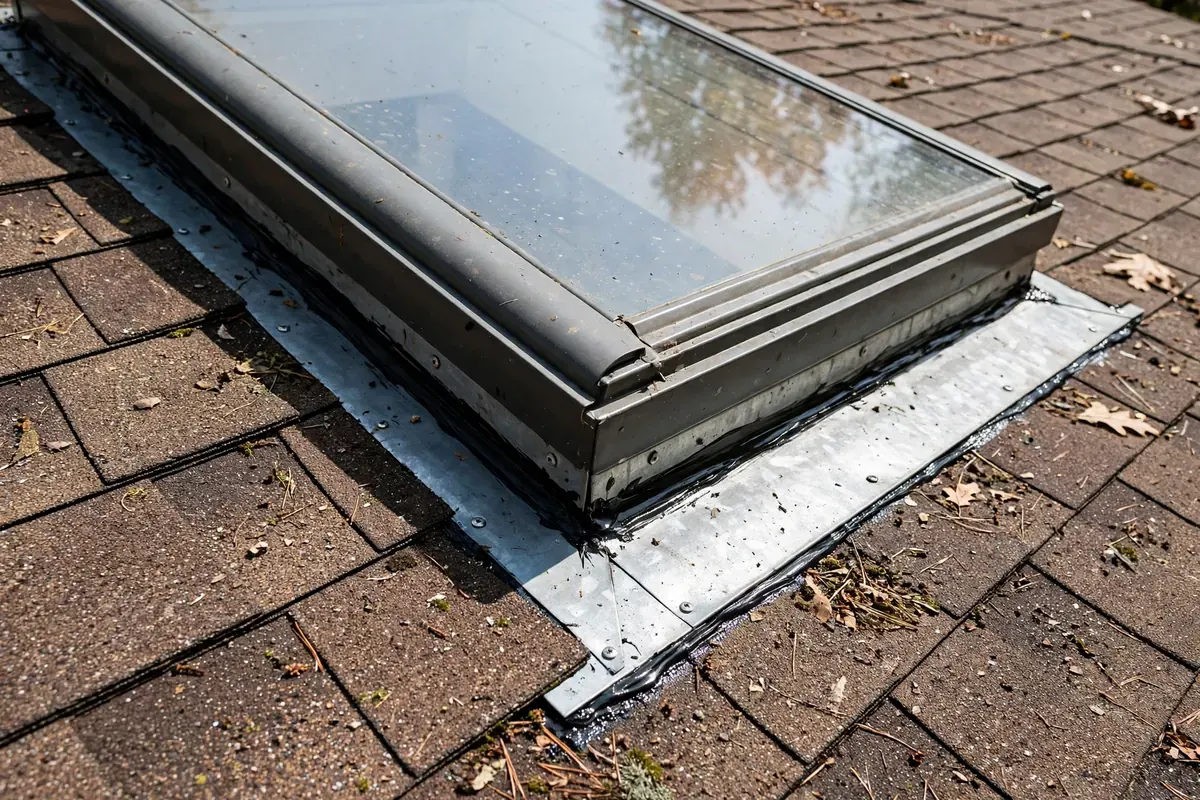
The flashing is the usual culprit. A skylight curb and flashing kit seals the joint where the skylight meets the roof, with step flashing up the sides and a head flashing across the top. When that flashing cracks, lifts, or was bent wrong in the first place, water runs behind it and into the shaft. Flashing replacement and re-sealing fixes the joint properly, and it holds because the metal is bent to fit.
Age matters too. A skylight that has served for decades may have a frame that has moved with the roof, a seal that has dried out, or glass that has fogged between the panes. At that point a repair patches a unit that will fail again at the next joint, and replacement is the honest answer.
Signs of trouble
Each of these points to the seal, the flashing, or the unit itself. Caught early, most are quick fixes.
Water dripping from the frame or the shaft in rain means the seal or the flashing has failed. The entry point is usually at the top edge, not the bottom.
A brown stain running down the light shaft marks where water has been traveling. The stain rarely sits under the leak itself.
Fog between the panes means the sealed unit has failed. The glass has lost its insulation, and the unit needs replacing, not cleaning.
Drops forming on the glass in cold weather mean warm, damp indoor air is meeting cold glass. The cause is usually ventilation, not a leak.
Flashing that has cracked or pulled away from the skylight curb leaves a straight path for water. The joint needs re-flashing.
A draft means the seal around the frame has dried out or the frame has moved. The room loses heat, and rain follows the same gap.
A skylight dripping in the rain? Call and get the seal and the flashing checked at the source.
Call (502) 922-5047Repair or replace
The answer depends on the unit, the flashing, and the roof around it.
Our rule of thumb: if the glass and the frame are sound, repair the seal and the flashing. If the unit itself has failed, a new skylight with a fresh flashing kit is the fix that lasts. A roof repair in Louisville that includes the skylight flashing covers both at once.
The flashing kit
A skylight flashing kit is a set of metal pieces made for one skylight size: step flashing up both sides, a head flashing across the top, and a sill flashing at the bottom, all lapped under the shingles so water steps down and away from the unit. The kit only works when it is fitted to the curb it was made for, and when the shingles are lapped over it in the right order.
Skylight replacement and re-flashing go together, because a new unit on old flashing inherits the old leaks. When we fit a new skylight, the old flashing comes off with it, the curb gets checked and repaired, and a fresh kit goes on with the new unit. A caulking gun and roofing sealant finish the edges where the metal meets the frame, but the sealant is the backup, not the seal: the metal does the work.
Dormer flashing sits beside skylight work, because dormers and skylights share the same problem: a joint in the middle of a slope that has to stay watertight through every storm. The same step flashing and counterflashing that seal a dormer seal a skylight curb, and the same care decides whether either one holds.
Adding a skylight
Yes, and the job is straightforward when the roof allows it. The opening is cut between the rafters, a curb is built and flashed, and the skylight is set into the curb with its flashing kit. The rafters around the opening get framed to carry the load, and the interior shaft is finished to bring the light down into the room.
The best spot is a slope that faces the sun you want: south for warmth and light through the day, north for steady light without the heat. The roof around the opening needs to be sound, because a new skylight on a worn roof inherits the roof's problems. When the roof is due for replacement anyway, the skylight goes in as part of that job, and the flashing is built into the new roof from the start.
Attic condensation at skylight shafts is the one surprise owners meet after a new skylight goes in. Warm, damp air from the house rises into the shaft and meets the cold glass, and the drops that form look like a leak. The fix is airflow, not a new seal: attic ventilation in Louisville keeps the air moving, and the shaft stays dry.
People also ask
Short answers to the skylight questions that come up most after a leak or before an addition.
Yes, when the roof around it is sound. The old unit and its flashing come off, the curb gets checked, and a new skylight with a fresh flashing kit goes in, with the shingles lapped back over the kit. When the roof is worn out anyway, the skylight goes in as part of the replacement.
Warm, damp air from the house meets the cold glass and condenses on it, and the drops run down the shaft. It looks like a leak, but it is condensation, and the fix is airflow in the attic, not a new seal. A fogged unit is different: that is a failed seal between the panes.
They can, on a south-facing slope in full sun. The glass brings in light and heat together, and a skylight without a shade or a blind will warm the room below it. A north-facing skylight brings steady light with far less heat, and a venting skylight lets hot air out at the top.
A skylight that drips is a skylight asking for a look. Call and get the seal and the flashing checked.
Call (502) 922-5047Frequently asked questions
Usually the flashing or the seal has failed. The flashing kit around the curb cracks or lifts with age, and water runs behind it into the shaft. A failed seal around the glass lets rain in at the frame. The stain rarely sits under the leak, so the flashing and the seal both need a close look to find the real entry point.
Yes, when the glass and the frame are sound. A failed seal can be re-sealed, and cracked flashing can be replaced with a fresh kit while the unit stays in place. When the glass has fogged between the panes or the frame has warped, the unit itself has failed, and a new skylight is the fix that lasts.
Yes. The opening is cut between the rafters, a curb is built and flashed, and the skylight is set in with its flashing kit. The rafters around the opening get framed to carry the load. The roof around the opening needs to be sound, and when it is due for replacement, the skylight goes in as part of that job.
A skylight often lasts 20 to 30 years, depending on the unit and the flashing around it. The seal and the flashing usually fail before the glass does, and a re-seal or a re-flashing can add years. A skylight that has fogged between the panes or warped at the frame is at the end of its run.
It depends on the rafter spacing and the slope. The opening fits between the rafters without cutting structure, and the slope sets how much light the skylight brings in. A roofer measures the bay and the pitch, and the size follows from those two numbers, not from a catalog page.
Yes, with a curb that raises the unit above the membrane so water cannot pool against it. The curb gets flashed into the membrane, and the skylight sits on top of the curb. A flat roof skylight needs a taller curb than a pitched roof one, because the water has nowhere to run.
Keep going
A skylight is part of the roof system. These pages cover the parts around it.
Roof repair in Louisville fixes the flashing and the shingles around a skylight at the source.
Learn more →Attic ventilation in Louisville keeps the air moving, so a skylight shaft stays dry instead of dripping condensation.
Learn more →Roof replacement in Louisville is the natural time for a new skylight, with the flashing built into the new roof.
Learn more →Where we work
Skylight work runs across Louisville and the towns around it, including skylight repair in Prospect KY, skylight repair in Fern Creek KY, skylight repair in Okolona KY, skylight repair in Valley Station KY, and skylight repair in Sellersburg IN. For every town we serve, see roofing across Louisville and Kentuckiana.
A drip, a fogged pane, or a new skylight you have been thinking about. Call or email and tell us what you see.