After a hailstorm or high wind
Hail bruises hide under the granules and wind lifts tabs you cannot see from the ground. A close look after a storm catches damage while it is still small.
Roof Health Check
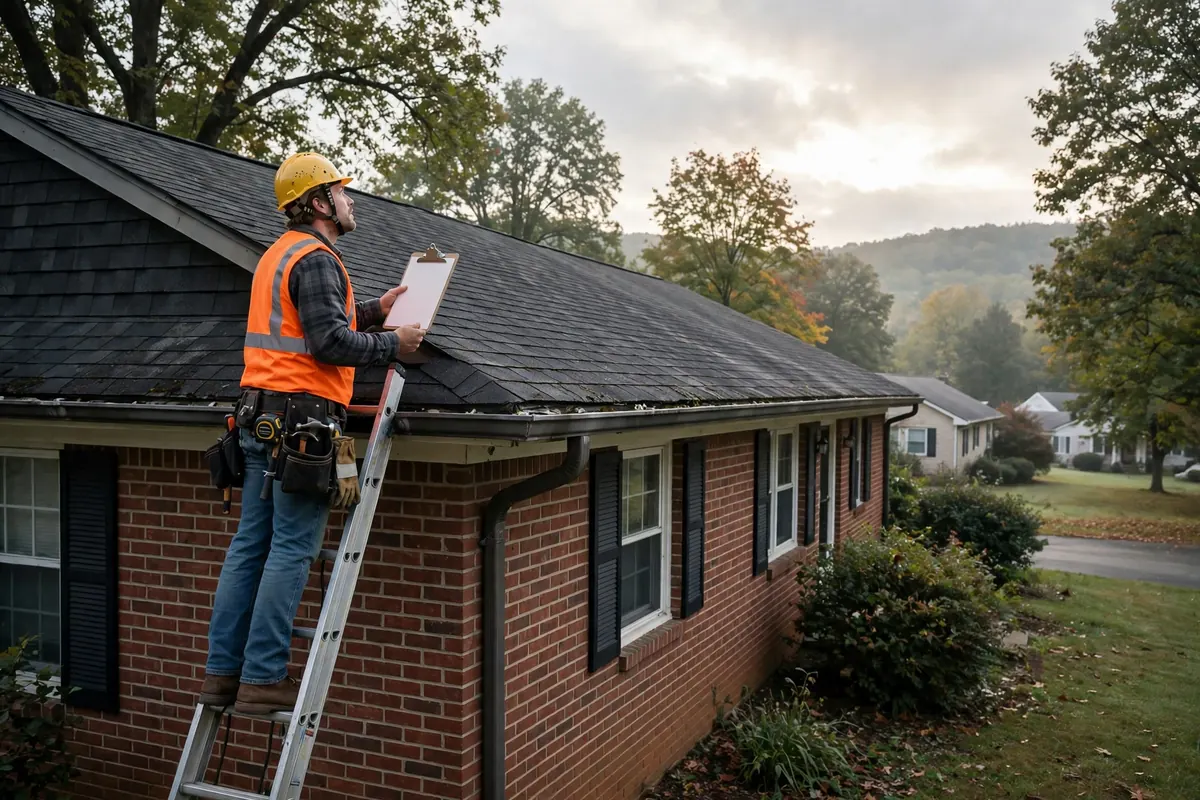
A roof inspection is a careful look at the whole roof system, not a glance from the driveway. We walk the roof, check the attic, and write down what is sound and what needs attention, in plain words you can act on.
What we look at
A good inspection reads the roof as a system. Shingles are only the top layer, and a roof can look fine from the street while the deck below is soft, the flashing is cracked, or the attic is holding damp air against the boards. We check all of it, because the surface alone rarely tells the whole story.
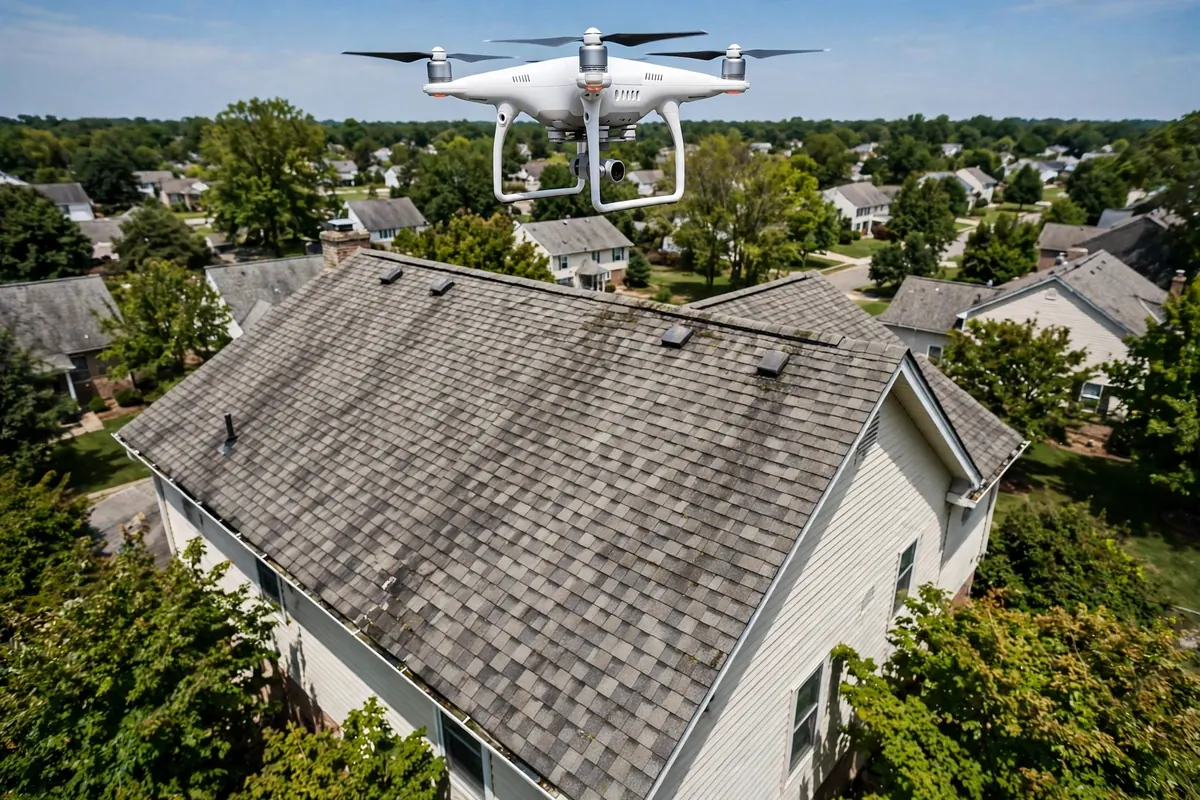
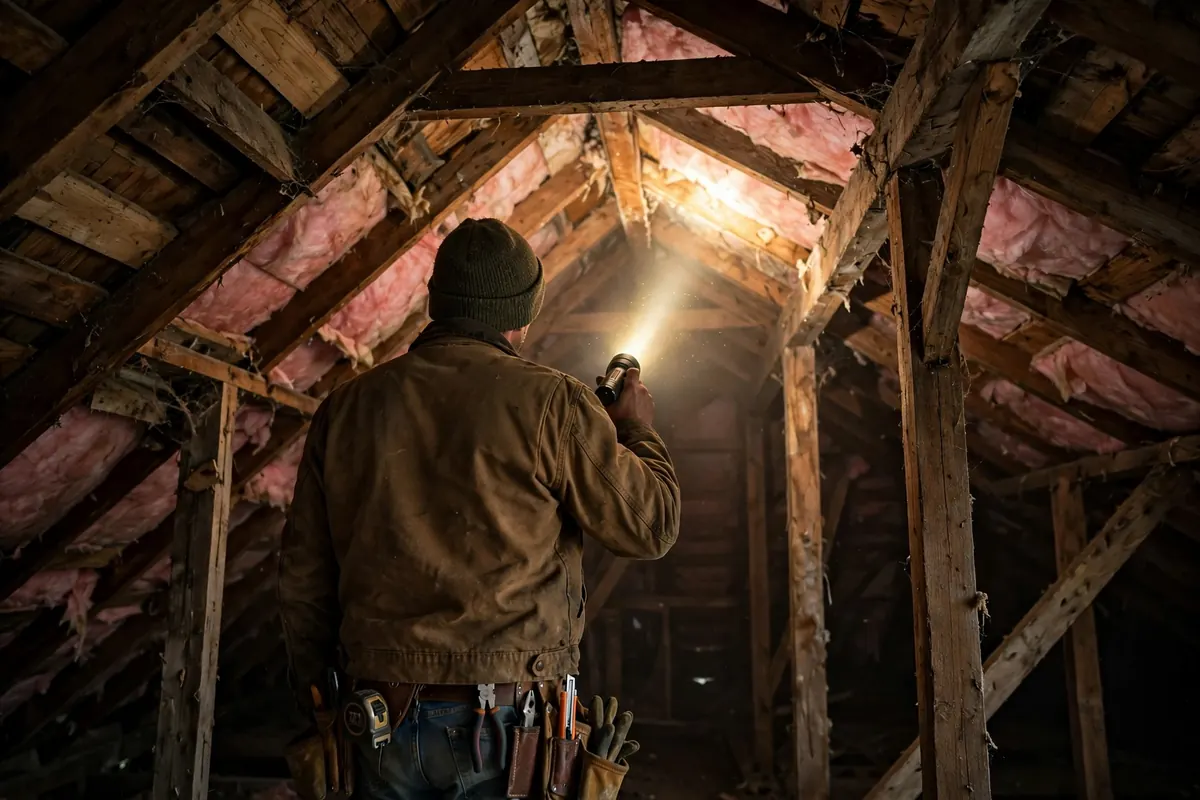
On the roof we look at shingle condition, granule loss, flashing at every joint, valleys, pipe boots, ridge caps, and the drip edge. In the attic we look at the deck from below, the insulation, the ventilation, and any stains that mark where water has been. A drone and aerial roof inspection helps on steep or tall roofs, giving a close view of slopes that are hard to walk safely.
The report you get is written in plain words: what is sound, what needs attention soon, and what can wait, with photos of anything we found. It is the basis for every decision that follows, whether that is a repair, a replacement, or simply another year of watching.
When to book one
Any one of these is a good reason to get a close look before the next storm tests the roof.
Hail bruises hide under the granules and wind lifts tabs you cannot see from the ground. A close look after a storm catches damage while it is still small.
A steady pile of coarse granules means the shingles are shedding their sun shield. The roof is aging fast, and an inspection shows how far it has gone.
Blisters from trapped moisture and heat mean the shingles are cooking from below. The cause is usually ventilation, and the attic holds the clue.
Pinpricks of light in the attic mean holes in the roof. Where light gets in, rain follows, and the deck around those holes is often soft.
A dip between the rafters or a wavy ridge line points to weak or rotted decking, or to trouble in the structure below. This one needs a look soon, not next year.
Moss holds moisture against the shingles and dark streaks mark algae feeding on the surface. Both hide damage underneath and shorten shingle life.
Not sure what shape your roof is in? Book an inspection and get the answer in plain words.
Call (502) 922-5047The checklist
Every inspection walks the same list, roof and attic together, so nothing gets skipped.
| Area | What we check | Why it matters |
|---|---|---|
| Shingles | Granule loss, curling, blistering, missing tabs | The surface shield against sun, hail, and wind |
| Flashing | Step, counter, and valley flashing, pipe boots | Most leaks start at a joint, not in the open field |
| Decking | Soft spots, sagging, daylight through boards | The foundation every other layer nails into |
| Attic | Stains, damp insulation, ventilation, daylight | Shows leaks and trapped moisture the roof hides |
| Gutters | Slope, clogs, sagging, fascia condition | Water that cannot drain runs down the walls |
| Ventilation | Ridge vent, soffit vents, airflow balance | A damp attic rots the deck from below |
Scroll sideways to see the full table.
Tools of the trade
Some roof trouble hides in places eyes alone cannot reach. A moisture meter reads damp in decking and insulation that looks dry, and an infrared camera shows cool, wet patches against warm, dry boards. A borescope reaches into tight spots around a chimney or a valley where a head cannot fit.
We also check past work against manufacturer installation specifications, because a roof that was installed wrong fails early in ways that look like age. Shingles nailed too high, flashing bent the wrong way, and vents set in the wrong place all leave a pattern, and the pattern tells us whether the fix is a repair or a redo of the detail.
None of these tools replaces walking the roof and looking. They add to it, and they give the report something a guess cannot: measurements and photos that show exactly what we found and where.
A sagging roofline is the deck telling you it has lost strength. We walk the roof to feel for soft spots and look from the attic for boards that are dark, damp, or split. Rotted sheathing cannot hold nails, so it has to be swapped before any new shingles go on, and the inspection report marks every soft board we find.
How a visit runs
One visit, roof and attic together, with a written report at the end.
Step 1
We look at the roof from the yard, noting the slope, the valleys, and anything that reads wrong from below, before any ladder goes up.
Step 2
Shingles, flashing, valleys, pipe boots, and ridge caps get a close look, with photos of every worn spot and every soft board.
Step 3
The deck from below, the insulation, the ventilation, and any stain that marks where water has been, with a moisture meter where the boards look damp.
Step 4
Drip edge, fascia, soffits, and gutter slope, because water that cannot drain properly comes back as a roof problem.
Step 5
What is sound, what needs attention soon, and what can wait, in plain words with photos, so you can decide with facts in hand.
How often, and when
A yearly visit suits most Louisville homes, with an extra one after hail or a long stretch of high wind. The spring visit finds winter wear before the summer storms arrive, and the fall visit finds loose flashing before cold rain sets in. Between those visits, a look from the ground after heavy weather is enough to spot trouble early.
A storm inspection is worth booking even when the roof looks fine from the street. Hail damage hides under the granules, and wind lifts tabs on the far slope you never see from the driveway. The inspection after a storm is the one that saves owners from a leak that shows up months later, when the trail back to the storm is cold.
An inspection is not a roofing quote. The inspection finds and records the condition of the roof; the quote prices the work that the findings call for. Keeping the two separate means the inspection stays honest, because it is not trying to sell the repair it recommends.
People also ask
Short answers to the inspection questions that come up most before a visit.
It helps, but it is not required. Being home lets us walk the attic with you and show you what we find as we find it. If you cannot be there, the written report with photos covers the same ground, and we talk it through with you after.
Often, yes. The attic holds the history of past leaks in stains and damp boards, even on a dry day, and a moisture meter reads damp that eyes miss. Hose testing can confirm a suspected entry point by wetting one section at a time.
Yes, the attic is half the inspection. The deck, the insulation, and the ventilation all show from below, and most leaks leave their clearest mark on the attic side of the boards. An inspection that skips the attic misses half the roof.
A roof that looks fine from the street can still carry storm damage. Book a close look and know for sure.
Call (502) 922-5047Frequently asked questions
It covers the shingles, flashing, valleys, pipe boots, ridge caps, and drip edge on the roof, plus the deck, insulation, and ventilation in the attic, and the gutters and fascia at the edges. You get a plain-words report with photos of anything found, saying what is sound, what needs attention soon, and what can wait.
Most Louisville homes do well with a visit each year, plus one more after a hailstorm or a long stretch of high wind. The spring visit looks for winter wear before the summer storms, and the fall visit looks for loose flashing before cold rain. Between visits, a look from the ground after heavy weather is enough.
Yes, even when the roof looks fine from the street. Hail bruises hide under the granules and wind lifts tabs on slopes you never see from the driveway. A close look after a storm catches damage while it is still small, and the photos give you a clear record of what the storm did.
An inspection finds and records the condition of your roof, while a roofing quote prices the work those findings call for. The inspection comes first and stays honest because it is not trying to sell the repair it recommends. The quote follows, built on the facts the inspection found.
Most single-family homes take under an hour from ladder up to report, depending on the size of the roof and how much attic there is to check. Steep or tall roofs take longer, since the drone and the attic both get a fuller look. The report follows the same day in most cases.
You get a written report in plain words, with photos of anything we found: what is sound, what needs attention soon, and what can wait. It names the spots by slope and by part, so you can see for yourself where the trouble sits and decide what to do next.
It gives a sound reading, not a promise. The report weighs the shingle wear, the deck, the flashing, and the attic together, and says whether the roof has years left or is near the end of its run. The reading is honest because it rests on what was seen, not on a guess from the driveway.
Keep going
An inspection usually points somewhere next. These pages follow the findings.
Storm damage roof repair in Louisville finds hail bruises and wind-lifted shingles, documents them, and repairs them.
Learn more →Roof repair in Louisville fixes the leaks and worn flashing an inspection turns up, at the source.
Learn more →Attic ventilation in Louisville fixes the damp, hot attic that cooks shingles and rots decking from below.
Learn more →Where we work
Roof inspections run across Louisville and the towns around it, including roof inspection in St. Matthews KY, roof inspection in Jeffersontown KY, roof inspection in Shively KY, roof inspection in Middletown KY, roof inspection in Clarksville IN, and roof inspection in Shepherdsville KY. See roofing across Louisville and Kentuckiana for the full list of towns we serve.
Book an inspection and get the roof and the attic checked together, with a plain-words report and photos.