Warped or buckled panels
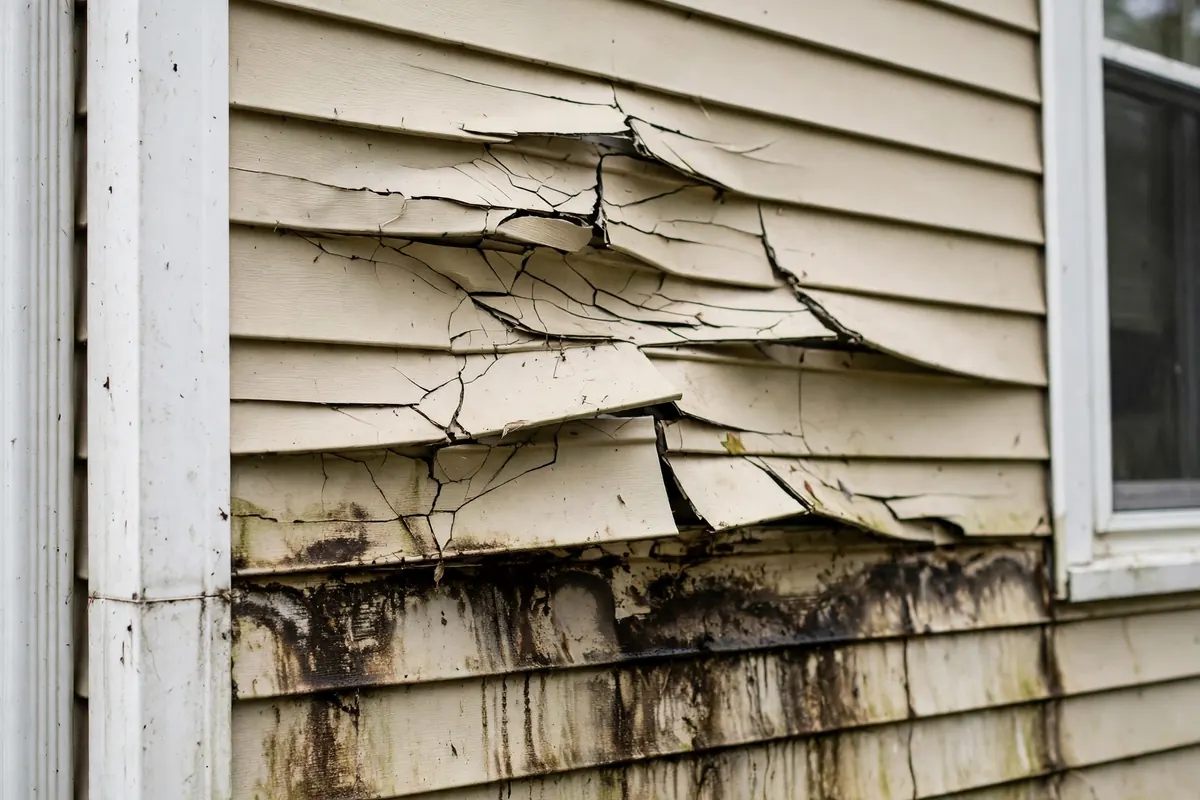
Panels that warp or buckle have been nailed too tight or have taken water behind them. Warping that spreads across a wall means the boards below are wet.
Envelope & Wall Repair
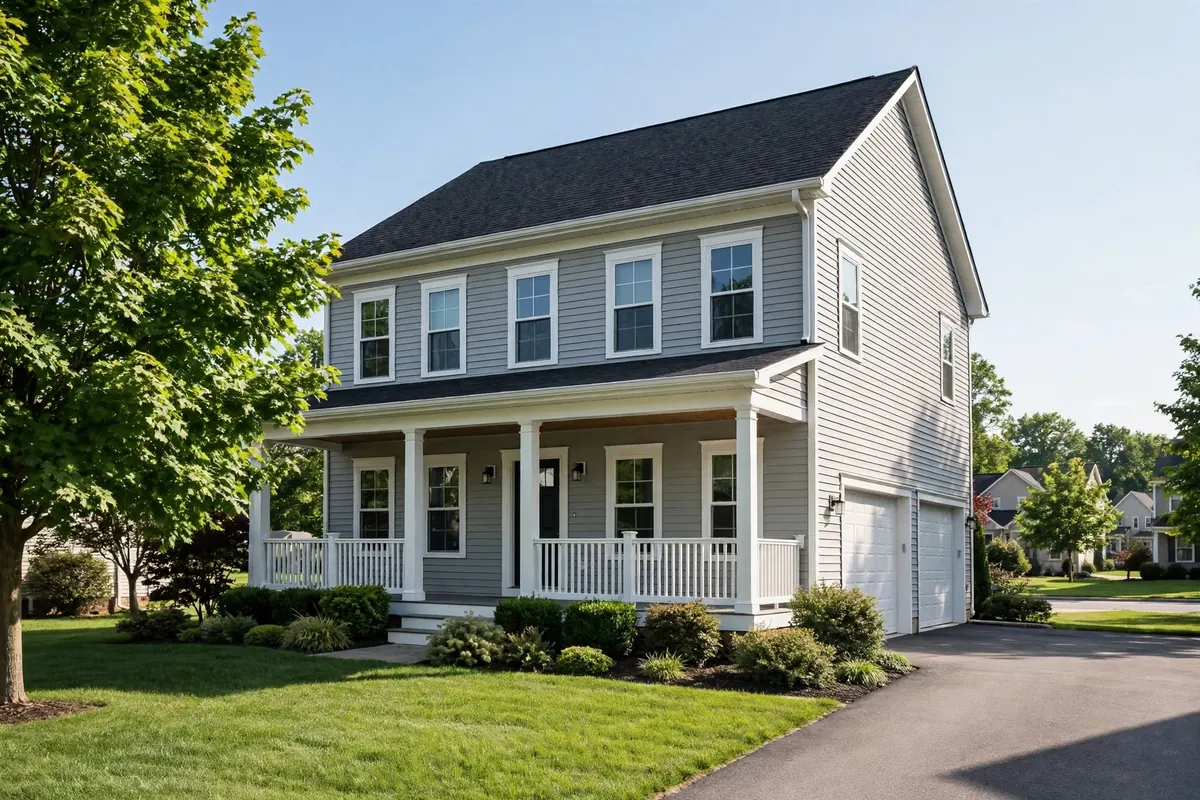
Siding and roofing are one system, not two jobs. The wall meets the roof at every eave and valley, and water that gets past the siding ends up in the same places a roof leak would. We repair and install siding with the roofline in mind, so the whole envelope holds together.
When siding fails
Siding water intrusion behind failed flashing is the most common siding problem we see in Louisville, and it starts where the wall meets the roof. Wall flashing where roof meets siding seals that joint, and when it cracks, lifts, or was bent wrong, water runs behind the siding and into the wall, where it rots the sheathing and feeds mold out of sight.
Freeze-thaw damage to siding joints is the Louisville part of the story. Winter nights below freezing followed by mild days let water creep into the joints and refreeze, prying them apart a little more each time. Caulk that has dried out and joints that have opened up are the weak points, and they show first on the south and west walls that take the most weather.
Squirrel, raccoon, and bird entry at the roofline is the other kind of siding failure, and it is easy to spot: a chewed corner, a hole under the eave, or a loose panel where an animal has pushed through. The repair closes the entry, and the flashing and the soffit get checked at the same time, because the animals found the weak spot first.
Signs of trouble
Each of these means the wall is taking water, or is about to. Caught early, most are quick fixes.
Panels that warp or buckle have been nailed too tight or have taken water behind them. Warping that spreads across a wall means the boards below are wet.
Cracks from hail or impact, and holes from animals, leave straight paths for water. A cracked panel needs swapping, not sealing.
A stain running down the siding marks where water has been traveling behind it. The entry point is usually above the stain, at a joint or a flashing edge.
Panels that rattle or hang loose have lost their lock or their nails. Wind gets under a loose panel and peels the wall open course by course.
The bottom courses sit closest to the ground and the splash, so they rot first. Soft boards at the base mean water has been sitting against the wall.
Paint that peels in patches often means damp is pushing out from behind the siding. The paint is the symptom; the water behind it is the cause.
Warped panels, a stain on the wall, or a hole under the eave? Call and get the envelope checked, not just the surface.
Call (502) 922-5047The roofline joint
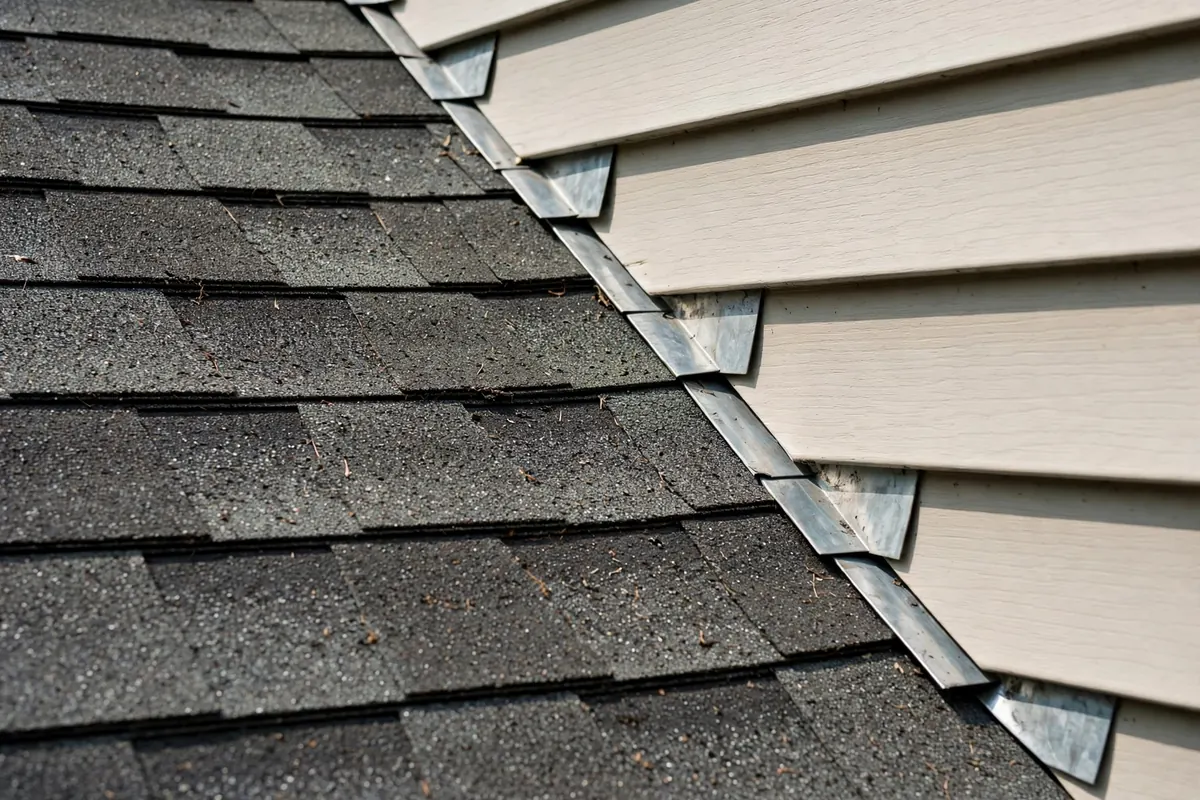
Step flashing where siding meets the roofline runs up the wall in small overlapping pieces, each one tucked under a siding course and over a shingle course, so water steps down and away from the joint. When that flashing fails, the water runs behind the siding and into the wall, and the stain shows up rooms away from the joint that let it in.
Fascia and soffit boards frame the same joint from below. The fascia carries the gutter, and the soffit closes the eave, and both have to stay sound for the wall and the roof to meet cleanly. Soffit and fascia repair goes with siding work whenever the boards are soft, because a rotted fascia lets the gutter sag and the wall take the water the gutter was meant to carry.
A caulking gun and roofing sealant finish the joints where the flashing meets the siding, but the sealant is the backup, not the seal: the metal does the work, and the sealant keeps the wind-driven rain out of the hairline gaps. Joints that rely on sealant alone, with no flashing behind them, fail with the first season of freeze and thaw.
Repair or replace
The answer depends on how far the trouble has spread, and what the wall looks like underneath.
Our rule of thumb: if the trouble is local and the wall below is dry, repair it. If the trouble is spread across the house and the sheathing is wet, a full reside stops the cycle. A roof repair in Louisville that includes the wall flashing covers the joint both trades share.
Know the parts
Siding talk has its own vocabulary. These are the parts and pieces that come up when we look at a wall together.
Roofing and siding together
Often, yes, and the reason is the joint they share. The wall flashing, the fascia, and the soffit sit between the two trades, and doing them together means the joint is built once, properly, instead of being opened twice. A re-roof that leaves old, failed wall flashing in place inherits the old leaks, and a reside that leaves a worn roof edge in place inherits the same problem from the other side.
Doing them together also saves the house a second round of ladders, tarps, and disruption. The crew is already there, the roof edge is already exposed, and the flashing can be fitted to the new roof and the new siding in one pass. The written scope names both jobs, so the owner holds one plan for the whole envelope.
When the two jobs run apart, the flashing still has to be right. A new roof with old siding needs its wall flashing fitted to the siding that is already there, and new siding with an old roof needs its flashing fitted to the roof that is already there. Either way, gutters in Louisville complete the envelope, carrying the water the roof and the walls shed away from the house.
People also ask
Short answers to the siding questions that come up most after a storm or a stain.
Yes, when the siding itself is sound and only the finish has worn. Paint covers fading and small wear, but it cannot fix warping, rot, or water behind the panels. A wall that takes water needs its flashing and its sheathing checked first, whatever the paint looks like.
Fiber cement and vinyl both hold up well in Louisville weather, with fiber cement lasting longer and holding paint better. Wood siding suits historic homes but needs more care against damp and pests. The flashing and the joints matter more than the material, since water gets in at the joints first.
Look for stains running down the wall, paint peeling in patches, and soft boards at the bottom courses. Inside, a damp smell or a stain on the wall near a roof joint points the same way. A roofer checks the flashing at the joint and the sheathing below it to confirm where the water is getting in.
Sometimes, when the old siding is flat, sound, and firmly fixed, and the wall below is dry. But layering hides rot and adds weight to the wall, so a tear-off is the safer choice when the old siding is warped or the sheathing is in doubt. The flashing has to be refitted either way.
A wall that takes water needs its flashing checked, not just its paint. Call and get the envelope looked at properly.
Call (502) 922-5047Frequently asked questions
Look at the pattern. Warping on one wall, a few cracked panels, or one loose course usually means a repair. Warping and rot on several walls, siding faded past matching, or wet sheathing below usually means a full reside. The wall below the siding decides it, and a close look at the flashing and the sheathing settles the question.
One area can usually be repaired when the trouble stays local and the panels around it are sound and match. The repair swaps the damaged panels, fixes the flashing behind them, and the wall reads even from the street. When the damage is spread across the wall, a section replacement reads cleaner than a patchwork of repairs.
Failed flashing where the wall meets the roof is the most common cause, letting water run behind the siding and into the wall. Freeze-thaw cycles open the joints, dried-out caulk leaves gaps, and a missing or cracked chimney cap lets water in from above. The water shows up as stains, rot, and peeling paint, often far from the joint that let it in.
Often, yes. The wall flashing, fascia, and soffit sit between the two trades, and doing them together means the joint is built once, properly, instead of being opened twice. A re-roof that leaves old, failed wall flashing in place inherits the old leaks, and the crew is already there, so the disruption happens once.
Vinyl and fiber cement suit most Louisville homes, with vinyl for a clean, low-care finish and fiber cement for a longer-lived, paintable surface. Wood siding suits historic homes that already carry it. The choice follows the house, the street, and the plan, and the flashing and the joints matter more than the material.
Usually, yes, when the siding is still made and the color has not faded too far. A repair uses the same profile and the closest color match, and the new panels weather in over a season or two. On a faded wall the new panels may read slightly brighter at first, then blend in with time.
Keep going
Siding shares its joints with the roof and the gutters. These pages cover the whole envelope.
Roof repair in Louisville fixes the wall flashing and the roof edge that siding depends on.
Learn more →Gutters in Louisville carry the water the roof and the walls shed away from the house.
Learn more →Roof replacement in Louisville is the natural time for siding, since the joint between them is already open.
Learn more →Where we work
Siding work takes us across Louisville and the towns around it, to siding repair in Crestwood KY, siding repair in Goshen KY, siding repair in Shelbyville KY, siding repair in Simpsonville KY, and siding repair in Mount Washington KY. The full list of towns we serve is on roofing across Louisville and Kentuckiana.
A warped panel, a stain on the wall, or a whole house that needs residing. Call or email and tell us what you see.