Replace together when
- The gutters are the same age as the roof.
- The gutters sag, rust, or leak at the seams.
- The fascia behind them is soft or rotted.
- The downspouts cannot carry a spring downpour.
- The drip edge is being replaced with the roof.
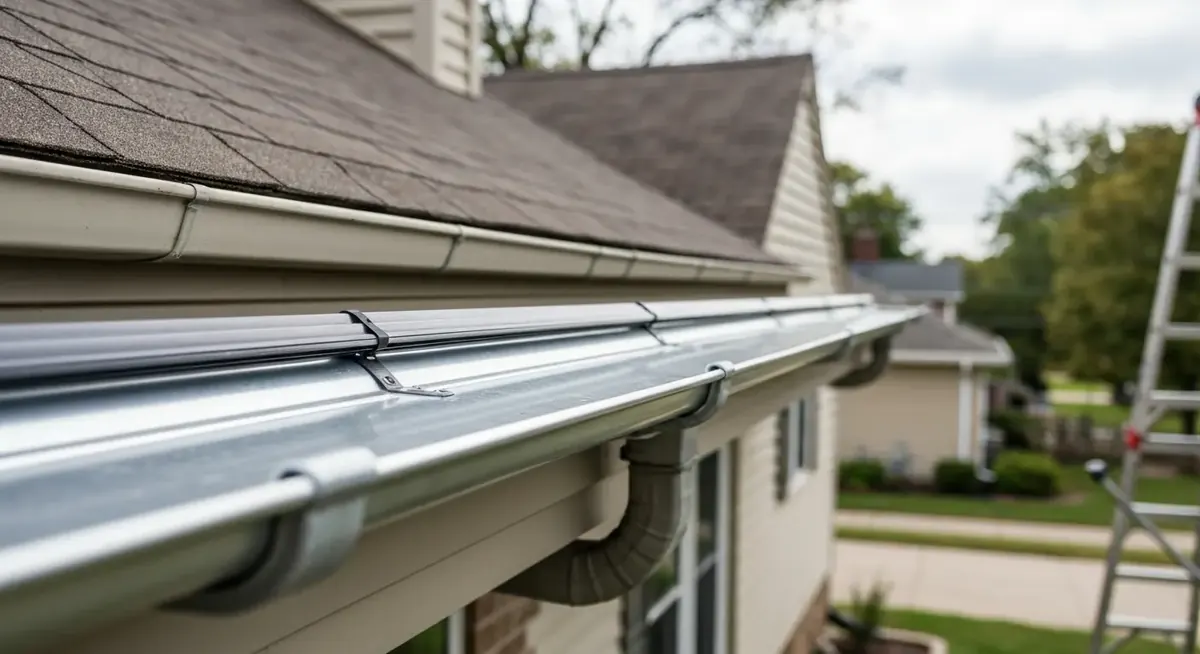
Gutters and Roof
A new roof and old gutters are a mismatch: the roof is built to last decades, and the gutters hanging from it are already tired. Replacing them together is often the right call, but not always.
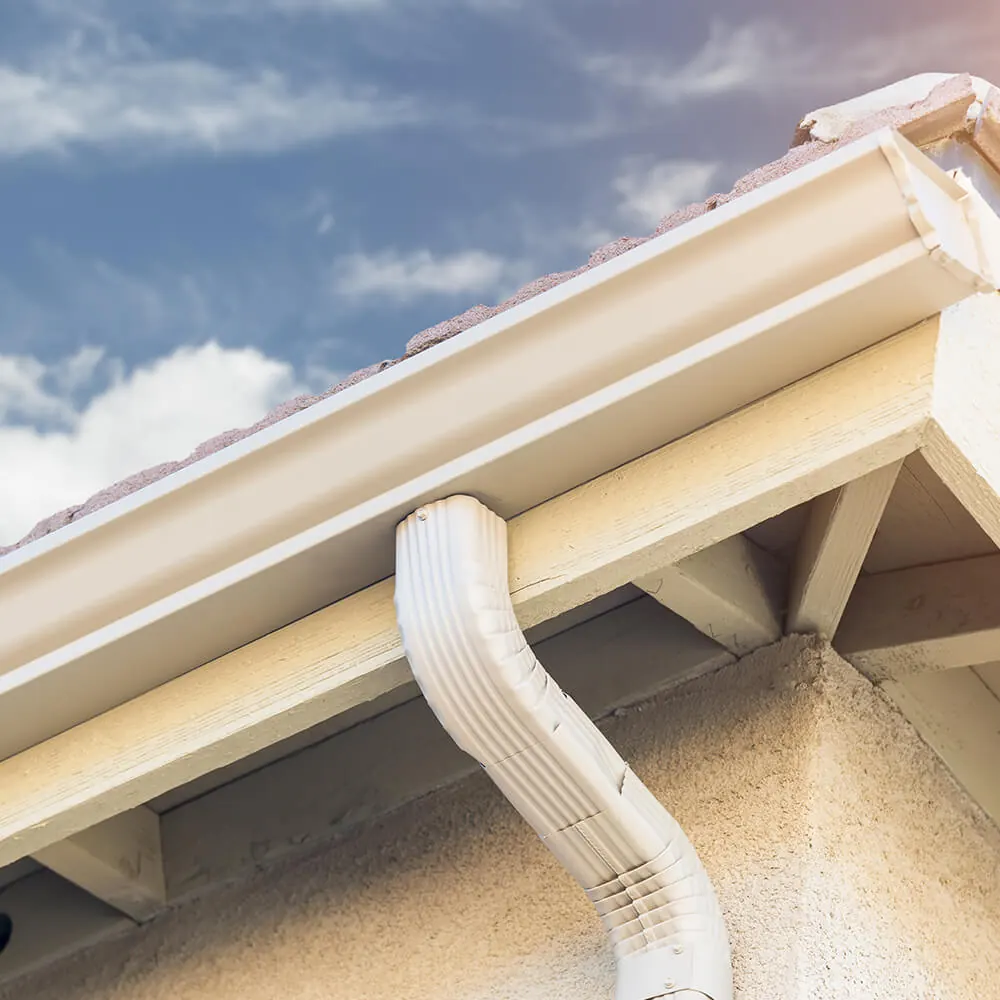
Together
A roof and its gutters face the same weather for the same years: the same hail, the same wind, the same freeze and thaw. When the roof is near the end of its run, the gutters usually are too, with the same granule wash, the same rust at the seams, and the same sag between hangers. Replacing them together means the whole water system is new at once, and the new roof drains into gutters that can carry it.
The timing lines up in the work itself. During a reroof, the drip edge is replaced, the fascia is exposed, and the crew is already on the roof and at the eaves. The gutters come off and go back on as part of the same job, with the new drip edge and the new gutters fitted together so the water runs from the shingles into the trough without a gap. Done separately, the gutter job means a second crew, a second ladder, and a second look at the same fascia.
The fascia is the link between them. The gutter hangs from the fascia, and the fascia is the board the drip edge covers. A reroof exposes the fascia, and any rot in it is found and fixed while the roof is open. A gutter fitted to a rotted fascia sags and pulls away, so the reroof is the moment to make the fascia sound. Gutters and gutter guards in Louisville cover the gutter side of the job.
Together or later
The age and the condition of the gutters decide it. Sound gutters can wait; tired gutters belong with the roof.
The test is simple: look at the gutters the way you look at the roof. If they show the same wear, the same age, and the same trouble, they belong in the same job. If they are sound and young, leave them, and spend the attention on the roof itself.
New roof on the way? Call and ask whether the gutters belong in the same job.
Call (502) 922-5047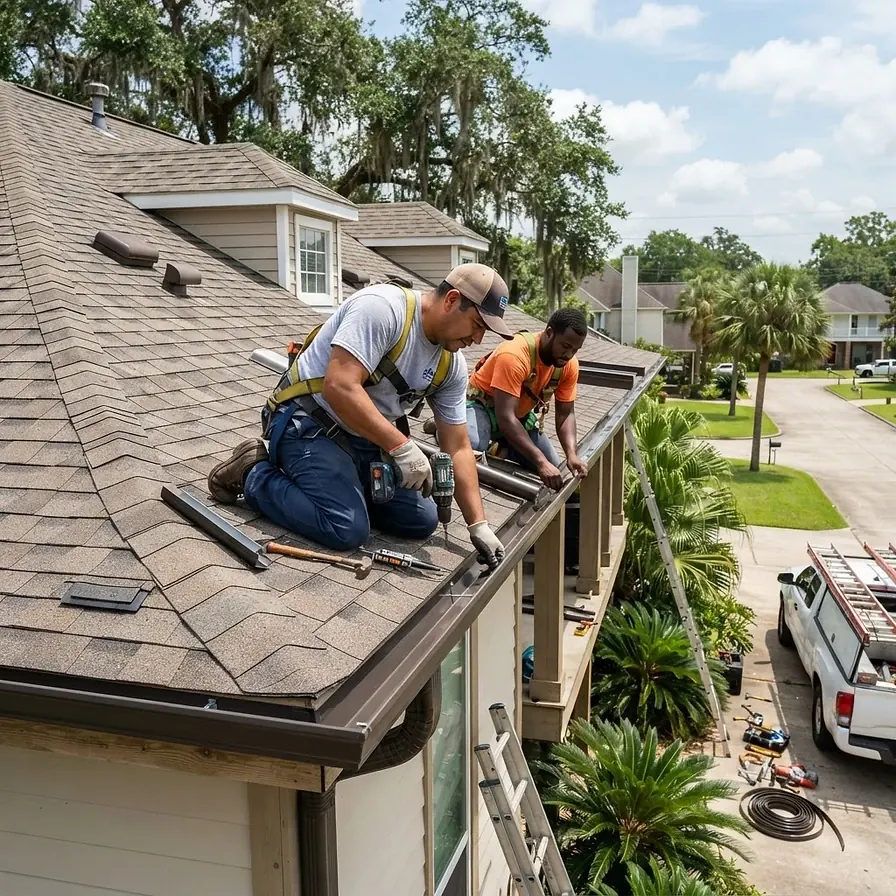
The details
The drip edge is the metal strip along the eaves that guides water from the shingles into the gutter, and it is replaced with the roof. A new drip edge with old gutters can leave a gap, since the old gutter was fitted to the old edge, and the water can run behind the gutter and down the fascia. Fitting the two together, in the same job, closes that gap.
The gutter size matters too. A new roof with a larger area or a steeper pitch moves more water faster, and the old gutters may not carry it. A roofer sizes the gutters to the roof during the reroof, so the troughs and the downspouts match the water the new roof sheds. Roof replacement in Louisville and the gutter work are planned together for that reason.
After the roof
A gutter replaced a year before the roof is not a wasted job. It is a gutter that stays, and the roof work goes around it.
Gutters replaced recently, and still sound, stay through the reroof. The crew takes them down carefully, does the roof work, and refits them to the new drip edge, checking the slope and the hangers as they go. The gutter is not disturbed more than it has to be, and the fascia is checked while the gutter is off.
The same applies to gutter guards fitted recently. The guards come off with the gutters, the roof goes on, and the guards go back on the refitted gutter. A guard that is still sound is not replaced for the sake of it, and the reroof is the moment to check that the guard still fits the gutter below it.
People also ask
Short answers on gutters and roofs, and when to change them together.
Yes, a gutter swap does not touch the shingles. The gutter is screwed to the fascia board, so the crew unhangs the old trough, checks the board behind it, and hangs the new gutter in its place. The roof covering stays put through the whole job, and the drip edge at the eave is the only roof part looked at.
When they sag, rust, leak at the seams, or spill over the edge in rain, and when the fascia behind them is soft. Gutters the same age as a roof near the end of its run are usually ready together. Sound gutters under ten years old can wait, and the roof work goes around them.
It turns on the roof area and the pitch above each run, since a larger or steeper roof sheds more water faster. A roofer sizes the troughs and the downspouts to the roof during the job, so the gutters carry a spring downpour without spilling over the edge.
Planning a reroof? Call and talk through the gutters at the same time.
Call (502) 922-5047Frequently asked questions
It depends on their age and condition. Gutters the same age as the roof, with sagging, rust, or leaking seams, belong in the same job, since the drip edge and the fascia are already exposed. Sound gutters under ten years old can stay, and the crew refits them to the new drip edge.
Yes, the gutters come off so the drip edge and the fascia can be worked on, and they go back on after the new roof is laid. Sound gutters are refitted to the new drip edge, with the slope and the hangers checked. Gutters that are worn are replaced in the same job, fitted to the new edge.
It is a metal strip along the eaves that guides water from the shingles into the gutter and keeps it from wicking back under the shingles. A new drip edge with old gutters can leave a gap, so the two are fitted together during a reroof, and the water runs from the shingles into the trough.
Yes, it is a good time to do it. The gutters are already being looked at during a reroof, and the drip edge and fascia are exposed, so the guard goes on a system that has just been checked. If the gutters are sound and sloped right, the guard is a simple addition on top of good work.
Seamless aluminum gutters often last about 20 years or more here, and their life turns on the fascia behind them and the cleaning rhythm. A gutter that is cleaned twice a year and hung on sound fascia runs longer than one that clogs each fall and sags between its hangers.
Barely, when the color matches the fascia and the trim. A new gutter reads as a clean line along the eave, and the change from the street is a tidier edge rather than a new look. The roof itself is untouched by the gutter work, since the gutter hangs from the fascia, not from the shingles.
Keep reading
For the guard question, read gutter guards: worth it on a Louisville home, and for the cleaning rhythm, read gutter cleaning schedule for Louisville homes.
Call and we will look at the gutters and the fascia with the roof, and tell you plainly whether they belong in the same job.