Call (502) 922-5047
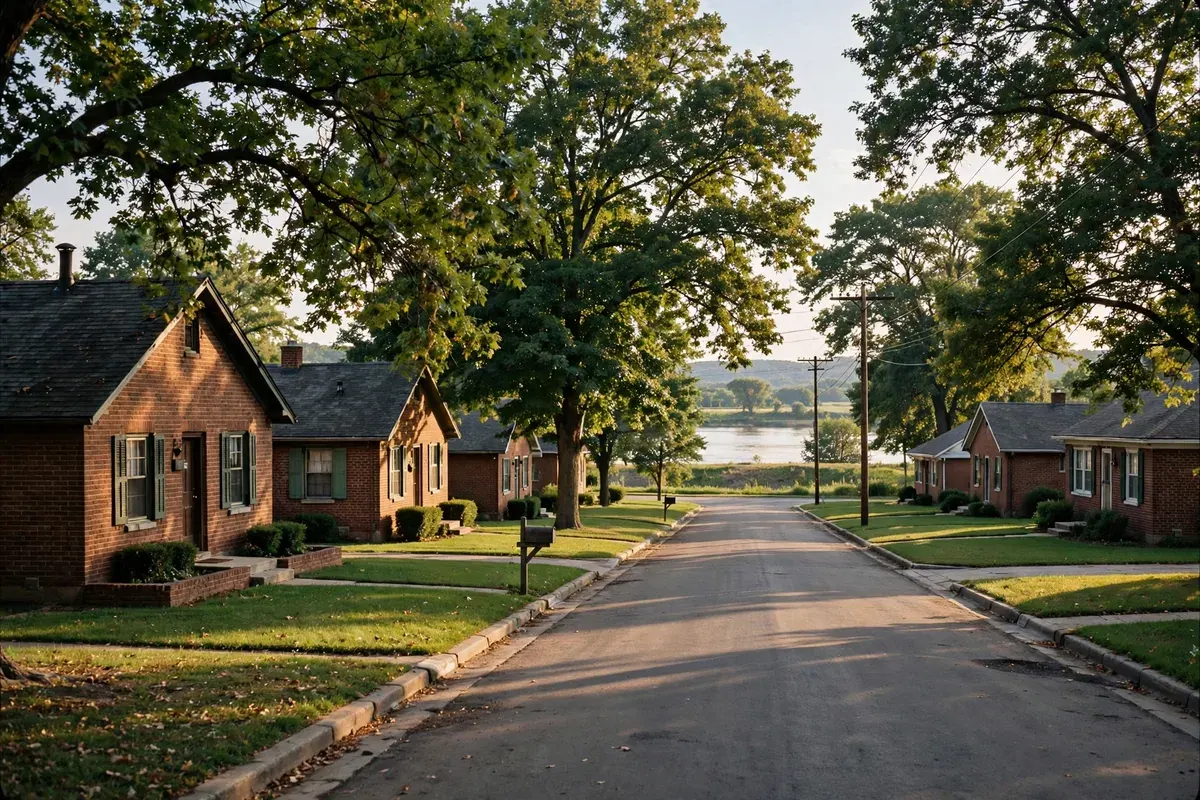
A street in Clarksville, Indiana, near the Ohio River, with brick ranch houses and pitched shingle roofs

Falls of the Ohio

Clarksville Ranch Roofs on the Floodplain: Drainage First

Clarksville ranches sit on the broad river floodplain, where drainage and flashing matter more than on higher ground, and the 1950s stock is at replacement age. We work on roofs across town, and every job here starts with the same question: where does the water go?

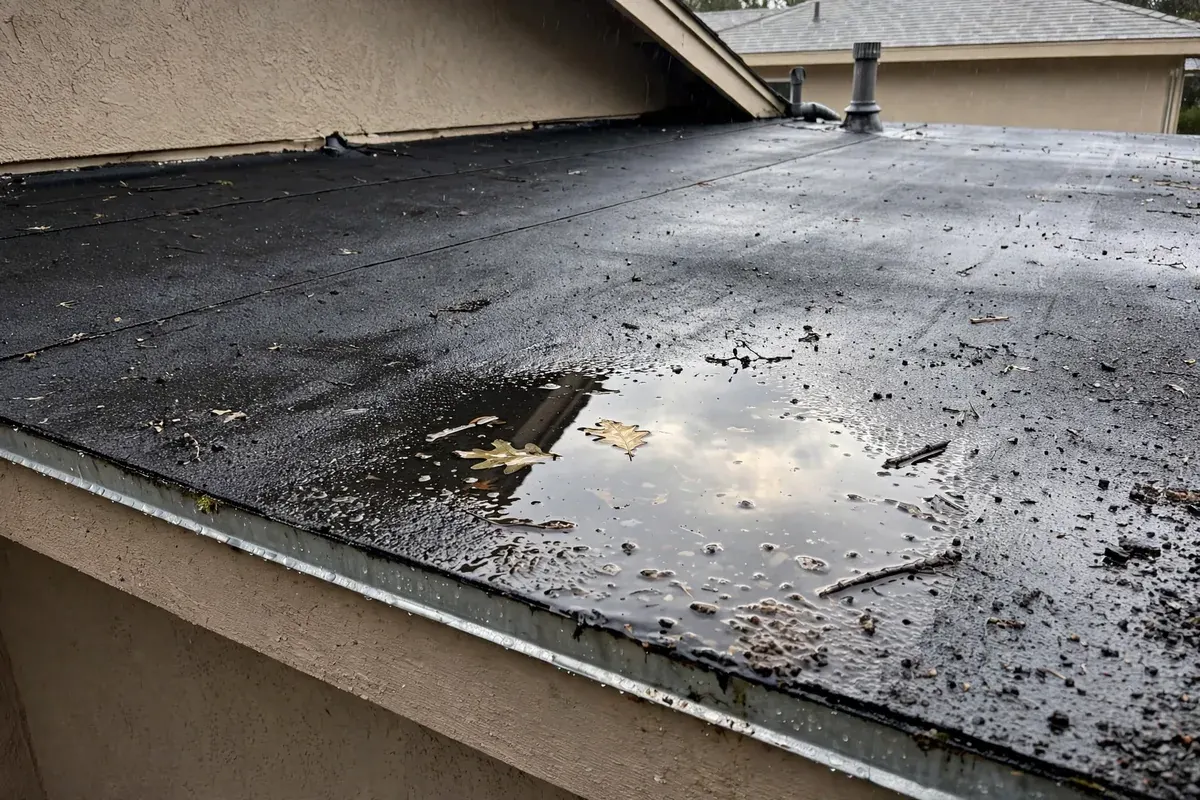
Low-slope roof section on a Clarksville ranch addition with ponding water after rain

Clarksville, IN

Ranches on the broad river floodplain

Clarksville sits on the north bank of the Ohio River, between New Albany to the west and Jeffersonville to the east, abutting Sellersburg to the north, and it runs about nine miles long north to south. The town was founded in 1783. The housing runs from 1950s to 1970s brick ranches and Cape Cods in the older grid to 1980s to 2000s subdivisions, patio homes, and townhomes, with a growing number of renovated homes and a few riverfront and new-construction pockets. Most homes have one-car garages or carports and mid-sized yards, and the Clark-McKinley district holds about two dozen compact 1940s Minimal Traditional houses.

A broad flat Ohio River floodplain is the local condition that shapes roof work here. The floodplain is documented for the town, so drainage, flashing, and low-slope details matter more than on higher ground, and the flat land holds moisture in the air after rain. The large stock of 1950s to 1970s ranches is at replacement age, with granule loss, curling tabs, and flashing wear showing across whole slopes. The symptom is often a gutter that overflows under mature street trees, a low-slope section that ponds water after rain, or a stain near a valley. The floodplain is a local condition to plan around, not a defect, and the roof work starts with drainage and flashing.

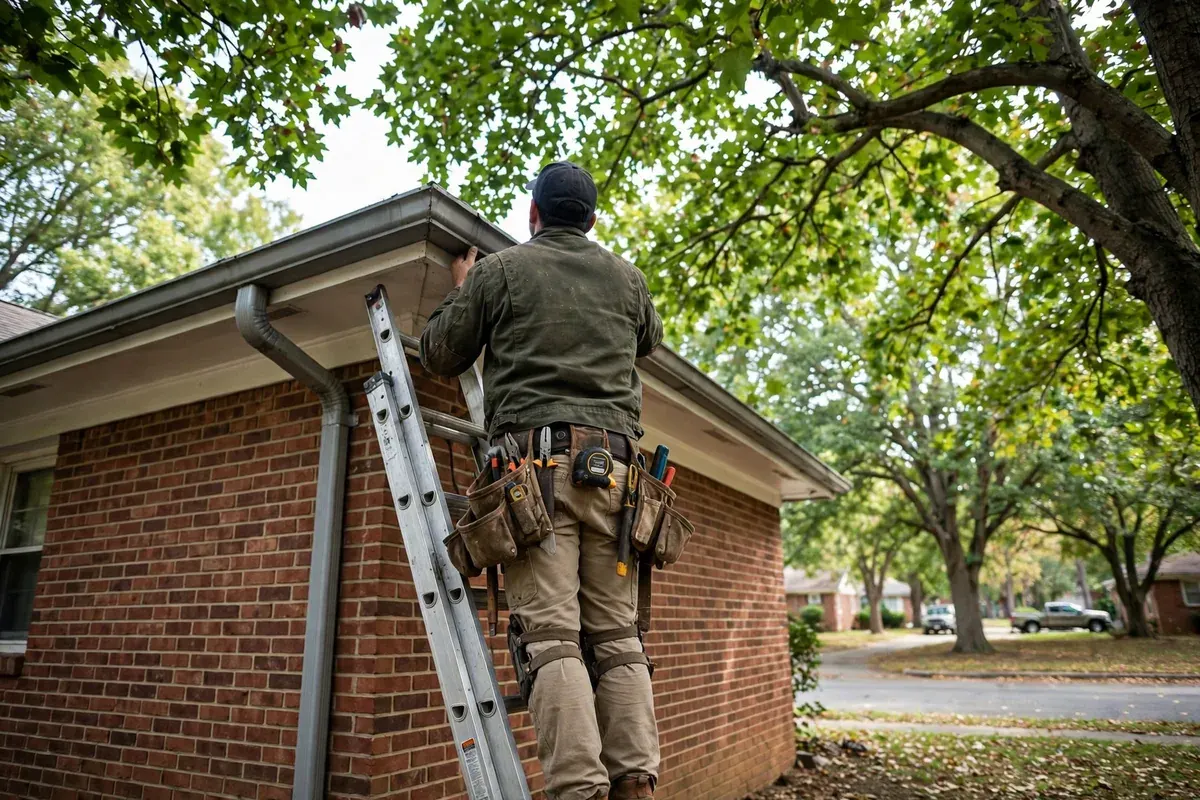
Roofer checking gutters and downspouts on a Clarksville ranch under mature street trees

Homes & roofs

Clarksville ranches, then and now

Clarksville housing runs from 1950s to 1970s brick ranches and Cape Cods in the older grid to 1980s to 2000s subdivisions, patio homes, and townhomes. Blackiston Heights, Blackiston Mill, Green Acres, the Clark-McKinley Historic District, the Centralia Court Historic District, Fairlawn, Victory Court, River Hill, Springdale, Greentree, Lapping Park, Ashland Park, Eagle Ridge, Deer Run, Plum Creek, Meyer Manor, Dover Woods, Parkwood, Windemere, Southgate, and Midway hold much of the stock. Falls of the Ohio State Park sits at the foot of the Falls, with its fossil beds, and Green Tree Mall and the Veterans Parkway and Lewis and Clark Parkway retail corridor anchor the shopping. The town sits about a ten-minute drive from downtown Louisville by the Second Street and Sherman Minton bridges.

In Clarksville, the floodplain and the age of the house decide the roof work. The 1950s to 1970s ranches are at replacement age, and their roofs show granule loss, curling tabs, and flashing wear across whole slopes. The low-slope sections on older additions pond water after rain, and the drainage, flashing, and gutter lines around them deserve a careful roof-level check. The mature street trees drop leaves into every gutter each fall. The Ohio River runs to the south, and I-65 and I-265 carry the main corridors, with Veterans Parkway, Lewis and Clark Parkway, and Eastern Boulevard carrying the local traffic.
Local trouble

Drainage, old ranches, and tree-filled gutters

Clarksville roofs

Floodplain drainage and flashing

The broad flat floodplain holds moisture after rain, so drainage, flashing, and low-slope details matter more here than on higher ground. A clogged gutter or a worn valley flashing shows up faster on flat land, and the fix starts with water movement.

Clarksville roofs

1950s to 1970s ranches at replacement age

The large stock of 1950s to 1970s ranches carries roofs at replacement age, with granule loss, curling tabs, and soft decking near the eaves. A deck check settles it: sound boards mean a repair can wait a little longer, and soft boards mean replacement is the honest answer.

Clarksville roofs

Gutter overflow from mature street trees

Mature street trees drop leaves into every gutter each fall, and a clogged gutter spills water over the edge and back under the shingle edge. Clearing the run and checking the fascia and drip edge with it stops most of the damage.

Gutters overflowing or a low-slope section holding water? Call and we will start with the drainage.

Call (502) 922-5047

Roof choices

What covers a Clarksville ranch best, in plain words

Architectural shingles. For most Clarksville ranches, architectural shingles are the straightforward choice. The simple pitches suit them, and they stand up to Ohio Valley hail better than the thin three-tab roofs they replace. Floodplain damp wears the granules down faster than the calendar says, so the windward slopes get the closest look.

Standing seam metal. Standing seam metal fits the 1950s brick ranches where wind exposure is high. It sheds rain and hail fast, and the seams hold where shingles lift. River wind works the fasteners and the flashing at every joint, so those joints deserve a careful check every year.

Membrane for low-slope sections. Low-slope sections on older additions need a membrane, not shingles. A flat section holds water after rain, and a shrunken membrane or a failed seam lets that standing water through. The drains get cleared and the seams get checked after storms, before standing water turns into a leak.

Neighborhoods

The old grid to the new subdivisions

Blackiston Heights Mill Road ranch roofs

Ranch homes along the Blackiston Mill Road corridor, with simple pitches at replacement age.

Green Acres Ranch roofs

Ranch homes with mature street trees, where gutter overflow shows first.

Clark-McKinley Historic District 1940s Minimal Traditional roofs

About two dozen compact 1940s Minimal Traditional houses with small, simple roofs.

Greentree Subdivision roofs

Subdivision homes along Greentree Boulevard, with newer roofs and open lots.

River Hill Riverfront roofs

Homes near the riverfront, where wind off the Ohio finds the ridge lines first.

Ashland Park Ranch and subdivision roofs

Ranch and subdivision homes near the park and the riverfront.

Services

Clarksville roof help, ranches to subdivisions

Roof Repair

Valley wear patched, low-slope ponding traced to its seam or drain, and gutter overflow fixed at the run on Clarksville ranch and subdivision roofs.

Learn more →

Roof Replacement

Tear-offs for 1950s to 1970s brick ranches whose shingles have worn across whole slopes, with flashing rebuilt around the low-slope additions.

Learn more →

Roof Inspection

A floodplain-aware look at a Clarksville roof: drainage, flashing, low-slope sections, and attic, written up in plain words.

Learn more →
See All 17 Roofing Services

Or contact a Louisville roofer about where the water ponds or the gutter spills.

Coverage

The 47129 strip along the river

Clarksville is a town in Clark County, Indiana, on the north bank of the Ohio River between New Albany and Jeffersonville, founded in 1783.

47129

The 47129 ZIP covers Clarksville in Clark County, Indiana.

Nearby towns

Clarksville's river-town neighbors

Jeffersonville runs east along the riverfront, and Sellersburg sits north on I-65, and a Clarksville visit often takes in one of those two towns as well.

FAQ

Answers for Clarksville's floodplain ranches

Yes. We repair roofs across Clarksville, from the 1950s ranches of Blackiston Heights to the subdivisions of Greentree and the riverfront homes of River Hill. A repair visit starts with the water: where it ponds, where it gets in, and what the deck looks like underneath, then a plain-words plan for the fix.

Most Clarksville ranches do well with architectural shingles, which sit neatly on the simple pitches and take Ohio Valley hail season after season. Metal also works where wind exposure is high, and it sheds rain and hail fast. The choice turns on the pitch, the drainage, and the attic ventilation, so we look at the roof first and recommend after that.

Low-slope sections shed water slowly, and the flat floodplain holds moisture after rain, so water ponds at seams and drains instead of running off. A membrane that has shrunk or a seam that has failed lets that standing water through. Clearing the drains and checking the membrane and the seams is the first step.

The floodplain is a local condition to plan around, not a defect. It means drainage, flashing, and low-slope details matter more here than on higher ground, since the flat land holds moisture after rain. Gutters and downspouts that move water cleanly away from the house matter most, and a yearly check keeps them working.

Mature street trees drop leaves into every gutter each fall, and a clogged gutter spills water over the edge and back under the shingle edge. Clearing the run and checking the fascia and drip edge with it stops most of the damage, and guards help on the runs that fill fastest.

Clear the gutters and valleys of leaves, then look for granules in the gutters, lifted tabs along the ridge, and standing water on any low-slope section. In the attic, look for damp insulation or daylight through the deck. A fall check finds loose flashing before cold rain sets in, while the fix is still small.

Floodplain drainage starts at the roof

A ranch roof at replacement age, a low-slope section that ponds water, or a gutter that overflows every fall. Tell us where the water sits, by phone or email, and we will start with the drainage.