Roof Inspection
We walk the ranch and the two-story alike, checking granule loss on the old slopes and attic heat on the tall new ones, and write up the findings plainly.
Learn more →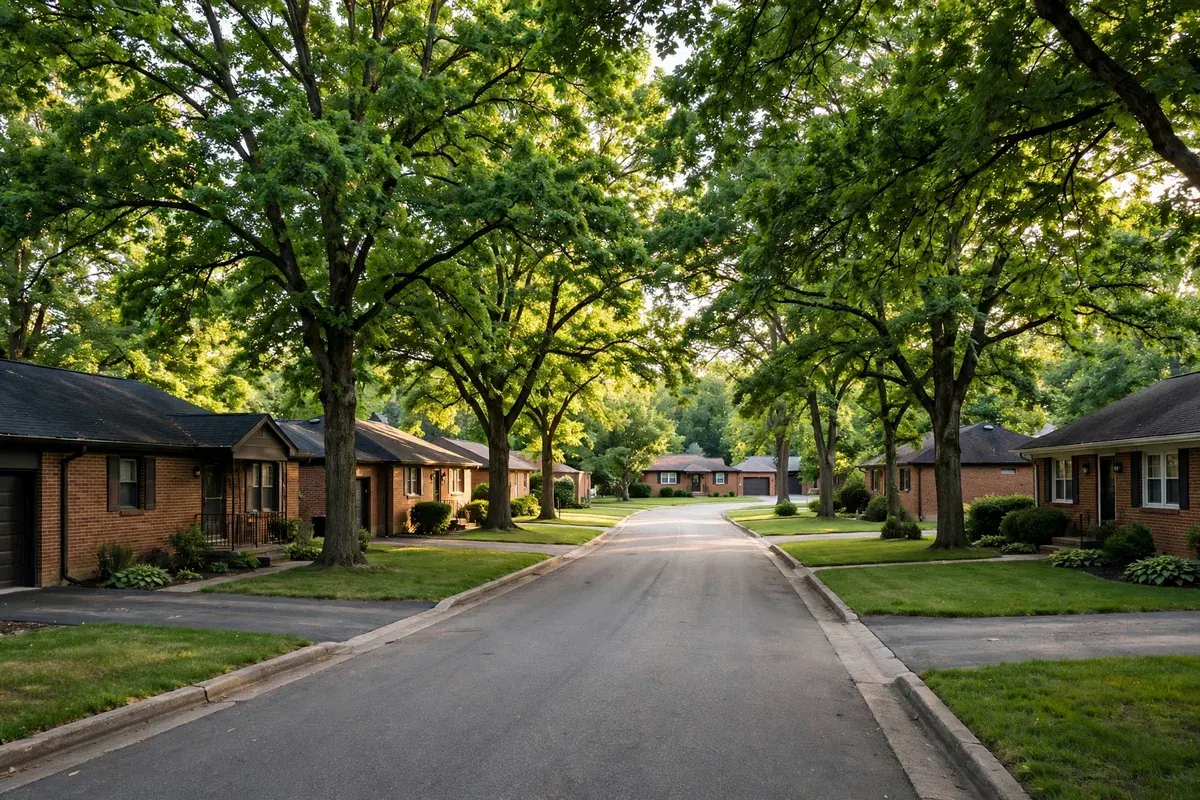
I-65 North Roofing
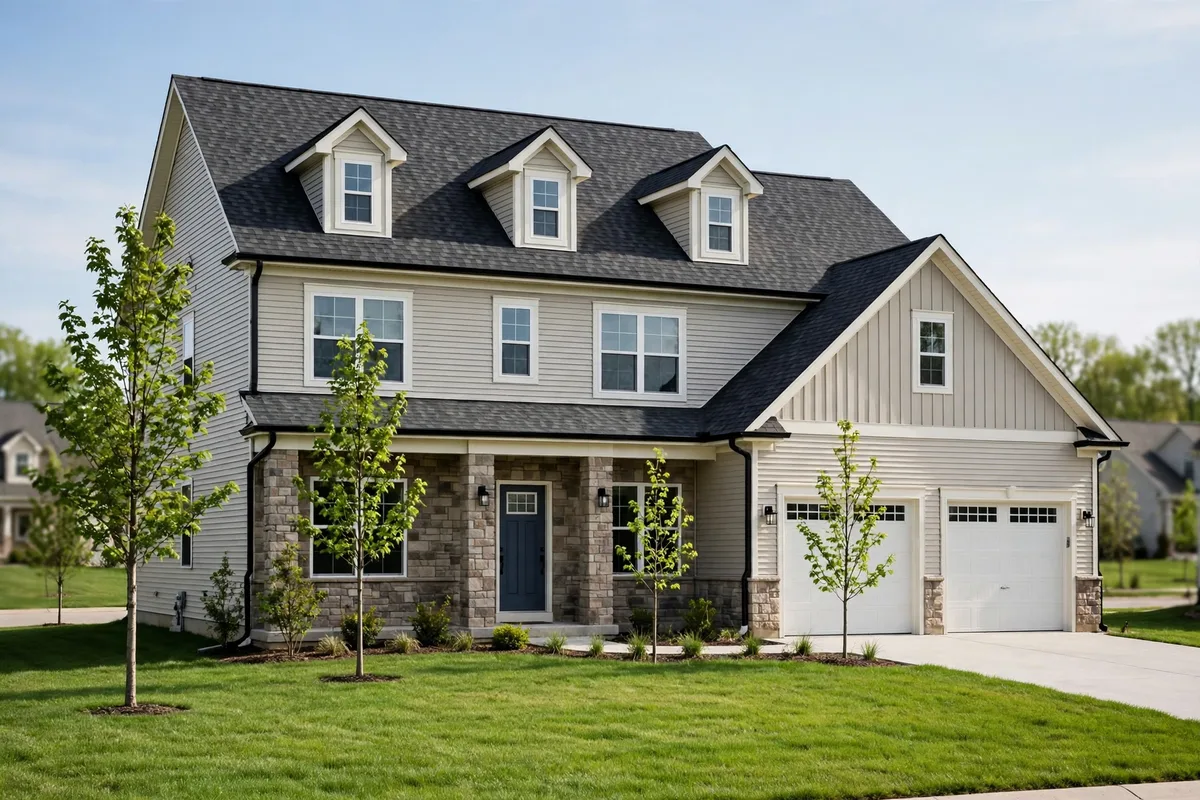
North of the Ohio River on I-65, post-war brick ranches sit a few streets from new two-stories in Covered Bridge and Sterling Oaks. Both take Indiana hail, but the ranch roofs are aging out while the tall two-story roofs hold more attic air, so the fix is never the same twice.
Services
We walk the ranch and the two-story alike, checking granule loss on the old slopes and attic heat on the tall new ones, and write up the findings plainly.
Learn more →Post-war ranches get a full tear-off and a fresh deck where the old one has gone soft, with shingles rated for Indiana hail.
Learn more →Hail bruises, lifted tabs, and valley wear on ranch and two-story roofs, patched at the source, with the flashing around it checked too.
Learn more →Tall two-story attics in Covered Bridge and Sterling Oaks run hot in summer; we balance intake and exhaust so the shingles stop cooking from below.
Learn more →Or get in touch and say whether yours is a ranch or a two-story.
Sellersburg, IN
Sellersburg sits in Clark County, Indiana, along I-65 a short drive north of Louisville, with two I-65 exits of its own. The town was incorporated in 1890. About four in five occupied homes are owner-occupied, and about three in four housing units are detached single-family homes. Much of the stock went up in the post-war decades, with a newer layer added since, and the ZIP reaches past the town line into Speed and unincorporated county land. The town is a commuter town, and the steady new construction along the corridor keeps the roofs young on average, even as the post-war stock reaches replacement age.
Post-war ranches beside newer subdivisions are the mechanism that shapes roof work here. The established streets like Hill and Dale and Deer Run hold brick ranches at replacement age, with granule loss, curling tabs, and flashing wear showing across whole slopes. The newer subdivisions like Covered Bridge and Sterling Oaks hold two-story homes with taller, more complex roofs and more attic air to ventilate. Hail on the Indiana side of the Ohio Valley finds both kinds of roof, and the symptom is often granules in the gutter, a bruise you can feel with a fingertip, or a stain that shows up months after the storm. A walk across the roof after hail settles it before the leak starts. The National Weather Service office in Louisville tracks the spring storms that cross the Indiana side of the river, and its storm reports are the record we check after hail.
Local trouble
Sellersburg roofs
The established streets hold brick ranches at replacement age, with granule loss, curling tabs, and soft decking near the eaves. A close look at the deck tells whether a repair still buys time or a replacement is the honest answer.
Sellersburg roofs
Hail on the Indiana side of the Ohio Valley finds Sellersburg roofs often in spring, and it bruises shingles while leaving the roof looking whole from the ground. Granules collecting in the gutters and dents on vents and gutters are the first things to look for.
Sellersburg roofs
Newer two-story homes hold a lot of attic air, and poor ventilation cooks shingles from below in summer and feeds moisture in winter. Balanced intake and exhaust keep the attic close to the outside temperature, so summer heat stops cooking the shingles from below.
A ranch roof at replacement age, or hail on a new two-story? Call and tell us which street you are on, and we will talk through what comes next.
Call (502) 922-5047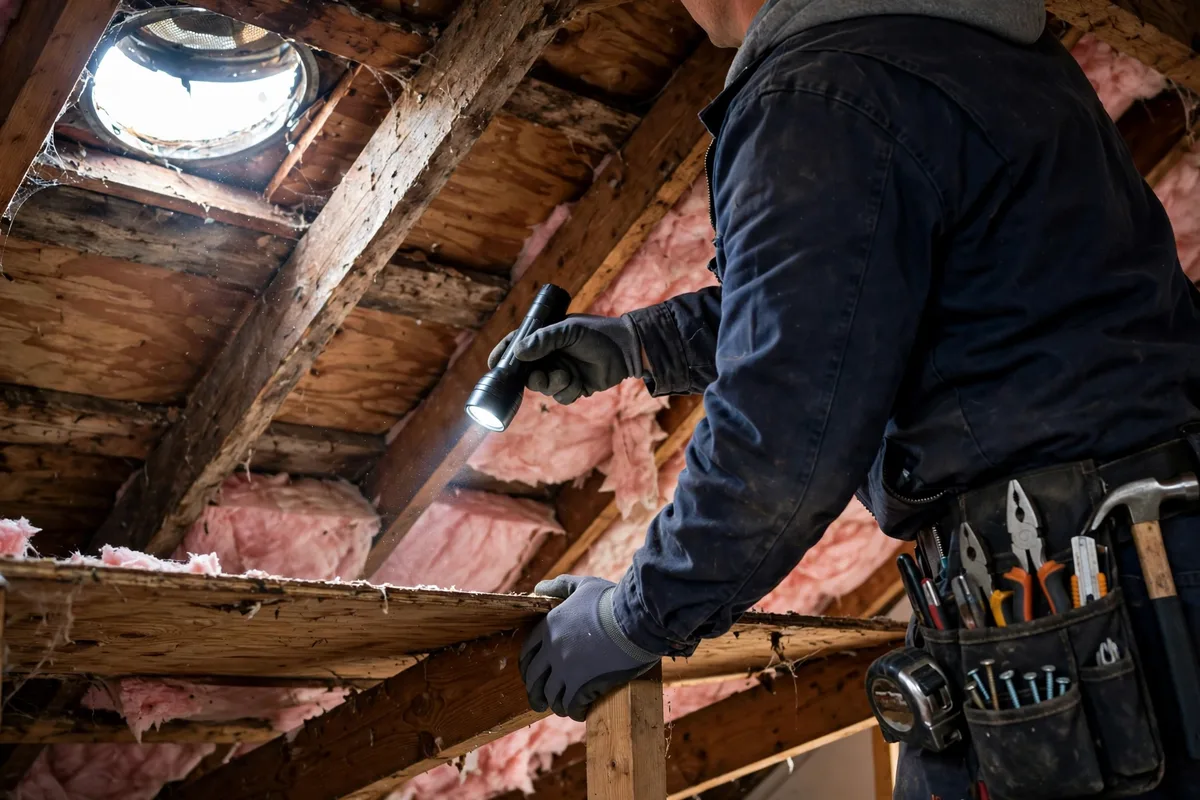
Homes & roofs
Sellersburg housing runs from post-war brick ranches to newer subdivisions. Covered Bridge, Sterling Oaks, Hill and Dale, Deer Run, Dreyer Estates, Lakeside Estates, Plum Creek, Plum Run, Plum Lake, Adams Creek, Cambridge Manor, Creston, Eagle Ridge, Hidden Creek, Highland Park, Katherine Estates, Meyer Manor, Southern Estates, Sunrise Hills, Tanner Estates, Woodhaven, Yorktown Park, Fields of Perry Crossing, Fields of St. Joe, and the Villas of Hunter Station hold much of the stock. Covered Bridge Golf Club anchors the newer side of town, Wilkerson Park holds war memorials and picnic areas, Mosley Park holds pickleball courts and the town pool, and the Silver Creek school campus, the Sellersburg Library branch, and the Ivy Tech campus serve the area. Sellersburg Celebrates fills Silver Creek Township Park each August.
Roof work in Sellersburg splits between the old ranch streets and the new subdivisions. The post-war brick ranches in Hill and Dale and Deer Run are at replacement age, and their roofs show granule loss, curling tabs, and flashing wear across whole slopes. The newer subdivisions in Covered Bridge and Sterling Oaks carry younger shingles but taller, more complex roofs, with more attic air to ventilate and more valleys to keep clear. The tree-lined established streets drop leaves into every gutter each fall. I-65 carries the main corridor, with US Highway 60, Highway 311, and Allentown Road carrying the local traffic, and Silver Creek runs through the area.
Neighborhoods
A newer subdivision with two-story homes near the golf club, and taller roofs exposed to corridor wind.
A newer subdivision with two-story homes and multi-slope roofs.
Established streets with post-war brick ranches at replacement age.
Post-war brick ranches with simple pitches and mature street trees.
Subdivision homes near the lake, with newer roofs and open lots.
Subdivision homes with two-story roofs and several valleys that collect leaves.
Coverage
Sellersburg is a town in Clark County, Indiana, incorporated in 1890, along I-65 a short drive north of Louisville, with two I-65 exits of its own.
The 47172 ZIP reaches past Sellersburg town limits into Speed and unincorporated Clark County.
Nearby towns
Clarksville sits south on I-65 toward the river, and Jeffersonville runs southeast along the riverfront, so Sellersburg roof visits often pair with one of those two towns.
FAQ
We do. We inspect roofs across Sellersburg, from the post-war ranches of Hill and Dale to the newer two-stories of Covered Bridge and Sterling Oaks. We walk the Sellersburg roof, the flashing, and the deck, look in the attic, and leave a plain-words write-up of what can wait and what needs work. Call and tell us the street and the trouble.
A roof on a Sellersburg home usually lasts about 20 to 30 years with architectural shingles, and about 15 to 20 years with three-tab shingles, though hail and attic ventilation can shorten that span. Granule loss, curling tabs, and soft decking say more about a roof than the calendar does. Those are the signs we read on the roof itself.
Hail on the Indiana side of the Ohio Valley finds Sellersburg roofs often in spring, and it bruises the mat under the granules. That bruise lets water through slowly, often months after the storm, and the leak shows up as a stain far from the bruised spot. Check for bruises soon after the storm and you catch them before the ceiling stains.
They do. A two-story in Covered Bridge or Sterling Oaks holds a taller attic with more air to move, so intake and exhaust have to balance or the shingles cook from below in summer. A post-war ranch has a lower attic and older shingles, so the deck and flashing matter more. We check both on the same visit.
A repair fits when the damage is confined, such as one valley, one pipe boot, or a few shingles lifted in a storm. Replacement fits when granule loss and curling show on whole slopes, leaks appear in more than one room, or the deck feels soft. Walk the roof with us first: the granule loss, the curling, and the soft deck tell you whether to repair or replace.
On a Sellersburg ranch, watch for hail bruising in shingles that have already weathered decades of storms. The Indiana side of the Ohio Valley takes spring hail often, and the post-war ranches here carry shingles that have already weathered decades of it. The bruise sits under the granules, so a ranch roof can look sound from the street while water keeps working through the mat.
A post-war ranch in Hill and Dale, a two-story in Covered Bridge, or a roof you just want checked after hail, call or email, and we will tell you honestly whether it needs a repair, a replacement, or just a look.