Call (502) 922-5047
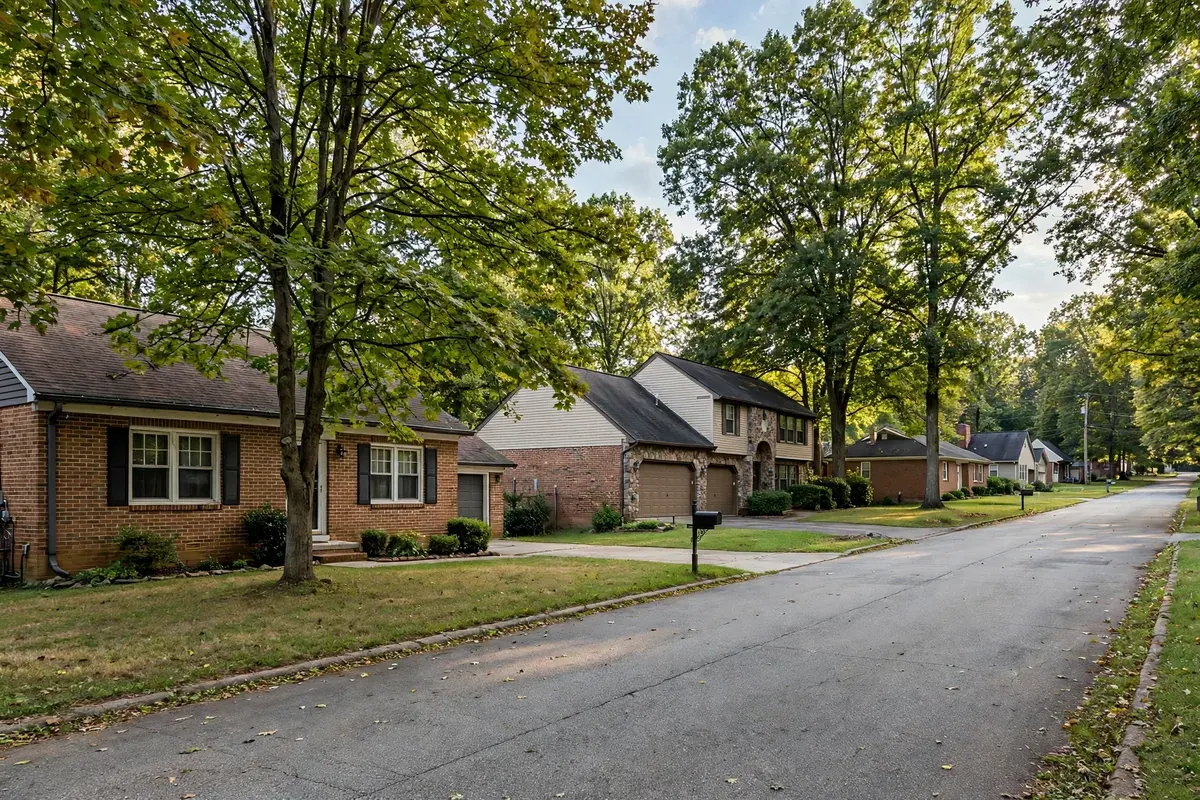
Brick ranch and bi-level houses with pitched shingle roofs on a street in Hillview, Kentucky

County Line Roofing

Hillview Hillside Roofs: Ice Dams, Ridge Wind & 1970s Ranches

Hillview hillside lots hold snow longer and feed ice dams at the eaves, while ridge-top homes face wind from the hilltops. We work on roofs across town, and every winter leak we chase starts in the attic, not on the shingle.

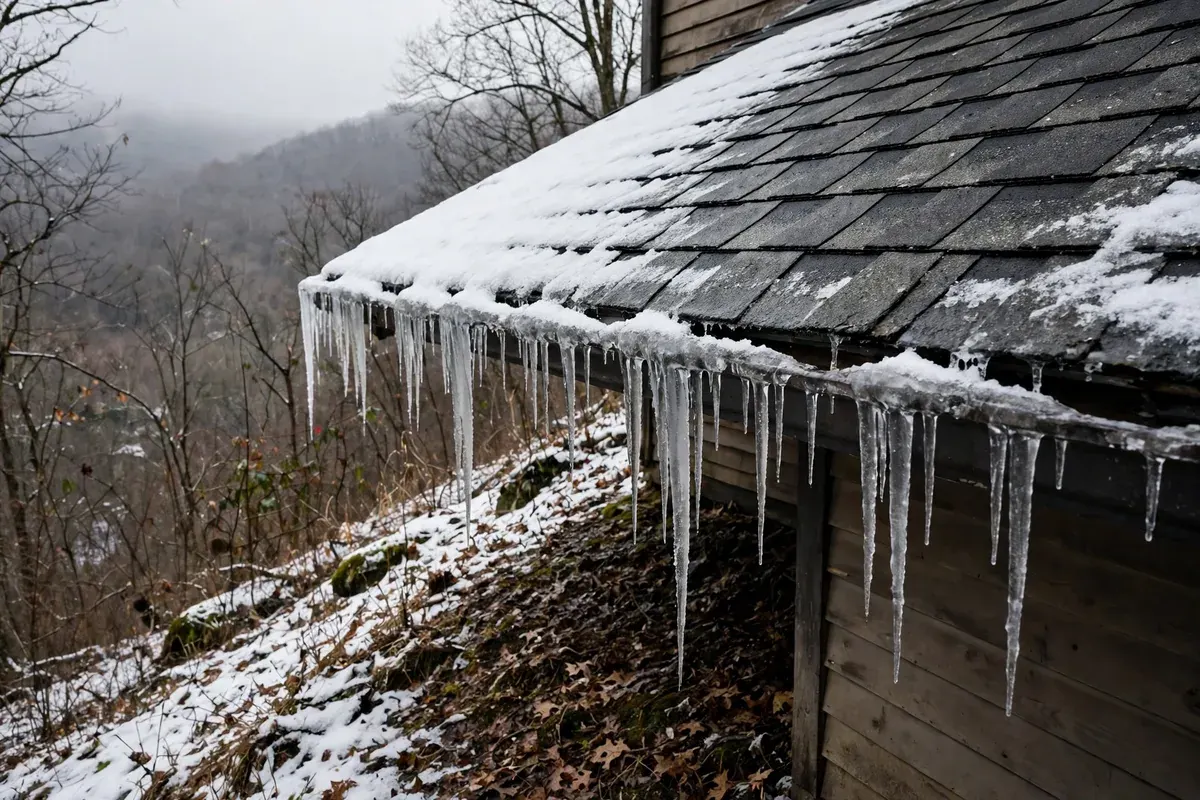
Ice dam icicles along the eave of a shaded hillside home in Hillview in winter

Hillview, KY

Hillside lots on the county line

Hillview sits at the north end of Bullitt County, right on the Jefferson County line, about fifteen miles south of downtown Louisville. The city was incorporated in 1974 from portions of Lone Acres, Overdale, and Maryville, the three founding subdivisions. The housing is mostly modest single-family homes: Maryville homes built largely in the 1960s and 1970s, Hunters Hollow and Tanyard Springs homes from the 1970s up to the 2020s, and most homes on lots of about a fifth of an acre. Brick and frame ranches from the 1970s and 1980s, many on crawl spaces or slabs, sit alongside bi-levels and split-levels from the same era and newer two-story homes from the 1990s onward near Zoneton and the Snyder.

Hillside lots with steep pitches are the mechanism that shapes roof work here. The shaded hillside slopes hold snow longer, and attic heat melts it from below, so meltwater refreezes at the eave into an ice dam that traps water behind it. The ridge-top homes face wind exposure from the hilltops, and the 1970s and 1980s ranches and bi-levels are at replacement age, with crawl spaces and slabs that make the lower roof edges and wall flashing worth a detailed look at the roof. What gives it away is usually a stain near an outside wall in winter, a lifted tab on a ridge-top slope, or granules washing into the gutter. Many Hillview homes carry a Louisville mailing address, so the town is easy to miss on a map, but the roofs here are Bullitt County roofs.

Local trouble

Ice dams, ridge wind, and 1970s roofs

Hillview roofs

Ice dams on shaded hillside slopes

Shaded hillside slopes hold snow longer, and attic heat melts it from below. That meltwater turns back to ice at the eave and traps more water behind it, under the shingles. Ventilation balance and ice and water shield at the eaves break the cycle.

Hillview roofs

Wind on ridge-top homes

Ridge-top homes face wind exposure from the hilltops, and the wind finds the highest part of the roof first. Tabs lifting at the ridge and caps worn thin are the early signs, and looking at the ridge after a storm catches them while the fix is still a small one.

Hillview roofs

Aging roofs on 1970s and 1980s subdivisions

The 1970s and 1980s ranches and bi-levels are at replacement age, with granule loss, curling tabs, and soft decking near the eaves. Checking the deck board by board settles whether a repair still makes sense or a replacement is the honest call.

Ice at the eaves or a stain near the wall? Call and we will trace it to the attic.

Call (502) 922-5047

How a visit works

How a Hillview roof visit works

Hillview visit

The attic first

Ice dams start in the attic, so that is where we start: the ventilation, the insulation, and the deck above the eaves, to find where the heat is getting through.

Hillview visit

Ridge, eaves, and deck

Then the ridge-top slopes for tabs the wind has lifted, the eaves for wear where ice has sat, and the deck for soft spots near the outside walls.

Hillview visit

A plain-words plan

Then a plain-words plan: what needs doing now, what can wait until later, and what the work covers, all before anything starts.

Roofer inspecting a wind-exposed ridge-top roof in Hillview

Homes & roofs

Bi-levels and ranches on fifth-acre lots

Hillview housing is mostly modest single-family homes on lots of about a fifth of an acre. Maryville, Overdale, and Lone Acres are the three founding subdivisions from the 1974 incorporation. Heritage Creek, Hunters Hollow, Tanyard Springs, Indian Falls, Cedar Brook, Autumn Woods, Bullitt Hills, Cinderella, Cooper Farms, Maple Grove, Park Lake Village, Spring Meadow, Timber Creek, Summit Hills, Washington Green, Woods of Penn Run, and Larkgrove hold the rest. Preston Highway, US 31W, and Blue Lick Road carry the main traffic, between I-65 and the Gene Snyder Freeway, with Zoneton Road and the Outer Loop to the north. Brooks and Pioneer Village sit at the edges.

On a Hillview hillside, the slope decides the roof work. The shaded slopes hold snow longer and feed ice dams at the eaves, while the ridge-top homes face wind exposure from the hilltops. The 1970s and 1980s ranches and bi-levels are at replacement age, with granule loss, curling tabs, and flashing wear showing across whole slopes, and the crawl spaces and slabs beneath them make the lower roof edges worth a careful check. The newer two-story homes near Zoneton and the Snyder carry younger shingles but taller, more exposed ridges. A roof inspection here covers the attic ventilation as carefully as the shingles, since the ice dams start in the attic.
Neighborhoods

Three founding subdivisions and the newer streets

Maryville Ranch roofs

The founding subdivision, with homes built largely in the 1960s and 1970s on modest lots.

Overdale Ranch roofs

One of the three founding subdivisions, with brick and frame ranches from the 1970s and 1980s.

Lone Acres Ranch roofs

One of the three founding subdivisions, with modest single-family homes on fifth-acre lots.

Hunters Hollow Ranch and two-story roofs

Homes from the 1970s up to the 2020s, with ranches and newer two-stories mixed together.

Tanyard Springs Ranch and two-story roofs

Homes from the 1970s up to the 2020s, on hillside lots with steep pitches.

Heritage Creek Two-story roofs

Two-story homes on hillside lots, with steep pitches and valleys that hold leaves after a storm.

Coverage

A ZIP code split by the county line

Hillview is a city at the north end of Bullitt County, right on the Jefferson County line, about fifteen miles south of downtown Louisville, incorporated in 1974.

40229

The 40229 ZIP is split across the Jefferson and Bullitt county line, covering southern Okolona, Hillview, and Zoneton. Many Hillview homes carry a Louisville mailing address.

Services

Hillside roof services in Hillview

Roof Repair

Ice-dam leaks traced to the attic, lifted ridge tabs refastened, and valley flashing resealed on Hillview hillside ranches and bi-levels.

Learn more →

Roof Replacement

Tear-offs for 1970s and 1980s ranches and bi-levels whose shingles have worn thin across whole slopes, with new ice and water shield at the eaves.

Learn more →

Roof Inspection

A roof-to-attic look at a Hillview hillside home: shingles, ridge caps, deck, and ventilation, written up in plain words with what can wait and what cannot.

Learn more →

Attic Ventilation

Balanced intake and exhaust that keep a Hillview attic near outside temperature, so snow stops melting from below and ice dams stop forming at the eave.

Learn more →
See All 17 Roofing Services

Or contact a Louisville roofer about the ice at the eave or the stain near the outside wall.

Compare

Choosing a roof on a Hillview hillside

Roof choices for Hillview homes, side by side
Roof optionWhich hillside roof it suitsHillside wear to expect
Architectural shingles for hillside ranches and bi-levelsRanches, bi-levels, and two-stories across townHillside ice dams and ridge-top wind wear the granules down, so the shingles age faster than the years suggest.
Three-tab shingles for older hillside ranchesOlder hillside ranches nearing the end of shingle lifeThe thin tabs on older ranches curl at the edges and lift on the exposed hillside slopes.
Standing seam metal for ridge-top homesRidge-top homes and wind-exposed hillside lotsRidge-top wind tests every seam, and the flashing at valleys and dormers has to be bent to fit the pitch.
Algae-resistant shingles for shaded north-facing hillside slopesShaded north-facing hillside slopesShaded hillside slopes stay damp, and the vents deserve a careful check, since the ice dams start in the attic.

Swipe the table sideways on a phone to see every column.

Nearby towns

Towns across the county line from Hillview

Shepherdsville runs south down Preston Highway, and Okolona sits north past the Outer Loop, and a Hillview visit often stretches into one of those two towns.

FAQ

What Hillview hillside owners ask

We can. We work across Hillview, from the Maryville, Overdale, and Lone Acres subdivisions to the newer two-stories near Zoneton and the Snyder. A leak visit starts by tracing the water to its source, since the stain rarely sits under the hole. Tell us where the stain shows and whether it appears in cold weather, and we will plan the visit around that.

Attic heat melts snow near the ridge, and the meltwater runs down to the colder eave, where it freezes into a dam that traps more water behind it. Hillview hillside slopes hold snow longer, so the cycle runs harder here than on flat ground. Balanced ventilation and insulation that keep attic air near the outside temperature are the real fix, with ice and water shield at the eaves as backup.

Hillview sits in Bullitt County, right on the Jefferson County line, though many Hillview homes carry a Louisville mailing address. A Louisville mailing address does not change the county, so an address alone does not settle it. We work across the line either way, and we tell you plainly which county your home sits in when it matters for permits.

Meltwater held back by an ice dam runs under the shingles and into the house, and it usually shows as a stain near an outside wall. The leak is not a hole in the middle of the roof. It is water moving uphill under the shingle edge, and the fix is ventilation, insulation, and shield at the eave, not another layer of sealant.

Hillview is in Bullitt County, so Bullitt County rules apply, even when a home carries a Louisville mailing address. Only the 40229 ZIP straddles the county line, and a mailing address does not change the county. A repair rarely needs a permit, and a full tear-off often does. We check the rules for your address before work starts and walk you through what the county asks for.

Look for granules washing into the gutters, tabs curling at the edges, and soft spots near the eaves where ice dams have pushed water under the shingles winter after winter. A 1970s or 1980s ranch on its second roof is usually near the end of its run. A deck check settles it: sound decking means a repair still makes sense, and soft decking means replacement is the honest call.

Hillside ice dams start quietly

An ice dam forming at the eave, a leak near the outside wall, or a hillside roof that has simply run its course. Tell us what you are seeing, by phone or email, and we will plan the visit around it.