A musty smell in the attic
A musty attic usually means damp air with nowhere to go. Poor ventilation traps humid air against the deck, and the deck stays wet long after the rain stops.
Intake & Exhaust Balance
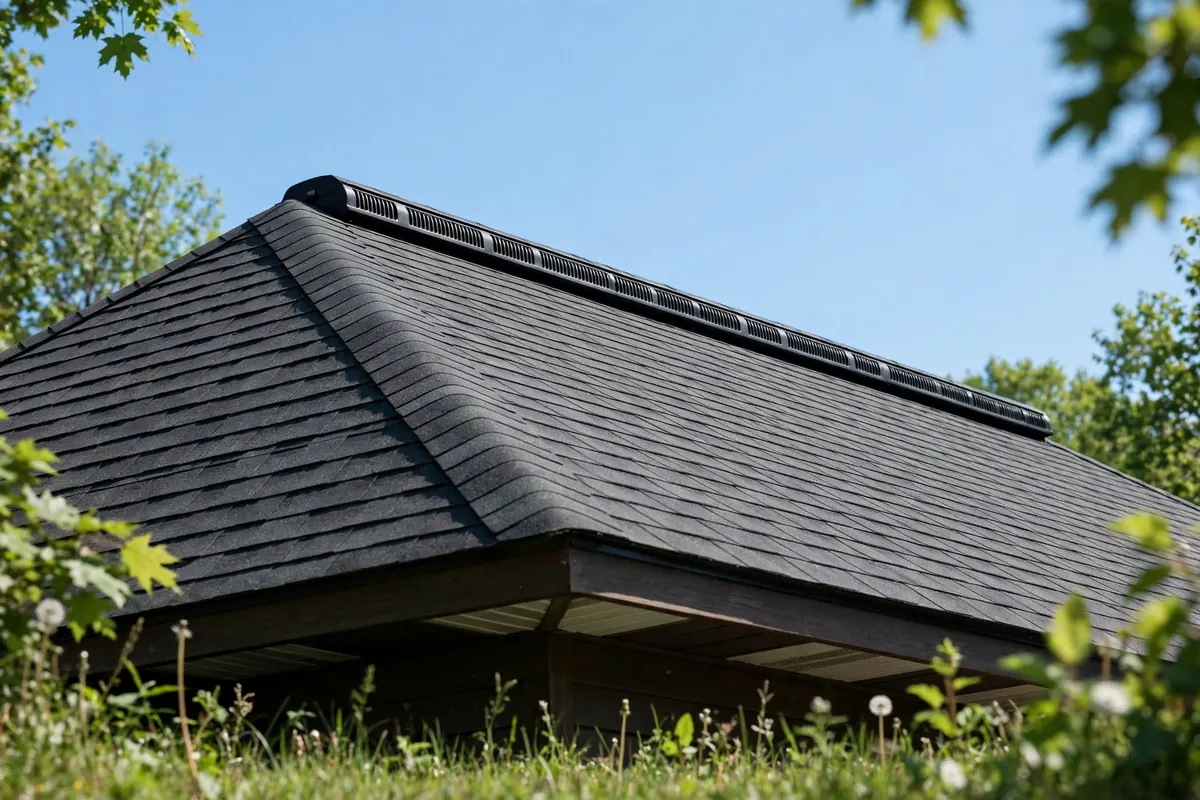
Your attic needs to breathe, or your roof suffers for it. We balance the air coming in low through the soffits with the air going out high through the ridge, so the attic stays near the outside temperature and the deck stays dry.
How it works
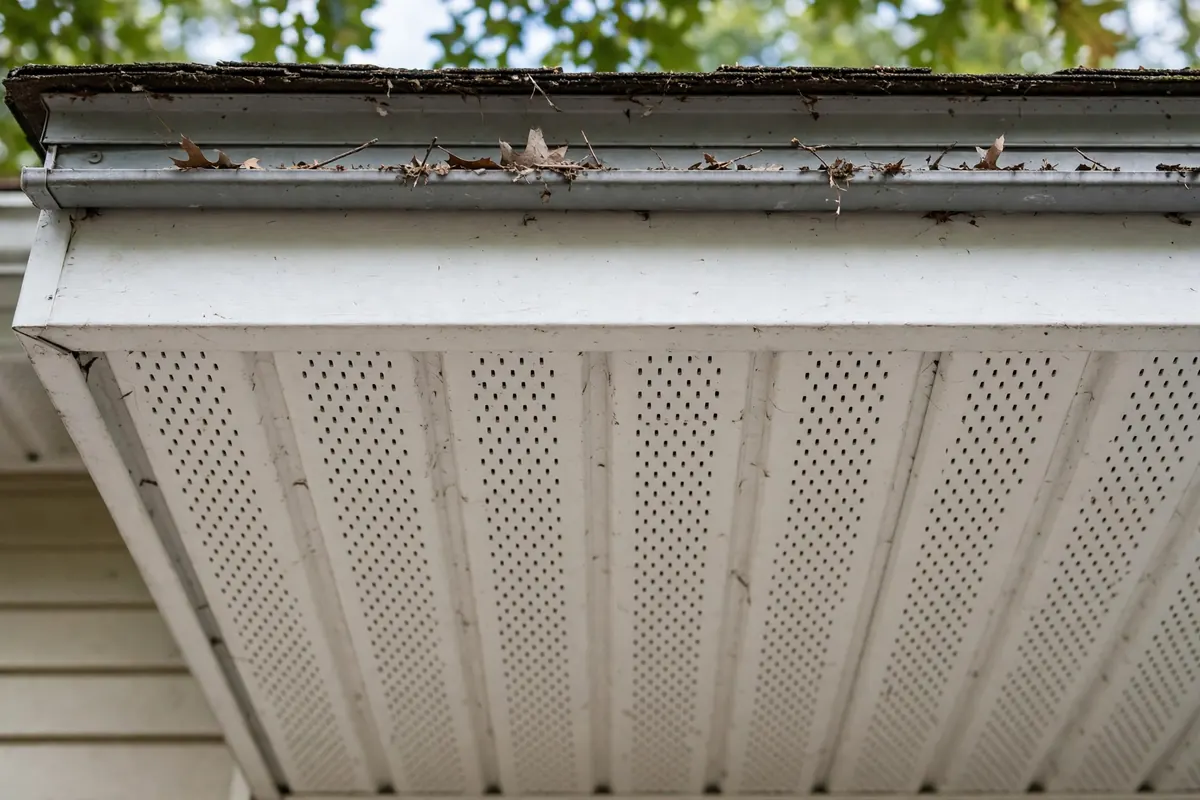
Attic ventilation balancing is simple in principle: cool air comes in low through the soffit vents, warms as it rises, and leaves high through the ridge vent. That slow, steady flow keeps the attic near the outside temperature. In winter the same flow carries damp household air out before it can condense on the cold deck and drip back onto the insulation.
The system only works when intake and exhaust stay in balance. A ridge vent with blocked soffits pulls air from wherever it can, often from the house itself, and soffit vents with no exhaust let hot air sit at the peak. Both halves have to be open and matched, or the attic stops breathing.
Louisville humidity makes the stakes higher. Humid summers fill attics with damp air, and without steady airflow that moisture condenses on the deck and rots it from below while the sun bakes the shingles from above. A ventilated attic is a dry attic, and a dry attic is a roof that lasts.
Signs of trouble
Each of these means the air is stuck, and the fix is usually vents and clear airflow, not a new roof.
A musty attic usually means damp air with nowhere to go. Poor ventilation traps humid air against the deck, and the deck stays wet long after the rain stops.
Insulation that feels damp or has lost its loft is holding moisture. Wet insulation insulates badly and feeds the damp problem.
Rust on the nails poking through the deck means the attic air has been damp for a long time. The rust is the history of the moisture.
Shingles that curl years before their time often mean the attic below them is cooking. Heat from a sealed attic bakes shingles from below.
Frost on the underside of the deck means damp air is condensing on cold boards. When it melts, it drips onto the insulation.
Ice at the eaves means the attic is warm enough to melt snow on the roof, and the meltwater refreezes at the cold edge, building a dam.
A musty attic or shingles curling years early? Call and get the airflow checked, not just the shingles.
Call (502) 922-5047Insulation and airflow
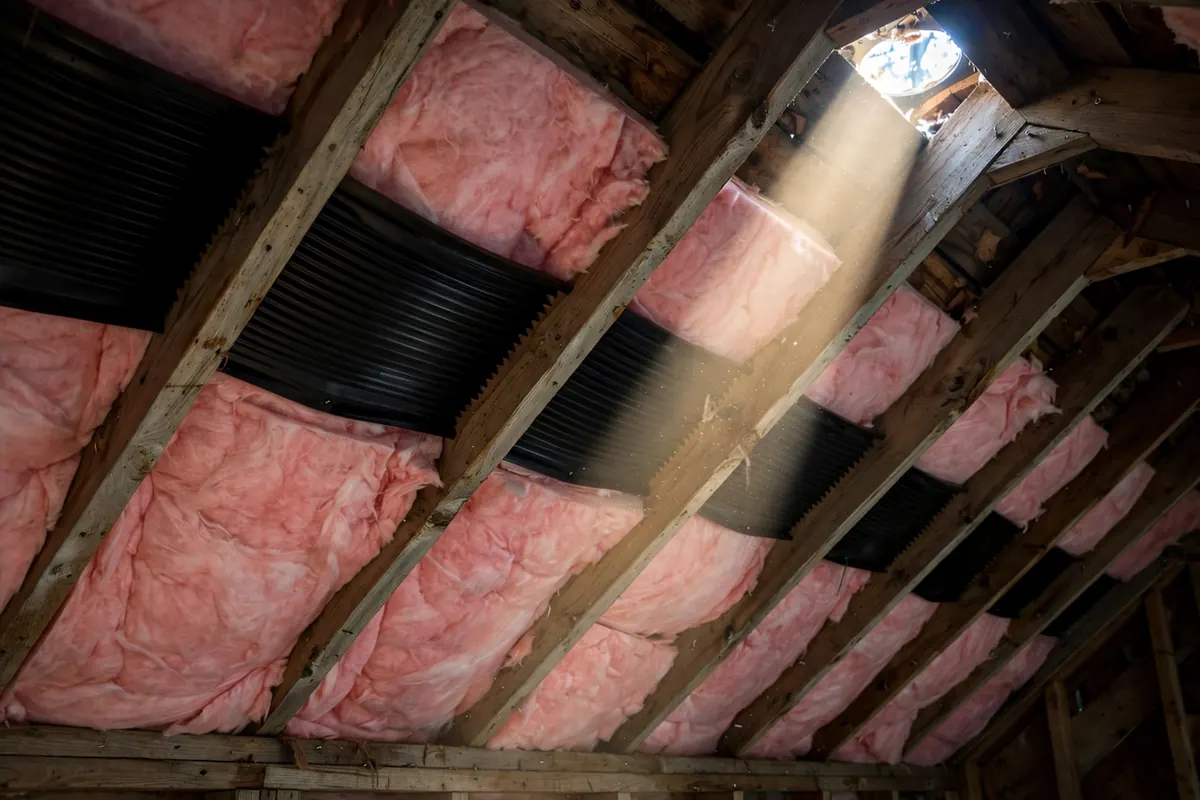
Attic insulation and baffles work as a pair. The insulation keeps the house warm in winter and cool in summer, and the baffles, vent chutes fitted between the rafters above the soffit, keep the air path open so insulation cannot block the intake. Insulation that is pushed tight against the roof deck chokes the airflow it is meant to protect.
Bathroom and kitchen fans must vent outside through the roof, never into the attic, because dumping steam into the attic feeds the same damp problem the vents are meant to solve. A fan that ends in the attic is a moisture source hiding in plain sight, and it shows up as damp insulation and rust on nail heads.
Energy code attic ventilation and insulation requirements set the shape of the system: how much intake and exhaust a roof needs for its size, and how much insulation belongs below it. The numbers follow the roof, and the balance follows the numbers, so a big two-story roof needs more of both than a small ranch.
Ridge vent vs turbine vent
Both move hot air out of the attic. The difference is how they move it, and what they need to work.
Our rule of thumb: a ridge vent is the first choice on most Louisville homes, because it runs the full peak and needs nothing to spin it. Turbines and power attic fans suit roofs where a ridge vent cannot run, and a roof inspection in Louisville that includes the attic shows which one your roof can carry.
Damage and ice dams
Yes, and it does it quietly. A damp attic rots the deck from below, so the boards lose strength while the shingles above still look fine. A hot attic cooks shingles from below, so they curl and crack years before their time. Both kinds of damage show up late, when the repair is already bigger than it needed to be.
Attic condensation and mold from poor ventilation follow the same pattern. Damp air condenses on the cold deck, drips onto the insulation, and feeds mold on the boards and the framing. The mold is the symptom; the stuck air is the cause, and the fix is airflow, not a new roof.
Ice dam prevention through ventilation is the winter half of the same story. A cool attic keeps the roof cold, so snow melts evenly instead of melting at the peak and refreezing at the eave. The dams themselves are a winter question in their own right, but the attic is where they start, and roof maintenance in Louisville keeps the vents clear and the airflow steady through the seasons.
People also ask
Short answers to the attic questions that come up most in humid summers and cold snaps.
Look for the signs: a musty smell, damp insulation, rust on nail heads, and shingles curling years early all point to stuck air. A roofer counts the intake and exhaust against the size of the roof and checks that the soffits are clear, which settles the question with numbers instead of a guess.
Yes, when the roof has a clear peak to run it along and the soffits can supply matching intake. The ridge gets cut open, the vent goes on, and the cap shingles cover it. On a roof that is due for replacement, the vent goes in as part of that job.
A damp, musty attic is a roof problem in slow motion. Call and get the airflow checked.
Call (502) 922-5047Frequently asked questions
Look for a musty smell, damp or compressed insulation, rust on nail heads, and shingles that curl years before their time. Frost on the underside of the deck in a cold snap points the same way. Each one means the air is stuck, and a roofer can count the intake and exhaust against the size of your roof.
It keeps damp air moving out of the attic instead of letting it sit against the deck. Humid summers fill attics with moisture, and without steady airflow that moisture condenses on the boards and rots them from below while the sun bakes the shingles from above. Moving air keeps the attic near the outside temperature.
A ridge vent is better for most Louisville homes, because it runs the full peak and moves air steadily without anything to spin or wear out. Turbine vents suit roofs where a ridge vent cannot run, such as roofs with no clear peak or several separate sections. Either one needs matching soffit intake to work.
Yes. A damp attic rots the deck from below, so the boards lose strength while the shingles above still look fine. A hot attic cooks shingles from below, so they curl and crack years early. Both kinds of damage show up late, when the repair is already bigger than it needed to be.
It can break the cycle that forms them. A cool attic keeps the roof cold, so snow melts evenly instead of melting at the peak and refreezing at the eave. Ventilation alone does not clear a dam that is already there, but it stops the next one from forming once the roof is clear.
Yes. Insulation pushed tight against the roof deck blocks the intake, and the attic stops breathing. Baffles, vent chutes fitted between the rafters, hold the air path open above the insulation, so the soffits can pull cool air in even when the attic is deeply insulated.
Keep going
Ventilation connects to the roof above and the care that keeps it working. These pages follow.
Roof inspection in Louisville includes the attic, so the ventilation, the deck, and the insulation get checked together.
Learn more →Roof maintenance in Louisville keeps the vents clear and the airflow steady through the seasons.
Learn more →Roof repair in Louisville fixes the deck and flashing damage that a damp attic leaves behind.
Learn more →Where we work
Attic ventilation work takes us across Louisville and the towns around it, including attic ventilation in Pleasure Ridge Park KY, attic ventilation in Fairdale KY, attic ventilation in Lyndon KY, attic ventilation in La Grange KY, and attic ventilation in Mount Washington KY. Every town we serve is listed on roofing across Louisville and Kentuckiana.
Call or email, tell us what the attic smells like and what the shingles are doing, and we will check the airflow together.