Granule loss in the gutters
A gutter full of coarse granules means the shingles are shedding their sun shield. Once the asphalt shows, the shingle bakes and cracks fast.
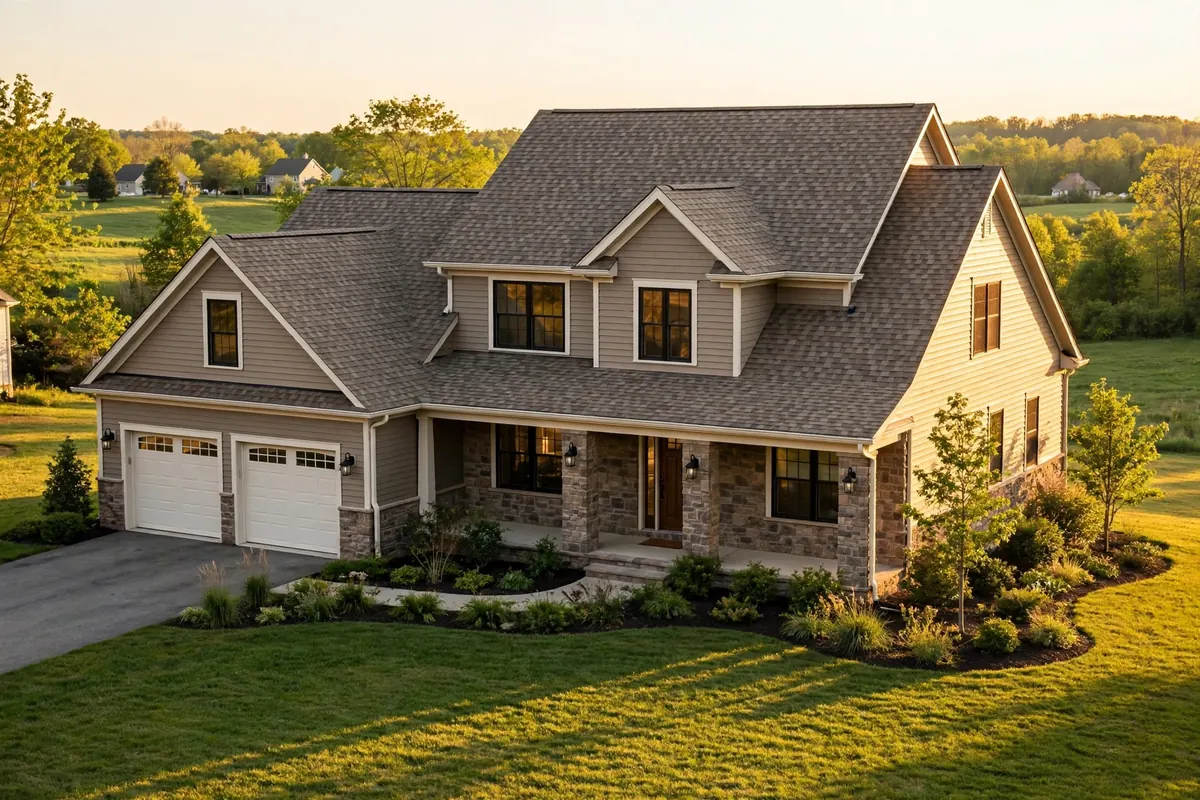
Architectural Shingles
Architectural asphalt shingles are the roof most Louisville homes wear, and for good reason: they suit the city's pitches, they handle hail and wind well, and they look right on everything from a Highlands bungalow to a new build in Prospect.
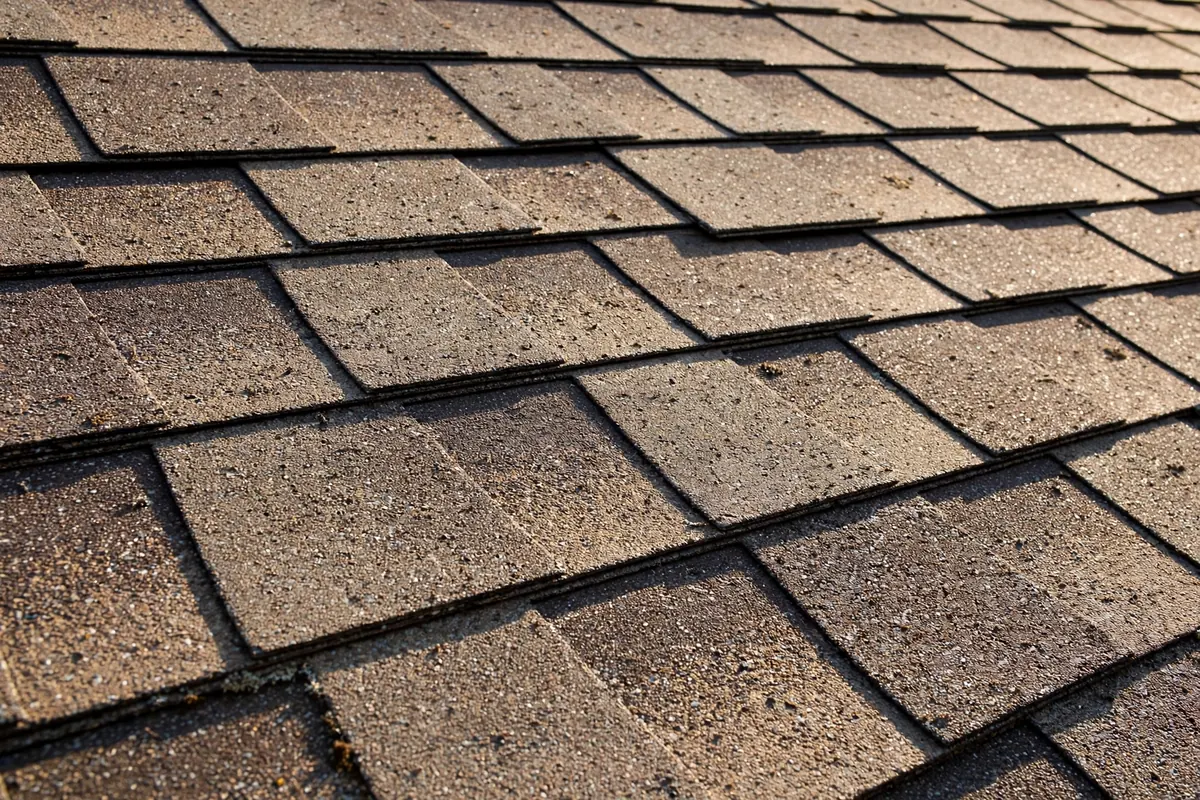
The standard choice
Architectural, dimensional, asphalt shingles are two layers thick, with a varied tab shape that gives the roof a deeper, more textured look than the flat profile of three-tab shingles. That thickness is not only looks: the laminated layers hold their seal better in wind, and the heavier shingle resists lifting in the gusts that roll up the Ohio Valley each spring.
Three-tab asphalt shingles are the simpler form: one layer, a flat profile, and a lower profile on the roof. They suit simple roofs where a lower-profile shingle fits, and they still serve well on sheds, porches, and outbuildings. On a main house roof in Louisville, architectural shingles are the standard choice, and three-tab is the simpler form that trades life for a lower outlay.
Under the shingles, the system matters as much as the surface. Synthetic underlayment and felt underlayment both back the shingles, with synthetic sheets holding up longer and laying flatter than old felt. Ice and water shield in valleys and eaves seals the spots where water backs up, and ridge cap shingles finish the peak with a clean, sealed line.
Signs of wear
Shingles wear in a pattern. These signs, read together, say how far the wear has gone.
A gutter full of coarse granules means the shingles are shedding their sun shield. Once the asphalt shows, the shingle bakes and cracks fast.
Edges that curl up or middles that cup catch the wind and let rain underneath. Curling across a whole slope is age showing.
Blisters mean trapped moisture and heat under the surface. The cause is usually ventilation, and the attic holds the clue.
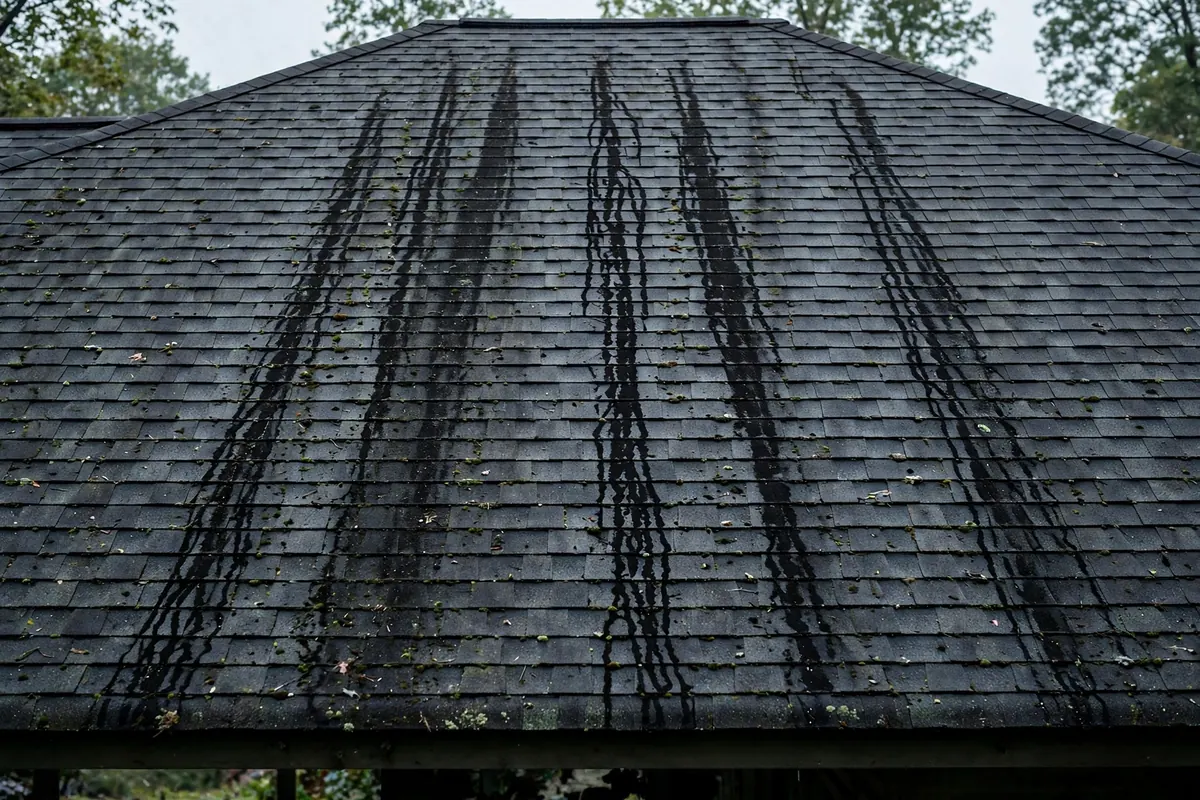
Dark streaks are algae feeding on the limestone in the shingles. They hold moisture against the surface and speed up wear on shaded slopes.
A missing tab leaves a bare patch that soaks the underlayment with every rain. One tab is a quick repair; many tabs mean the seal is failing.
Shingles worn smooth and bare have lost their granules entirely. A bald patch is a shingle with no shield left against the sun.
Shingles curling, granules in the gutter, or streaks down the slope? Call and get the roof read properly.
Call (502) 922-5047Architectural vs three-tab
Both are asphalt shingles. The difference is in the layers, the look, and the life.
Our rule of thumb: architectural shingles for the house, three-tab for the outbuilding. The laminated layers do the work longest, and the look suits the houses Louisville actually has. If you are weighing shingles against metal, metal roofing vs shingles in Louisville sets out the trade-offs side by side.
Under the shingles
A shingle roof is a system, and the parts under the surface decide how long it lasts. Synthetic underlayment rolls over the deck before the shingles go on, and it is the backup layer when wind drives rain under a lifted shingle. Ice and water shield, a sticky, self-sealing membrane, goes along the eaves, in the valleys, and around chimneys and skylights, sealing around nail holes where water backs up.
The craft shows in the small tools. A chalk line and roofing square keep the courses straight across a long slope, so the rows read even from the street. Coil roofing nails and a roofing nail gun set each shingle at the right depth and in the right place, because a nail driven too high or too deep is a shingle that lifts in the first strong wind.
Freeze-thaw cracking of shingles is the Louisville part of the story. Winter nights below freezing followed by mild days let meltwater creep under shingles and refreeze, prying the layers apart a little more each time. A shingle roof that is well vented and well sealed rides that cycle out; one that is not shows it in curling and cracking within a few winters.
Algae-resistant shingles carry copper granules that slow the black streaks on shaded, humid slopes. They suit north-facing roofs and homes under heavy tree cover, where the streaks spread fastest. They do not stop algae forever, and they do not replace cleaning, but they keep the roof looking cleaner for longer, and the granules are part of the shingle, not a coating that washes off.
Shingles compared
The three roofs Louisville homes wear most, side by side, so the trade-offs are plain to see.
| Roof type | How long it often lasts | Best for | Watch out for |
|---|---|---|---|
| Architectural shingles | About 20 to 30 years | Most pitched roofs, the standard choice | Granule loss and hail bruising over time |
| Three-tab shingles | About 15 to 20 years | Simple roofs, sheds, outbuildings | Thinner tabs lift sooner in high wind |
| Standing seam metal | 40 years or more | Steep and low slopes, sheds hail fast | Needs careful flashing at every joint |
Scroll sideways to see the full table.
Color and curb appeal
The honest answer is that color is a choice about the house, not about the roof. Dark shingles absorb more heat, which warms the attic in summer, while lighter shingles reflect more sun and keep the attic cooler. In Louisville summers, that difference is real, and a lighter color suits a south-facing slope that takes full sun all day.
The look matters too. A gray-brown shingle suits brick and stone, a charcoal shingle suits white trim and a modern front, and a warm brown suits the wood siding on older homes. The color should suit the house and the street it sits on, and it should hide the algae streaks that shaded slopes collect: mid-tone shingles show streaks less than very light ones.
Whatever color you choose, the shingle is the same system underneath: underlayment, shield, flashing, and ridge cap, laid straight and nailed right. Roof replacement in Louisville is the job that puts that system on, and roof maintenance in Louisville keeps the streaks and the moss off it afterward.
People also ask
Short answers to the shingle questions that come up most before a replacement.
Mid-tone shingles hide streaks best, because the dark algae blends into the middle of the range instead of standing out against a light surface. Very light shingles show every streak, while very dark shingles hide them but absorb more heat. A gray-brown mid-tone is the usual compromise.
Yes, with care. Shingles are stiffer in cold weather and the sealant strips need sun to bond, so winter installs run slower and the crew hand-seals the tabs that need it. A roof installed in a cold snap seals fully once the sun warms it, and the work is planned for the mild, dry days.
No, they use the same underlayment as any shingle roof: synthetic underlayment across the deck and ice and water shield at the eaves and valleys. The shingle is thicker, not the system, so the layers underneath stay the same and the flashing details stay the same too.
Cleaning takes the streaks off, and algae-resistant shingles or a zinc strip near the ridge slow their return, since rain washes a little zinc down the slope with each shower. Shade is the real cause, so trimming back branches that keep the roof damp all day helps more than any treatment.
Shingles are the standard Louisville roof, and the details decide how long they last. Call and talk through the options.
Call (502) 922-5047Frequently asked questions
Architectural shingles are better for the main roof of a house, because their laminated layers hold their seal better in wind and their deeper profile suits Louisville pitches. Three-tab shingles suit simple roofs, sheds, and outbuildings, where a lower-profile shingle fits and a shorter life is acceptable.
Architectural shingles often last about 20 to 30 years in Louisville, depending on the ventilation, the sun exposure, and how well the roof is kept. A well-vented roof on a shaded slope can outlast the same shingle on a south-facing slope that bakes all summer, so the attic matters as much as the shingle.
Yes, on shaded, north-facing slopes and homes under heavy tree cover, where black streaks spread fastest. The copper granules in the shingles slow the algae, keeping the roof looking cleaner for longer. They do not stop algae forever, and they do not replace cleaning, but they buy years of cleaner looks.
It depends on the house. Dark shingles absorb more heat, while lighter shingles reflect more sun and keep the attic cooler. Mid-tone gray-brown suits most Louisville homes, hiding algae streaks better than very light colors and suiting brick, stone, and wood siding alike. The color should suit the house and the street.
No, not on the same slope. The two shingles are different thicknesses, so they do not lie flat together, and the courses will not line up. A repair uses the same shingle as the roof it joins, and a replacement uses one shingle throughout, so the surface reads even from the street.
Look at the house first: the brick or siding, the trim, and the street. A gray-brown suits brick and stone, charcoal suits white trim, and warm brown suits older wood siding. Mid-tones hide algae streaks best, and lighter colors keep a south-facing attic cooler through the summer.
Keep going
Shingles are one material among several. These pages set the alternatives beside them.
Metal roofing vs shingles in Louisville sets the two materials side by side, so the trade-offs are plain to see.
Learn more →Roof replacement in Louisville is the job that puts a new shingle system on, layer by layer from the deck up.
Learn more →Roof maintenance in Louisville keeps the streaks and the moss off the shingles afterward, season after season.
Learn more →Where we work
Asphalt shingle roofs are our everyday work across Louisville and the towns around it, and the towns in this group are asphalt shingle roofing in Crestwood KY, asphalt shingle roofing in Goshen KY, asphalt shingle roofing in Shelbyville KY, asphalt shingle roofing in Simpsonville KY, and asphalt shingle roofing in Elizabethtown KY. The full list of towns we serve is on roofing across Louisville and Kentuckiana.
Architectural or three-tab, dark or light, and the system underneath. Call or email and talk it through.