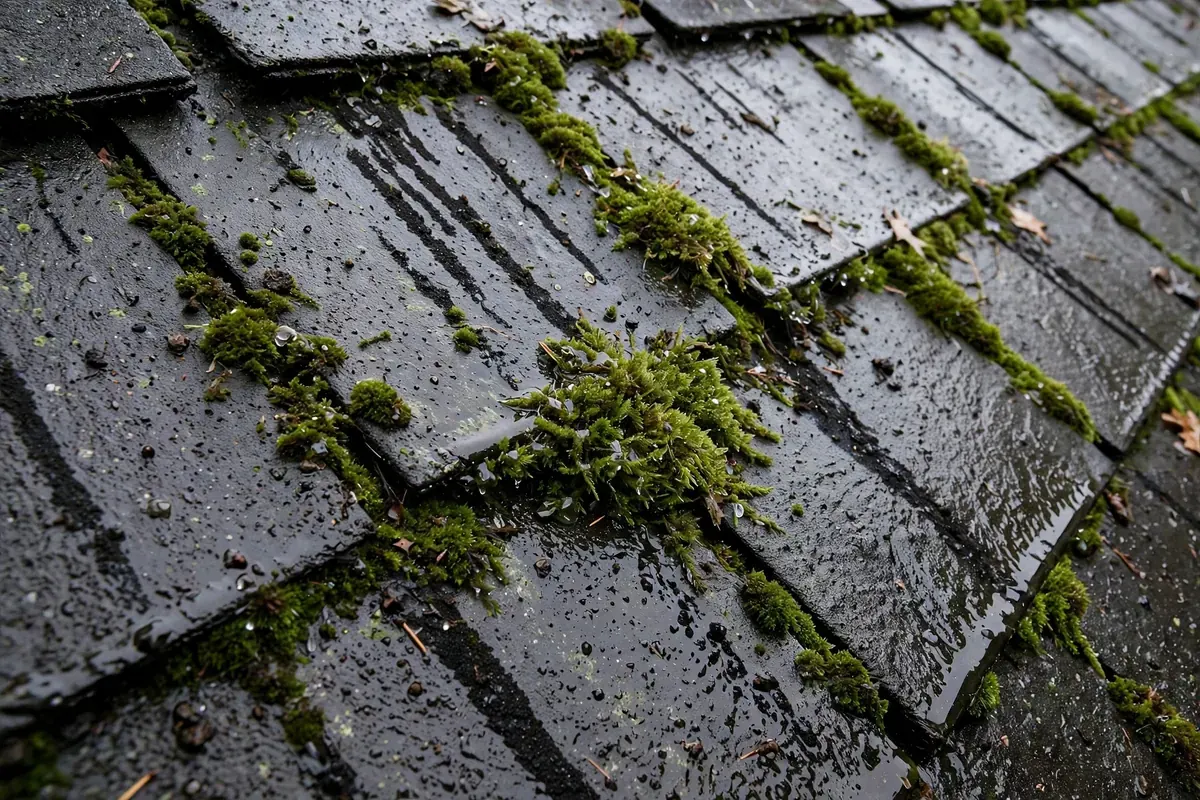
Moss spreading on a shaded slope
Moss holds moisture against the shingles and lifts their edges. Left alone, it shortens shingle life and hides damage underneath.
Seasonal Care Plans
A roof lasts longer when someone looks at it twice a year. Our maintenance visits check the shingles, the flashing, the gutters, and the attic, clear what needs clearing, and fix the small things before they grow into leaks.
What maintenance is
Roof maintenance programs are scheduled care for a roof: a visit each spring and fall, a close look at the whole system, and the small jobs done on the spot. The shingles get checked for granule loss and lifting, the flashing gets checked at every joint, the gutters get cleared, and the attic gets a look for damp and daylight.
Moss and lichen growth in shade is a Louisville staple, because the city's humidity and tree cover keep north-facing slopes damp for days after rain. Moss holds moisture against the shingles and lifts their edges, and the dark streaks of black algae, Gloeocapsa magma, feed on the limestone in the shingles and spread across shaded slopes. Cleaning takes both off, and a zinc strip near the ridge slows their return.
The habit that matters most is the spring check. Winter leaves its mark quietly, and spring storms arrive before most owners look up. A walk around the house in March, looking at the shingles, the gutters, and the attic, catches the winter wear before the hail season tests it.
Signs it is time
Each of these is small on its own. Together they mean the roof needs a season of care.
Moss holds moisture against the shingles and lifts their edges. Left alone, it shortens shingle life and hides damage underneath.
Dark streaks are algae feeding on the shingle surface. They look worse than they are at first, but they hold moisture and speed up wear.
A steady pile of granules means the shingles are shedding their sun shield. The visit checks how far the wear has gone.
A gutter that overflows in rain means the trough is clogged or the slope is wrong. Clearing it keeps water off the fascia and the walls.
Flashing that has lifted or cracked at a chimney or valley needs re-sealing before the next rain finds the gap.
Branches and leaves hold moisture against the surface and hide the shingles below them. Clearing them lets the roof dry and be seen.
When did someone last look at your roof up close? Book a maintenance visit and find out what it needs.
Call (502) 922-5047The maintenance visit
One visit, roof and attic together, with the small jobs done on the spot.
Step 1
Shingles, flashing, valleys, and ridge caps get a close look, with photos of anything worn or lifted.
Step 2
The trough gets cleared, the downspouts get flushed, and the elbows get checked for the clogs that hide inside them.
Step 3
The deck from below, the insulation, and the ventilation, with a look for stains, damp, and daylight.
Step 4
Moss and debris come off with low-pressure cleaning, so the shingles dry properly and the surface can be seen.
Step 5
Lifted shingles get sealed, cracked flashing gets re-sealed, and a short list of what to watch goes to you in writing.
Roof cleaning
Roof cleaning is low-pressure work, never a blast. A pressure washer on full force strips granules off asphalt shingles and drives water under the courses, doing more harm than the moss it was meant to remove. Low-pressure washing with a soft brush takes the growth off and leaves the granules where they belong.
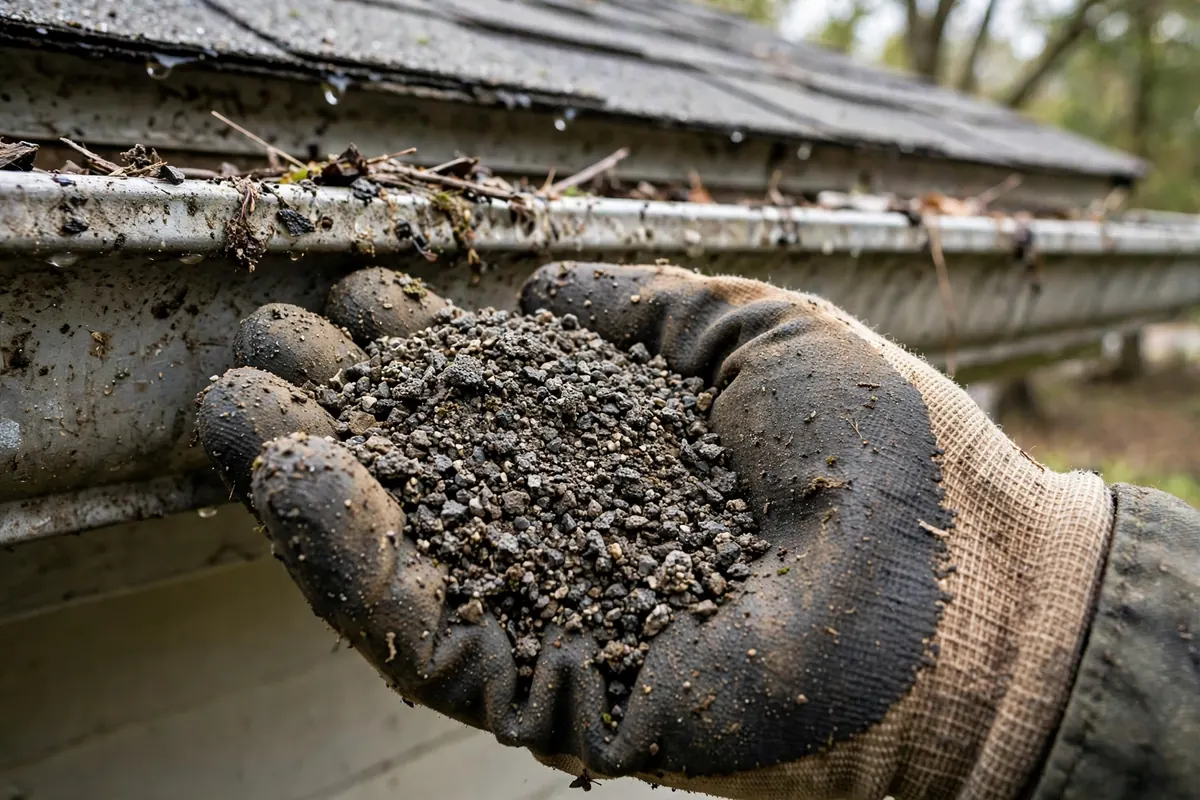
Granule loss checks run with every cleaning: a handful of granules in the gutter after a new roof is normal, but a steady pile year after year means the shield is wearing thin. Once the asphalt underneath shows, the shingle bakes and cracks fast, and the visit report says so plainly.
Soffit and fascia repair belongs on the maintenance list too, because the roof edge takes the weather first. Rotted fascia lets gutters sag, and blocked soffit vents choke the attic. Both get checked on the visit, and both are small jobs when they are caught early.
Through the year
A roof needs a little attention four times a year, and each season asks for something different.
Spring
Look for lifted shingles, cracked flashing, and granules in the gutters. Book a roof inspection before hail season, not after the first storm.
Summer
Hot attics cook shingles from below. Check that soffit vents are clear and the attic does not smell musty after humid weeks.
Fall
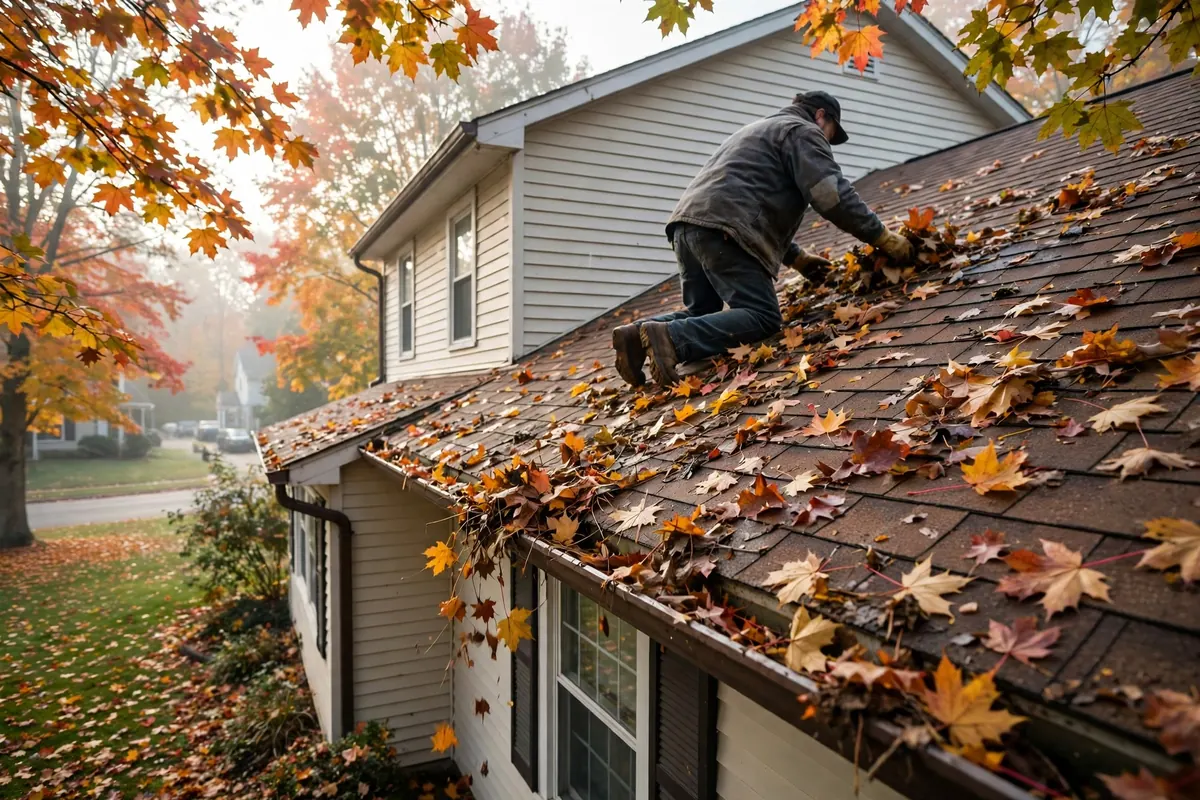
Maple and oak leaves pile up fast in Louisville falls. Clear gutters and downspouts so winter rain runs away from the roof edge.
Winter
After a cold snap, look for ice ridges and icicles along the eaves. They mean meltwater is backing up, and the attic needs more airflow.
Does it work?
Yes, and the mechanism is simple: maintenance catches the small failures before they become big ones. A lifted shingle sealed this spring does not become a torn-off section in the next storm. A clogged gutter cleared this fall does not become a rotted fascia by spring. Each small fix removes one more way the roof can fail.
Seasonal freeze-thaw checks are the Louisville part of the answer. Winter nights below freezing followed by mild days let meltwater creep under shingles and refreeze, prying the layers apart a little more each time. A fall check that seals the flashing and a spring check that finds the winter wear keep that cycle from doing its worst.
Maintenance does not make a roof last forever, and it cannot save a roof that is already worn out. What it does is let a sound roof reach the end of its natural life instead of failing years early to a problem nobody looked for. Roof inspection in Louisville gives the same close look on its own, and gutters in Louisville keep the water path open between visits.
People also ask
Short answers to the maintenance questions that come up most each spring and fall.
Yes, when it is low-pressure. A soft wash with a brush takes moss and algae off without stripping granules. A pressure washer on full force strips the shingle surface and drives water under the courses, doing more harm than the growth it removes.
Cleaning takes it off, and a zinc strip near the ridge slows its return, since rain washes a little zinc down the slope with each shower. Shade is the real cause, so trimming back branches that keep the roof damp all day helps more than any treatment.
A roof that gets checked twice a year fails later and smaller. Book the spring visit before hail season.
Call (502) 922-5047Frequently asked questions
A visit each spring and fall: a close look at the shingles, flashing, valleys, and ridge caps, gutter clearing with the downspouts flushed, an attic check for damp and daylight, low-pressure cleaning of moss and debris, and the small fixes done on the spot, such as sealing a lifted shingle or re-sealing cracked flashing.
Twice a year is the sound rhythm: once in spring after winter and before the storm season, and once in fall before the cold rain sets in. Homes under heavy tree cover need the gutters cleared a third time in mid-fall. Between visits, a look from the ground after heavy weather is enough.
Yes. Maintenance catches small failures before they grow: a lifted shingle sealed this spring does not become a torn-off section in the next storm, and a clogged gutter cleared this fall does not become a rotted fascia by spring. It cannot save a roof that is already worn out, but it lets a sound roof reach its natural life.
In spring, check for lifted shingles, cracked flashing, and granules in the gutters, and book an inspection before hail season. In fall, clear the gutters and downspouts, check the flashing before cold rain sets in, and look for ice ridges at the eaves after the first cold snap.
Most single-family homes take one to two hours, depending on the size of the roof and how much gutter clearing and cleaning is needed. The roof walk, the attic check, and the small fixes all run in the same visit, and the written list of what was found follows the same day in most cases.
Yes. Flat roof maintenance checks the membrane, the seams, and the drains, clears the ponding spots, and reseals the small splits before they grow. A flat roof needs its drains cleared and its seams checked on the same spring and fall rhythm as a pitched roof.
Often, yes. The visit checks the attic for damp boards and stains that have not reached the ceiling yet, and the roof for lifted shingles and cracked flashing that would let the next rain in. Finding the trouble in the attic is what keeps it from ever reaching the room below.
Keep going
Maintenance connects to inspection, gutters, and the attic. These pages follow the same care.
Roof inspection in Louisville gives the same close look on its own, with a plain-words report and photos.
Learn more →Gutters in Louisville keep the water path open between maintenance visits, so the roof edge stays dry.
Learn more →Attic ventilation in Louisville keeps the air moving, so a maintained roof stays dry from below as well as above.
Learn more →Where we work
Roof care takes us across Louisville and the towns around it, to roof maintenance in Pleasure Ridge Park KY, roof maintenance in Fairdale KY, roof maintenance in Lyndon KY, roof maintenance in La Grange KY, and roof maintenance in Taylorsville KY. The full list of towns we serve is on roofing across Louisville and Kentuckiana.
Call or email, tell us when the roof was last looked at, and we will book the spring or fall visit.