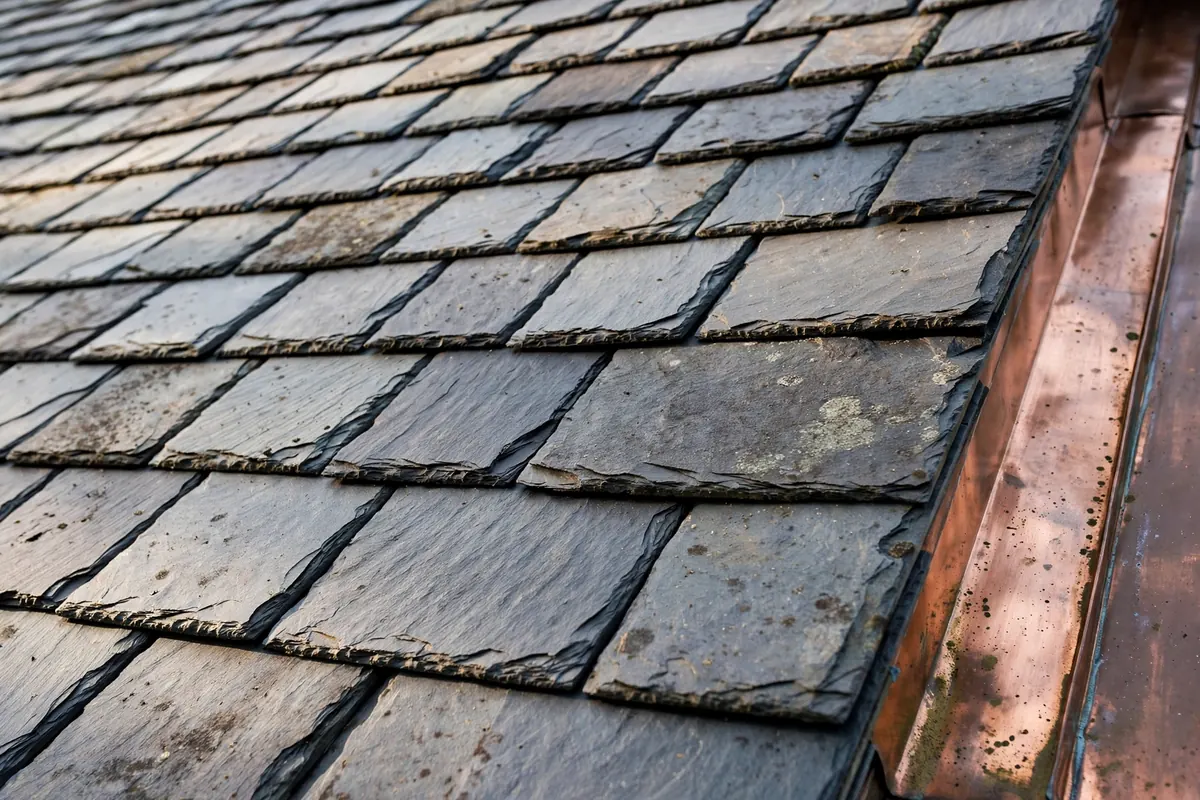
Slipped or missing slates
A slate that has slipped down the slope means its fixing has failed. One slipped slate is a quick fix; several mean the fixings are aging together.
Historic & Premium Roofs
Slate and tile roofs are the long-lived roofs of Louisville, and they belong to the city's oldest and finest houses. They need hands that know the material, flashing that is bent to fit, and a structure strong enough to carry the weight.
Old Louisville
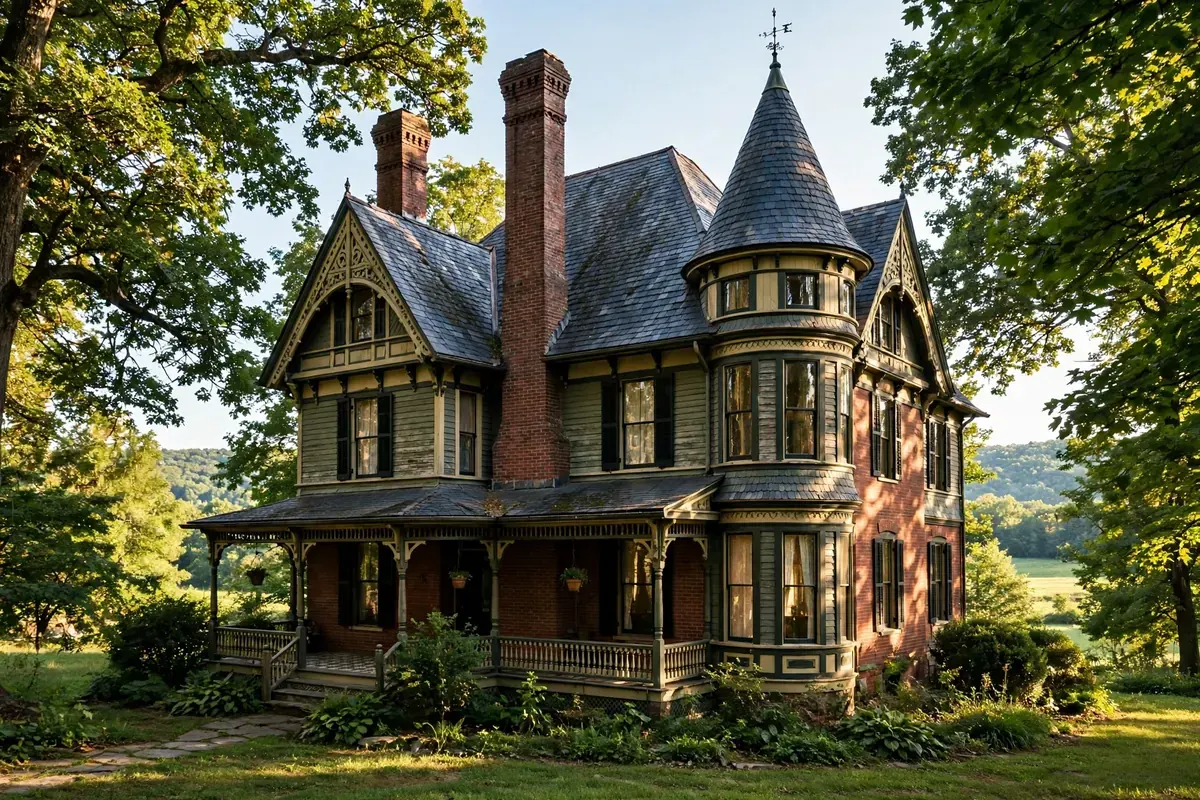
Old Louisville holds tall Victorians with steep slate roofs, turrets, tall chimneys, and long valleys. Natural slate suits those roofs because it is made for steep pitches and long lives: a slate roof laid well can serve for decades, and the stone itself usually outlasts the fixings that hold it. The roof is a permanent part of the house, not a surface that gets swapped every generation.
Slate is heavy, and the weight decides the job before anything else. The structure has to carry it, the deck has to be sound, and the flashing has to be bent to fit every joint, because slate does not bend and it does not forgive a wrong detail. Snow guards belong on slate roofs too, holding snow on the slope so it melts off instead of sliding down in one sheet.
Cedar shake and shingle suit the same historic houses, with a warm, textured look that fits older neighborhoods. Composite and polymer roofing and synthetic slate and synthetic tile give the same look at a lower weight, and they suit houses whose structure cannot carry natural stone. The choice follows the house, its structure, and its history.
Signs of trouble
Slate and tile fail at the joints and the fixings, not in the field. These signs point to the weak spots.
A slate that has slipped down the slope means its fixing has failed. One slipped slate is a quick fix; several mean the fixings are aging together.
Cracked tile from hail impact or foot traffic leaves an open path for water. A cracked tile needs swapping, not sealing.
Valleys carry the most water on a steep roof, and flashing that has cracked or lifted there lets water straight into the house.
A dip in a slate roof can mean the structure is struggling under the weight, or the deck below has rotted. Either one needs a close look.
Moss in the joints holds moisture against the slate and lifts the edges. It hides damage and speeds up wear on shaded slopes.
Slate fragments and tile chips in the gutter mean pieces are breaking off above. The roof is shedding its own surface.
A slipped slate, a cracked tile, or a Victorian that needs a careful hand? Call and talk to a roofer who knows the material.
Call (502) 922-5047Clay vs concrete
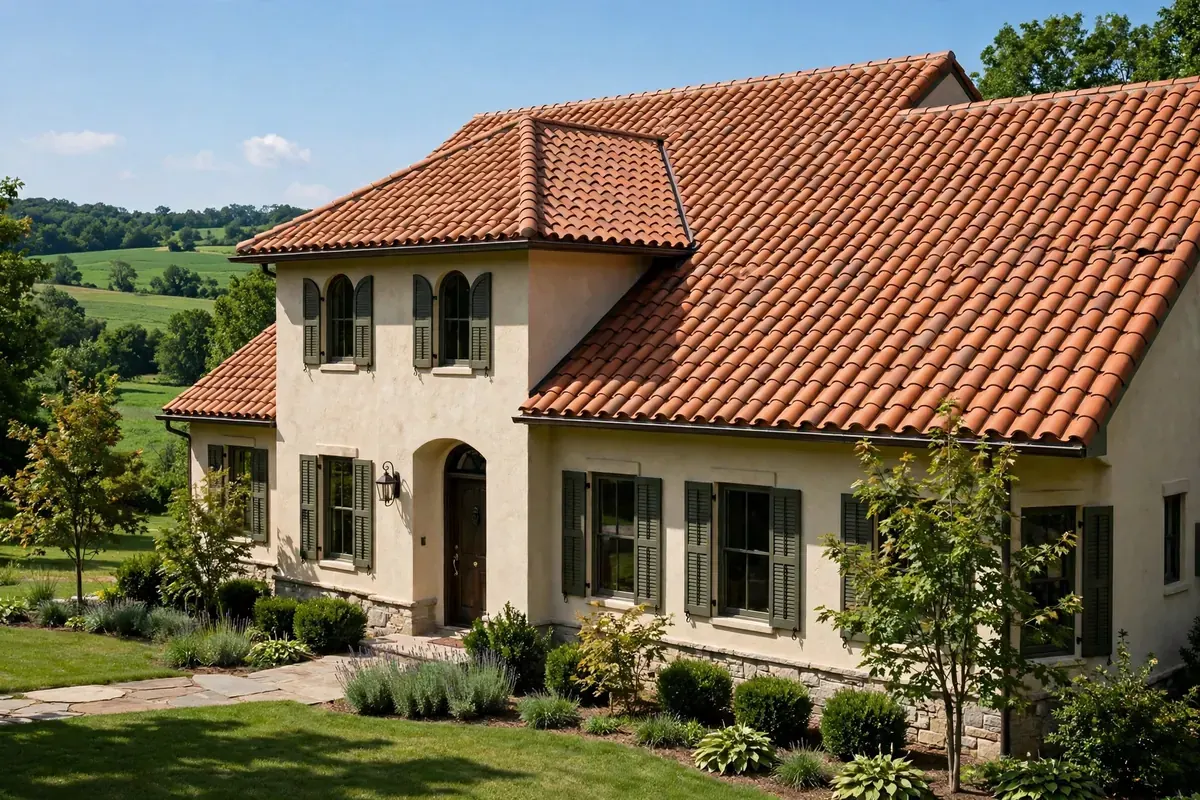
Clay tile is the classic: fired earth in warm terracotta tones, curved barrel tiles that shed water fast and suit Mediterranean and Spanish-style houses. It holds its color for decades, because the color is fired into the clay, not painted on. Concrete tile is the heavier, more regular alternative, cast in a wider range of colors and profiles, and it suits houses that want the tile look at a lower outlay.
Both are heavy, and both need a strong structure and skilled hands. The tiles hang on battens and overlap to shed water, and the flashing at every valley, chimney, and wall has to be bent to fit the curve of the tile. A tile roof that is walked on carelessly cracks underfoot, so the work is done from ladders and hooks, not from standing on the field.
Synthetic slate and synthetic tile give the same look at a fraction of the weight, cast from polymer to mimic the texture and the color variation of the real thing. They suit houses whose structure cannot carry stone or clay, and they suit owners who want the historic look without the historic weight. The flashing and the valleys still need the same care, because the joints are where any tile roof fails.
Specialty materials compared
Five premium materials, each with its own weight, life, and look. The house decides, not a ranking.
| Material | How long it often lasts | Best for | Watch out for |
|---|---|---|---|
| Natural slate | For decades, often outliving the fixings | Steep historic roofs, Victorians | Heavy weight, needs strong structure |
| Clay tile | 50 years or more | Mediterranean and Spanish-style homes | Heavy, cracks underfoot if walked on |
| Concrete tile | 40 to 50 years | Tile look at a lower outlay | Heavy, needs strong structure |
| Synthetic slate or tile | 40 to 50 years | Historic look at a lower weight | Needs the same careful flashing |
| Cedar shake | 25 to 35 years | Historic homes, warm textured look | Needs airflow and care against moss |
Scroll sideways to see the full table.
Repair or replace
A slate or tile roof can almost always be repaired, because the material itself lasts so long that the failures are local: a slipped slate, a cracked tile, a failed flashing detail, or a valley that has worn through. The repair swaps the broken pieces, re-flashes the joint, and the rest of the roof keeps serving for decades. That is the nature of a roof that outlives its fixings.
Replacement only comes into it when the structure has failed, or when the fixings have aged together across the whole roof. A slate roof whose nails have rusted through on every slope needs a re-slate, not a patch, and the slates themselves often go back on, because the stone is still sound. The work is slow and skilled, and it is the opposite of a shingle tear-off: the material is saved, and the fixings are renewed.
The houses that carry these roofs are the houses that made Louisville: Old Louisville Victorians with steep slate and tall chimneys, historic homes in Anchorage and La Grange, and riverfront houses in Prospect and Goshen. Roof repair in Louisville covers the slipped slates and cracked tiles, and metal roofing in Louisville is the alternative where a lighter premium roof suits the structure better.
People also ask
Short answers to the specialty questions that come up most on historic and premium roofs.
Only with great care, and usually not at all. Slate cracks underfoot, so the work is done from ladders, hooks, and staging, not from standing on the field. A roofer who walks a slate roof casually will break more slates than the repair fixes, and the bill grows with every step.
The broken slate is lifted out with a slate ripper that cuts the nails holding it, a new slate slides into the gap, and a copper nail or a slate hook holds it in place. The slates around it stay put, and the repair is invisible from the street when the new slate matches the old ones.
It depends on the structure. Tile and slate are heavy, and the framing has to be built to carry them. A roofer checks the rafters and the deck before any tile goes on, and a house that was built for shingles may need its structure strengthened before it can carry stone or clay.
A historic roof needs a careful hand and the right material. Call and talk through slate, tile, and the alternatives.
Call (502) 922-5047Frequently asked questions
Yes, slate is the roof those houses were built for. Steep pitches, turrets, and tall chimneys all suit natural slate, and the material lasts for decades, which matches the life of the house itself. The structure has to carry the weight, and the flashing has to be bent to fit every joint, but the match is the right one.
A natural slate roof often lasts for decades in Louisville, and the slates themselves can outlast the house they cover. The fixings age faster than the stone, so a slate roof usually needs its nails and flashing renewed long before the slates themselves wear out. The roof is a permanent part of the house.
Clay tile is better where the classic look and the fired color matter, since its color is baked into the clay and holds for decades. Concrete tile is better where the tile look is wanted at a lower outlay, with a wider range of colors and profiles. Both are heavy, and both need a strong structure and skilled hands.
It can almost always be repaired, because the failures are local: a slipped slate, a cracked tile, or a failed flashing detail. The repair swaps the broken pieces and re-flashes the joint, and the rest of the roof keeps serving for decades. Replacement only comes into it when the structure has failed or the fixings have aged together.
A clay tile roof often lasts 50 years or more in Louisville, since the fired clay holds its color and its shape through hail, humidity, and freeze-thaw winters. The flashing and the fixings age faster than the tile, so the roof usually needs its joints renewed long before the tiles themselves wear out.
Yes, from the street it reads very close to the real thing, with the same texture and color variation cast into the polymer. Up close the difference shows in the edge and the weight, but the look is convincing, and the lower weight suits houses whose structure cannot carry natural stone.
Keep going
Specialty roofs connect to repair, metal, and the roof beneath them. These pages follow.
Roof repair in Louisville covers slipped slates, cracked tiles, and failed flashing at the source.
Learn more →Metal roofing in Louisville is the lighter premium alternative where the structure cannot carry stone or clay.
Learn more →Roof replacement in Louisville is the job that puts a new premium roof on, layer by layer from the deck up.
Learn more →Where we work
Slate and tile work takes us across Louisville and the towns around it, to slate roofing in Crestwood KY, slate roofing in Goshen KY, slate roofing in Shelbyville KY, slate roofing in Simpsonville KY, and slate roofing in New Albany IN. The full list of towns we serve is on roofing across Louisville and Kentuckiana.
A Victorian, a historic home, or a premium roof you have been thinking about. Call or email and tell us about the house.