Mansion Row Historic District Victorian slate roofs
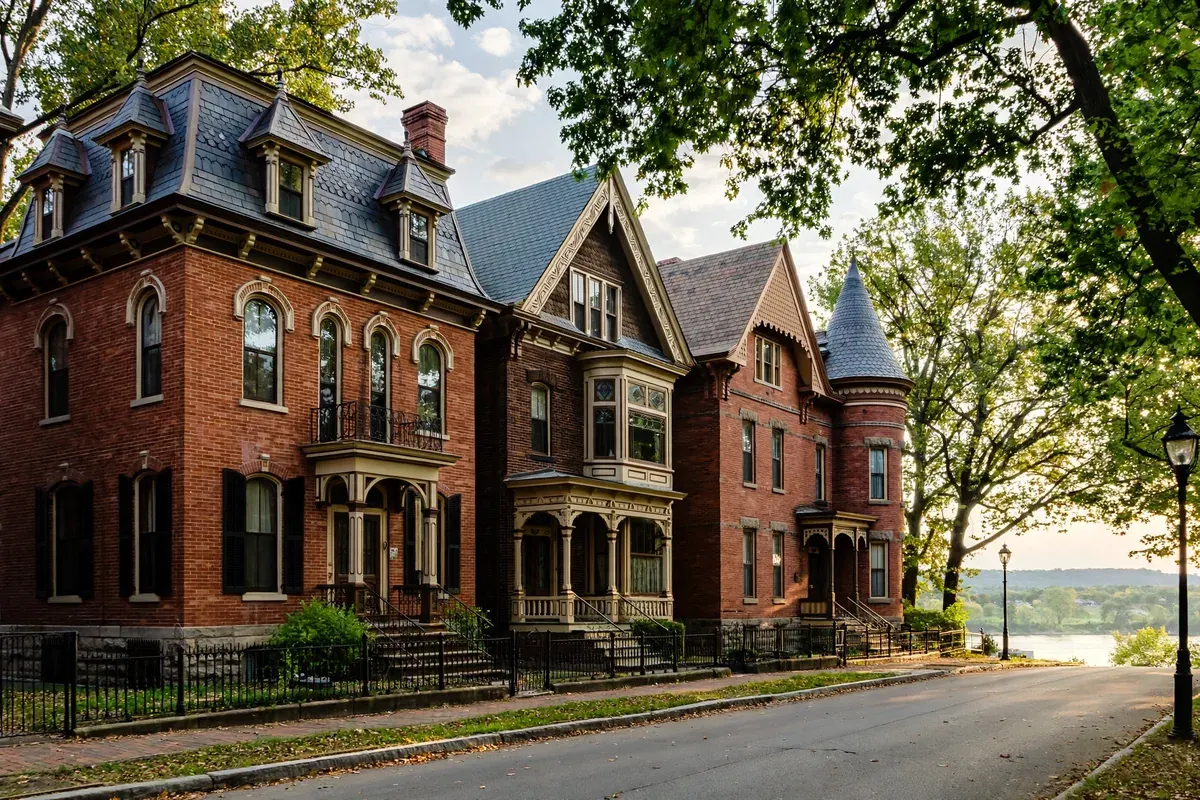
East Main Street from State Street to 15th Street, with 19th-century steamboat-era brick homes and steep slate roofs.
Indiana Riverfront Roofing
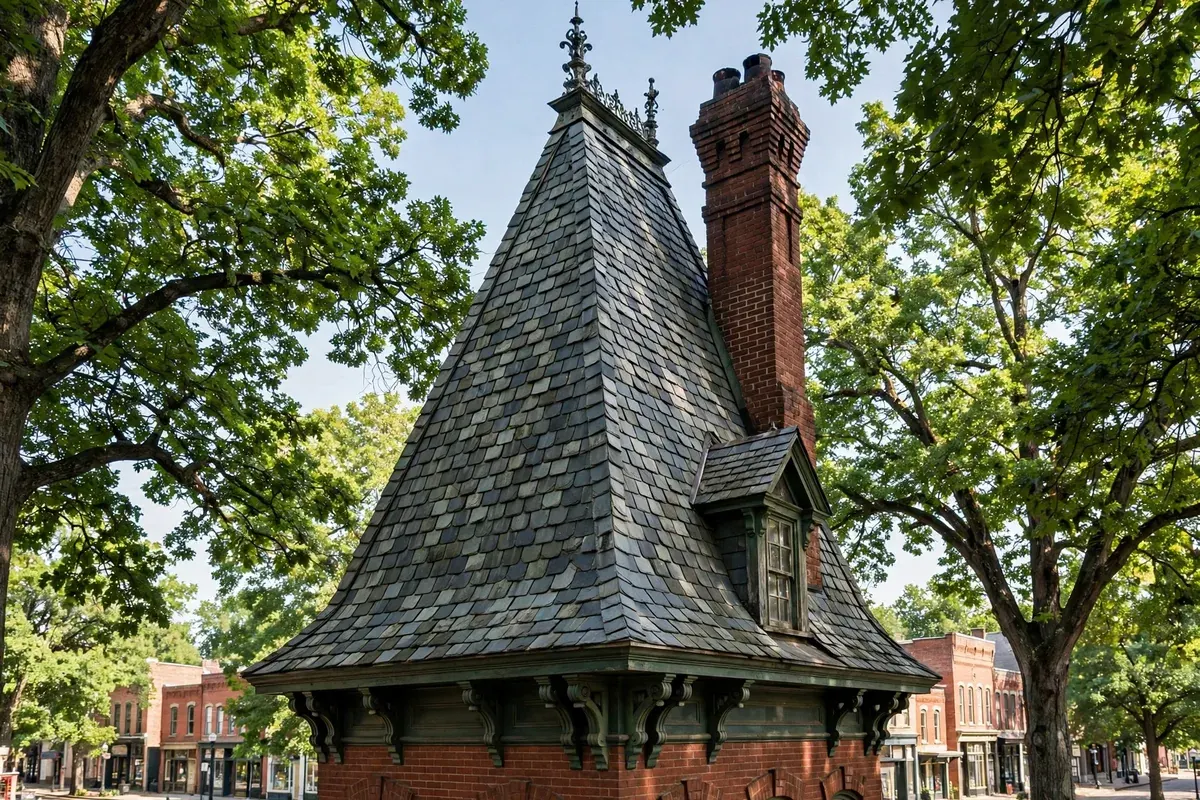
New Albany Victorian roofs are steep and tall, with slate and chimneys that have weathered more than a century of river weather. Those roofs need hands that know slate and tall flashing, and that is the work we do across town.
New Albany, IN
New Albany sits on the north bank of the Ohio River, directly across from western Louisville, and it is the county seat of Floyd County. The town was laid out in 1813 by the Scribner brothers, incorporated as a city in 1839, and around 1850 it was the largest city in Indiana. The downtown and riverfront hold the oldest and densest housing: 19th-century steamboat-era brick in Victorian, Italianate, and Federal styles on Mansion Row and East Spring Street, over masonry basements. Midtown holds postwar bungalows, Cape Cods, and ranches mixed with 1920s frame houses. North New Albany holds newer homes from the 1970s forward, and Silver Hills climbs the Knobs with large historic homes on steep hillsides.
Steep, tall Victorian roofs are the mechanism that shapes roof work here. The downtown roofs are tall and steep, with slate and metal, tall brick chimneys, and flashing joints that have moved with the seasons for more than a century. Silver Hills adds steep hillside exposure to wind and trees. The postwar ranches in midtown and north New Albany carry simpler roofs at replacement age, over crawl spaces and shallow foundations. River humidity and high groundwater behind the 1938 floodwall affect the low-lying homes, and the damp feeds algae on shaded slopes. What gives it away is usually a slipped slate tile, a stain below a tall chimney, or granules washing into the gutter. Every roof here gets judged on its own age and build.
Specialist work
A Victorian roof in New Albany is a tall, steep thing, and the work on it is different from the work on a ranch. The slates are heavy, the pitch is sharp, and the brick chimneys rise high enough that their flashing has shifted with a century of summers and winters. A tile that has slipped is easy to miss from the street and easy to find once you are up there, and finding it early is what keeps water out of the deck.
Silver Hills brings its own trouble: big homes on steep hillsides, open to wind and falling limbs. One limb can crack slate and dent a gutter in the same strike, and the steep slopes shed water fast once the flashing is sound. The midtown and north ranches are the opposite kind of roof, low and simple and at replacement age, and they get a different kind of attention.
A slate tile slipped or a stain below a tall chimney? Call and we will look at the slate and the flashing.
Call (502) 922-5047Neighborhoods
East Main Street from State Street to 15th Street, with 19th-century steamboat-era brick homes and steep slate roofs.
Historic homes with tall, steep roofs and brick chimneys near downtown.
Large historic homes on steep hillsides climbing the Knobs, exposed to wind and trees.
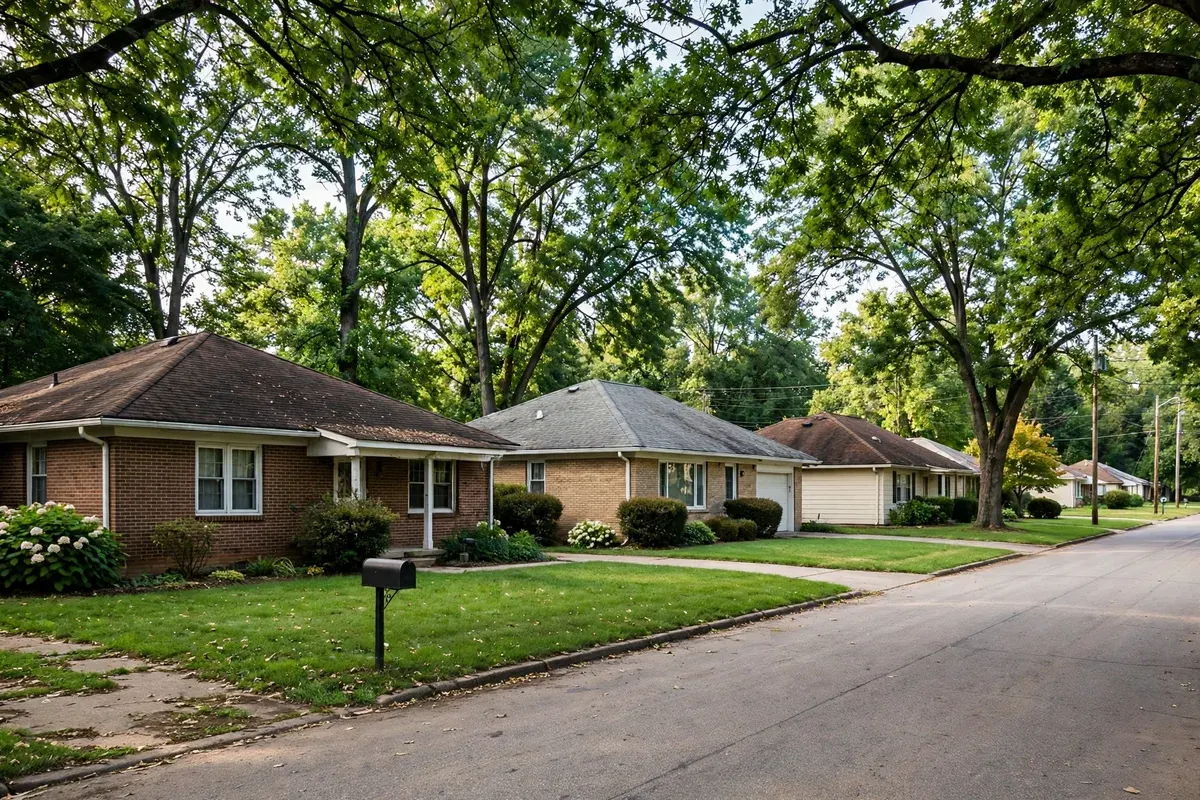
Postwar ranch homes with simple pitched roofs at replacement age.
Ranch and two-story homes in north New Albany, with newer roofs and open lots.
Ranch homes along Green Valley Road, with mature trees and shaded slopes.
Local trouble
New Albany roofs
Tall, steep Victorian roofs need specialist care: slate tiles slip and crack, tall chimneys need flashing that is sealed and seated, and the pitch means a fall hurts. We work these roofs with the care they demand, and we match the material to the house.
New Albany roofs
Silver Hills climbs the Knobs with large historic homes on steep hillsides, exposed to wind and falling limbs. A limb can crack slate and dent a gutter in one strike, and the steep slopes shed water fast once the flashing is sound.
New Albany roofs
River humidity and high groundwater behind the 1938 floodwall affect the low-lying homes, and the damp feeds algae on shaded slopes and wears flashing faster. A close look at the attic tells whether the moisture is coming from above or below.
Homes & roofs
New Albany housing runs from 19th-century steamboat-era brick downtown to postwar ranches in midtown and newer homes in the north. Mansion Row, the East Spring Street Historic District, and the Cedar Bough Place Historic District hold the oldest homes. Silver Hills holds large historic homes on steep hillsides. Autumn Hills, Autumn Grove, Bellemeade, Fairmont, Audubon Place, Crandon Park, Creekside, Gutford Woods, Brent Heights, Brentbrook, Silver Grove, and Klerner Lane hold the midtown and north stock. The Ohio River Greenway runs along the river, Indiana University Southeast sits nearby, and the Sherman Minton Bridge, I-64, crosses into Louisville. The 1938 floodwall, built after the great 1937 flood, protects the low-lying homes.
In New Albany, the house itself sets the roof job. The downtown Victorian roofs need specialist care: steep pitches, slate tiles that slip and crack, tall chimneys with flashing that has worked loose, and decks that have carried a century of weather. Silver Hills adds steep hillside exposure to wind and falling limbs. The postwar ranches in midtown and north New Albany carry simpler roofs at replacement age, over crawl spaces and shallow foundations, with granule loss and curling tabs showing across whole slopes. Indiana issues no state roofing license, and licensing and permits are local, at city and county level.
Coverage
New Albany is the county seat of Floyd County, Indiana, laid out in 1813 by the Scribner brothers along the north bank of the Ohio River, directly across from western Louisville.
The 47150 ZIP covers New Albany in Floyd County, Indiana.
Compare
| Roof option | Which Victorian or ranch it suits | Mansion Row wear to expect |
|---|---|---|
| Natural slate for Victorian homes on Mansion Row | Victorian homes on Mansion Row and East Spring Street | On steep Victorian pitches the tiles work loose, and chimney flashing gives out long before the stone does. |
| Standing seam metal for hillside homes | Historic roofs and wind-exposed hillside homes | Silver Hills wind tests every seam, and the flashing at valleys and chimneys has to hold through it. |
| Architectural shingles for postwar ranches and bungalows in midtown | Postwar ranches and bungalows in midtown | Hail takes granules off the midtown ranches, and river damp keeps the shaded slopes wet long after rain. |
| Three-tab shingles for older midtown ranches | Older midtown ranches nearing the end of shingle life | The thin tabs on older ranches curl up at the edges and catch the wind coming off the river. |
On a phone, slide the table sideways to see the full comparison.
Services
Slate tiles matched to the originals on Mansion Row and East Spring Street Victorians, with chimney flashing rebuilt to suit steep pitches and tall brickwork.
Learn more →Slipped slate reset, chimney flashing resealed, and storm nicks patched on downtown Victorians and midtown ranches alike.
Learn more →A slate-to-deck look at a New Albany roof: tiles, metal, flashing, and attic, written up in plain words with the next step spelled out.
Learn more →Seasonal visits that clear New Albany gutters, check Silver Hills limbs over the roof, and catch moss and loose flashing before they turn into leaks.
Learn more →Or contact a Louisville roofer about the slipped slate or the stain below the chimney.
Nearby towns
Jeffersonville runs east along the riverfront, and Clarksville sits between the two, so a New Albany visit often takes in the river towns on the same trip.
FAQ
We do. We work on the Victorian roofs of Mansion Row and East Spring Street, the hillside homes of Silver Hills, and the postwar ranches of Autumn Hills. Slate work starts with a close look at slipped and cracked tiles, the flashing at tall chimneys, and the deck beneath, then a plan that matches the material to the house.
Natural slate and standing seam metal suit most historic homes downtown, since they match the original character and hold up for decades when they are cared for. Architectural shingles can also work where the structure or the look calls for them. The choice turns on the pitch, the structure, and the house itself, so we look at the roof first and recommend after that.
They do. Steep, tall Victorian roofs carry slate tiles that slip and crack, tall chimneys with flashing that has worked loose, and decks that have carried a century of weather. The pitch means the work needs care and the right equipment, and the material needs hands that know it. We match the slate and the flashing to the house before work starts.
Indiana issues no state roofing license, and licensing and permits are local, at city and county level. That means the vetting matters more: ask for proof of insurance, recent local jobs you can drive past, and a written scope before work starts. We talk through the local rules for your job before we begin.
It can. River humidity and high groundwater behind the 1938 floodwall keep low-lying homes damp, and the damp feeds algae on shaded slopes and wears flashing faster. A close look at the attic tells whether the moisture is coming from above or below, and that answer decides the fix.
Right after the first spring storms pass. Walk the ground and look for slipped tiles, missing tabs, lifted ridge caps, and granules in the gutters, then check the attic for damp insulation or daylight through the deck. Winter wear shows up in spring, and catching it then means the repair stays small.
A Victorian roof with slipping slate, a ranch roof at replacement age, or a Silver Hills roof that took wind and limbs. Tell us what your roof is doing, by phone or email, and we will set up a time to look at it.