ACV
Actual cash value
The value of the roof as it stands today, with age and wear taken into account. An older roof carries a lower actual cash value than a new one.
Claims & Adjuster Help
A roof claim turns on records: the storm date, the photos, and a clear account of what the storm did. We help Louisville homeowners gather that record, understand the terms, and get ready for the adjuster, so the claim rests on facts, not on memory.
How a claim works
A roof insurance claim starts with the storm. The storm date ties the damage to one event, the photos show what that event did, and a written record names what was found and where. Without those three, a claim is a conversation about a roof. With them, it is a file an adjuster can work from.
Homeowners insurance policy terms decide what the policy covers, and they read differently from policy to policy. Sudden storm damage, such as hail or wind tearing shingles off, is often covered, while wear from age is usually excluded. The policy is the document that decides, and reading it before the adjuster visits is the single most useful hour a homeowner can spend.
We are roofers, not adjusters and not lawyers, and we do not decide claims. What we do is the roofing half of the claim: find the damage, document it clearly, and explain what the storm did in plain words, so you walk into the adjuster visit with facts in hand.
The terms that matter
Three terms shape every roof claim in Kentucky. Here is what each one means in plain words.
ACV
The value of the roof as it stands today, with age and wear taken into account. An older roof carries a lower actual cash value than a new one.
RCV
What it takes to replace the damaged roof with a new one of like kind. Some policies settle on this figure, and some settle on ACV first.
Deductible
The amount you carry before the policy responds. The deductible is named in the policy, and it comes off the settlement, not on top of it.
A storm hit and the claim feels confusing? Call and get the damage documented first, then talk to your insurer.
Call (502) 922-5047Before the adjuster visits
Gather the record first. Dated photos of stains, missing shingles, and dents, inside and out, taken before anything is moved or covered. The storm date, from the forecast or the news, so the damage ties to one event. And any receipts from the emergency work, such as tarping, which show what was done to stop the water.
Do not repair the lasting damage before the adjuster has seen it. A tarp is fine, and stopping the water is the right move, but the damaged roof should stay as the storm left it until the adjuster has had a look. Once the inspection is done, the repair can run, and the photos carry the record of what was there.
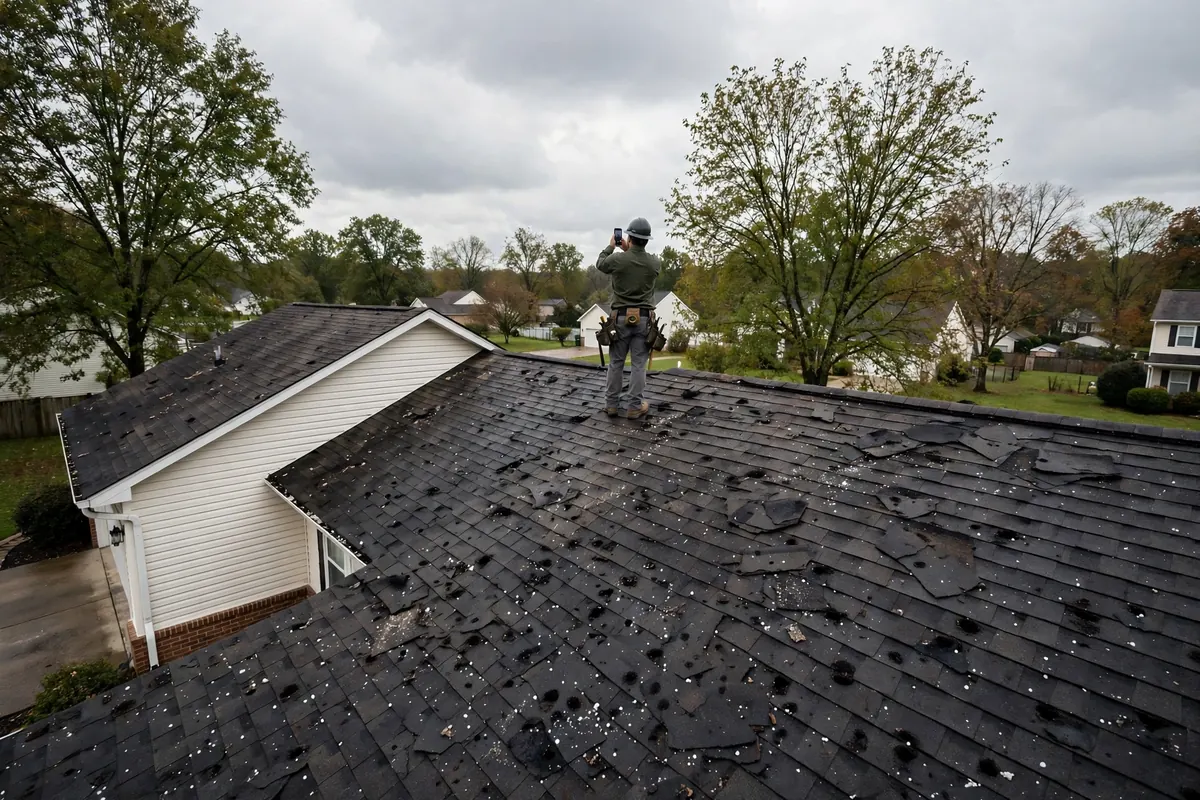
Walk the roof with the adjuster if you can, or have your roofer there for the visit. The adjuster sees many roofs in a day, and a roofer who knows the damage can point out the bruises and the lifted tabs that eyes from the ground miss. Storm damage assessment and documentation is the roofing half of the claim, and it is strongest when the adjuster sees it with the roofer.
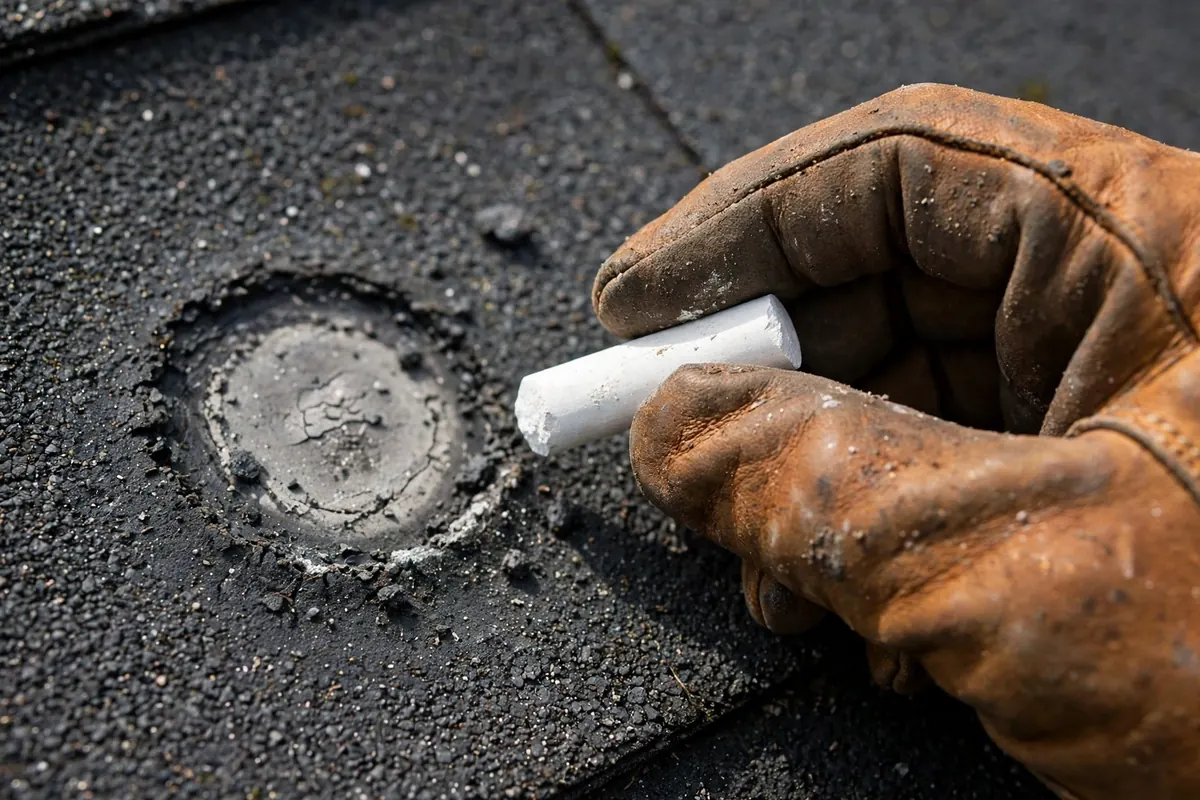
Hail impact damage is the most common claim trigger in Louisville, because a spring storm can bruise a whole block in one afternoon. The bruises hide under the granules, so the photos and the chalk marks are what make the damage visible to an adjuster. Storm damage roof repair in Louisville finds and documents that damage, and the claim follows from the same record.

The claim, step by step
The order matters: document first, repair second, and keep the record at every step.
Step 1
Tarp the opening and control the water inside, so the next rain does not turn a small opening into a bigger repair.
Step 2
Dated photos inside and out, the storm date, and a written list of what was found and where, before anything is covered.
Step 3
Note the deductible, the ACV and RCV terms, and what the policy says about storm damage and age, before the adjuster visits.
Step 4
Walk the roof with the adjuster if you can, with your roofer there to point out the damage that eyes from the ground miss.
Step 5
Once the claim is settled, agree the full repair in writing, so the work matches the record the claim was built on.
If the claim is denied
A denial is not the end of the claim. Ask for the denial in writing, with the reason named, and read it against your policy: a denial for wear and age reads differently from a denial for missing records, and the next step follows from the reason. A claim denied for thin records can be reopened with better photos and a clearer account of the storm date and the damage.
Manufacturer installation specifications can support a claim where the work itself is in question. When a roof was installed to the maker's specification, the record of that installation backs the claim that the roof was sound before the storm. When the installation was wrong, the claim turns on the storm damage itself, not on the roof's history.
Whatever the outcome, the roof still needs its repair. A denied claim does not make the damage go away, and the water keeps coming in while the paperwork runs. Roof replacement in Louisville is the lasting answer when the storm damage is spread across the whole roof, and the repair can run while the claim question is still open.
People also ask
Short answers to the claim questions that come up most after a storm.
It depends on the deductible and the damage. When the repair sits near the deductible, filing may not be worth it, since the policy responds only above that figure. When the damage is spread across the roof, the claim is the right path, and the photos and records decide how far it goes.
Policies set their own deadlines, and they differ, so the policy is the document that answers it. The safe move is to file promptly after the storm, while the damage is fresh and the storm date is clear, and to keep the photos and receipts from the first day.
Yes. The policy covers the repair, and the choice of roofer is yours. The insurer may suggest names, but the roofer who does the work is the one you hire, and the written scope you agree with that roofer is the plan the repair follows.
The claim starts with the record, not the paperwork. Call and get the storm damage documented first.
Call (502) 922-5047Frequently asked questions
First the damage gets documented: dated photos, the storm date, and a written list of what was found and where. Then the claim is filed and the adjuster inspects the roof, often with the roofer there to point out the damage. The settlement follows the policy terms, and the repair runs once the claim is settled.
Actual cash value is the value of the roof as it stands today, with age and wear taken into account. Replacement cost value is what it takes to replace the damaged roof with a new one of like kind. Some policies settle on replacement cost, and some settle on ACV first, so the policy is the document that decides.
Gather the record: dated photos inside and out, the storm date, and receipts from any emergency work such as tarping. Do not repair the lasting damage before the visit, so the adjuster sees the roof as the storm left it. Walk the roof with the adjuster if you can, with your roofer there.
Ask for the denial in writing, with the reason named, and read it against your policy. A denial for wear and age reads differently from a denial for thin records, and a claim denied for records can be reopened with better photos and a clearer account. The roof still needs its repair, whatever the outcome.
It often covers sudden storm damage, such as hail or wind tearing shingles off, but every policy reads differently and wear from age is usually excluded. Read your policy, note your deductible, and keep photos and receipts from the storm. Your insurer decides what the policy covers.
That is a question for your insurer, since every company treats claims differently. Some count storm claims differently from other claims, and some do not. Ask your agent directly before filing, and weigh the answer against the size of the damage and the deductible in your policy.
Keep going
A claim starts with the storm and ends with the repair. These pages cover both ends.
Storm damage roof repair in Louisville finds hail and wind damage and documents it with photos.
Learn more →Roof replacement in Louisville is the lasting answer when storm damage is spread across the whole roof.
Learn more →A roof inspection in Louisville gives the claim a full, documented look, slope by slope.
Learn more →Where we work
Claim help reaches across Louisville and the towns around it, including roof insurance claim help in Pleasure Ridge Park KY, roof insurance claim help in Fairdale KY, roof insurance claim help in Lyndon KY, roof insurance claim help in La Grange KY, and roof insurance claim help in Hillview KY. The full list of towns we serve is on roofing across Louisville and Kentuckiana.
A storm, a denial, or a claim you have not started yet. Call or email and tell us what the storm did.