Missing shingles over a seam
A bare patch over a seam is an open door for rain, and the underlayment below it soaks fast.
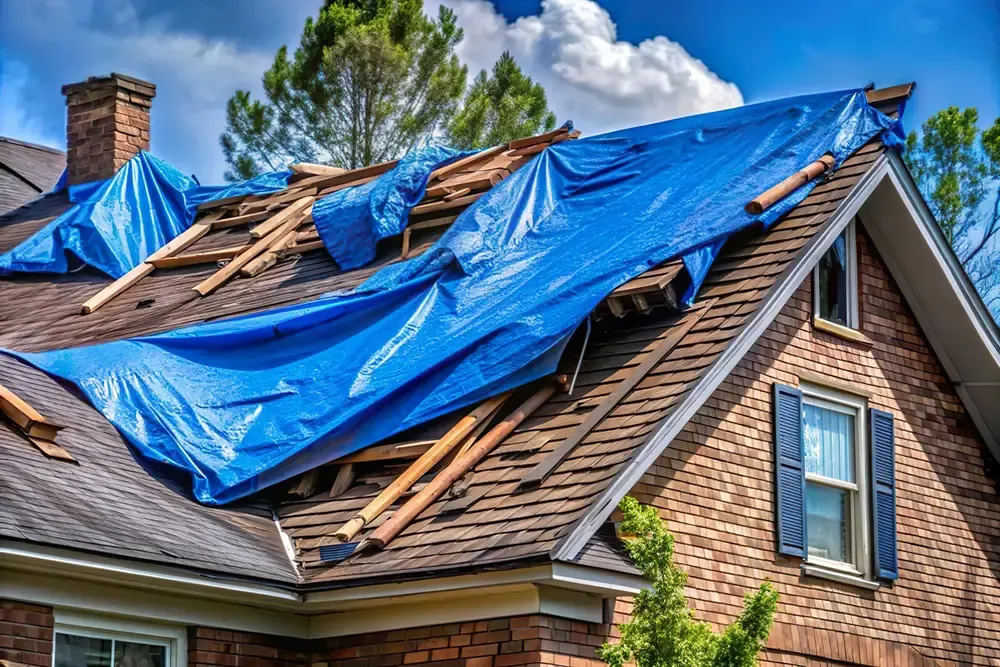
Emergency Tarping
A tarp is the fastest way to keep rain out of a damaged roof, and it is also the most misunderstood. It is a temporary cover, not a repair, and knowing when it is the right call saves both the roof and the house.
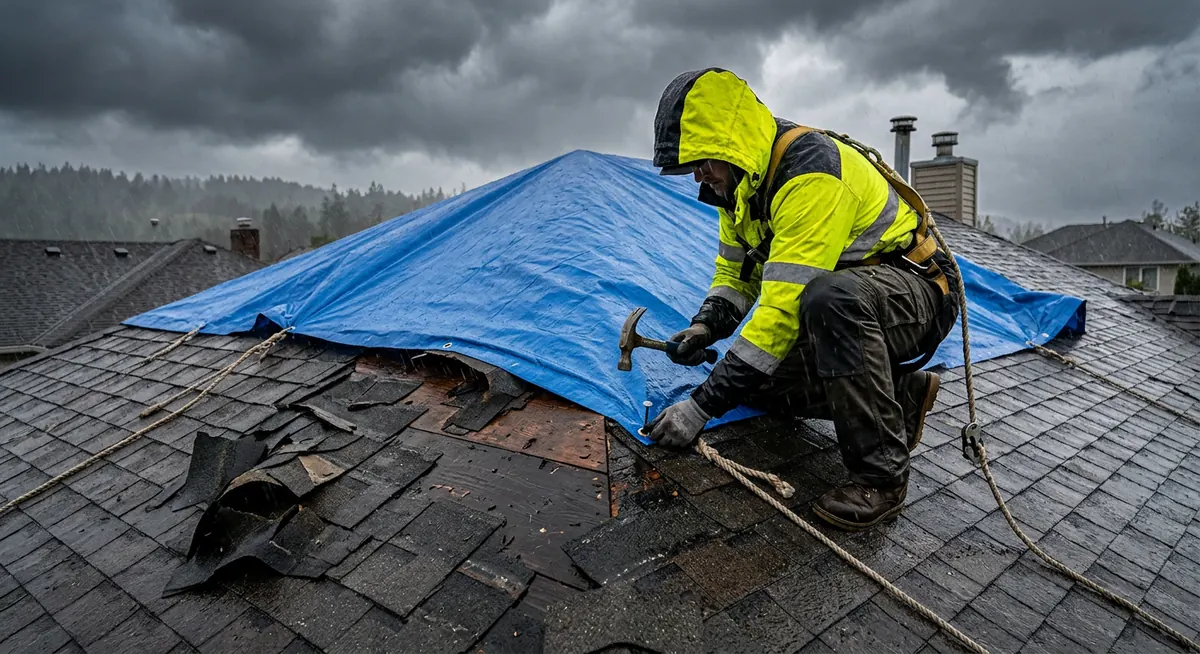
The right call
A tarp is the right call when the roof is open and water can get in. Missing shingles after a storm, a section torn by wind, a tree limb through the deck: any opening that lets rain reach the deck and the rooms below needs a cover at once. The tarp buys time, days or weeks, while the lasting repair is planned, the adjuster visits, and the materials are ordered.
The tarp goes on fast and it goes on right. A roofer lays it over the damaged area and past it on all sides, anchors it to sound roof and framing, and seals the edges so wind cannot peel it back. A tarp thrown over the hole and held by bricks is not a tarp job: the wind lifts it in the first gust, and the rain gets in behind it. The anchoring is the work, and it is what makes the tarp hold through the next storm.
The other right call is a leak that will not stop. A drip that keeps coming through the ceiling during rain, even a small one, means water is already inside the deck, and the tarp stops more water joining it. The buckets inside catch what is already in, and the tarp keeps the next rain out. Emergency roof repair in Louisville starts with the tarp, and the lasting repair follows.
Tarp it now
Any one of these means water can get in before morning. Call for a tarp, and keep the buckets ready inside.
A bare patch over a seam is an open door for rain, and the underlayment below it soaks fast.
Wind-torn shingles leave a wide opening, and the next rain will soak the deck across it.
A fallen limb opens a hole and cracks the deck around it, and the hole needs a cover at once.
A drip that keeps coming means water is already inside, and the tarp stops more joining it.
A sag means the deck below is weak or soaked, and rain on it will make the sag worse.
Light through the deck means a hole in the roof, and rain follows light through the same opening.
Roof open and rain coming? Call now and get it tarped before the next rain.
Call (502) 922-5047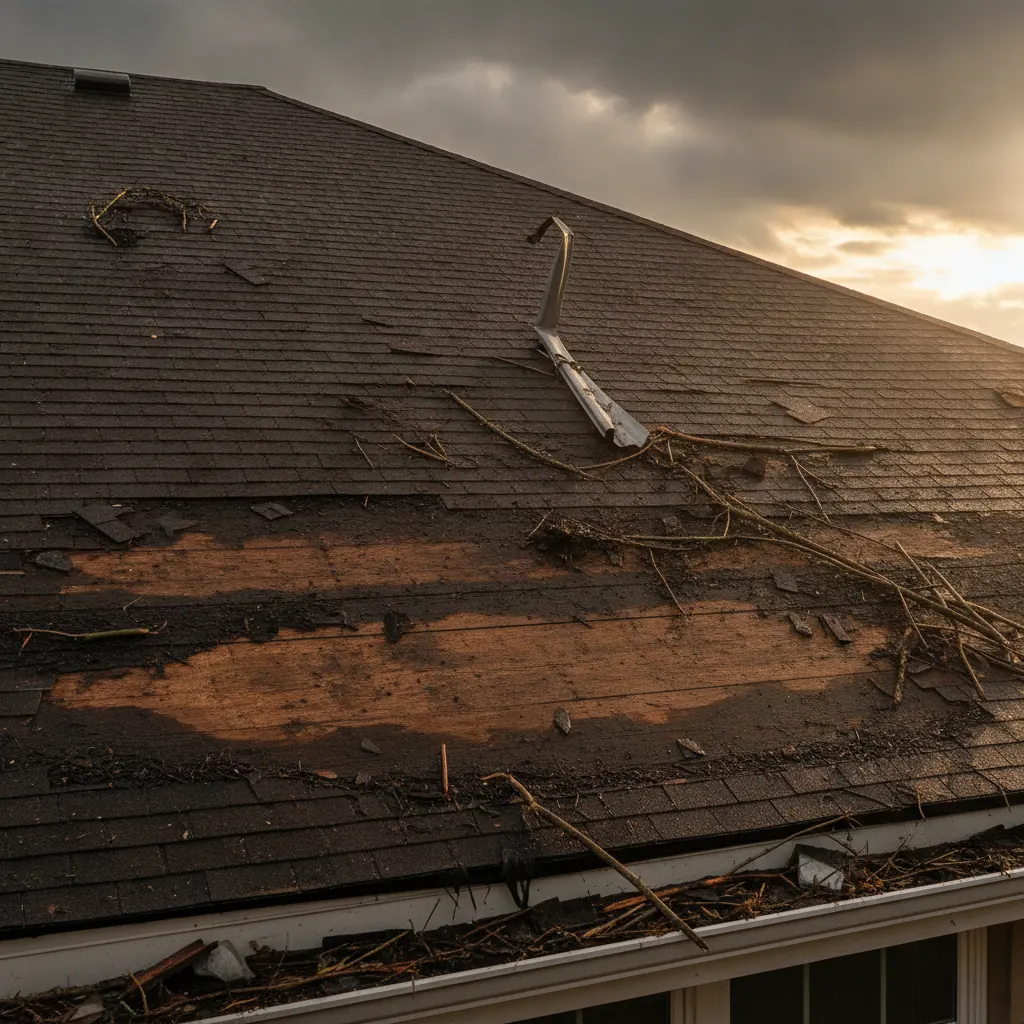
What it cannot do
A tarp cannot fix the deck. A soft or rotted deck below the tarp stays soft, and the tarp hides it while the rot goes on. A tarp cannot fix flashing, since the flashing around a chimney or a skylight sits under the tarp and keeps leaking at its own joint. And a tarp cannot fix a roof that is wearing out everywhere, since covering one slope leaves the others open to the next storm.
A tarp also cannot stay up for a season. Sun breaks the tarp down, wind works the anchors loose, and water pools in the folds and finds its way under the edges. A tarp left up for months becomes a leak of its own, and the roof below it rots in the damp. The tarp is a bridge to the repair, not a roof in itself, and the repair should follow within weeks, not months.
While you wait
The tarp keeps the next rain out. The inside still needs attention, since the water that already got in keeps moving.
Keep the buckets under any drip until the ceiling dries, and move rugs and furniture out of the path of the water. Photograph every stain with the date, since the record matters for the claim and for the repair plan. If the ceiling bulges with water, do not push on it: call a roofer, since a bulging ceiling can come down, and the water inside it needs draining by someone who knows where to cut.
Do not climb on the roof to check the tarp yourself. A tarped roof is slick, the anchors are underfoot, and the deck below may be soft. A roofer checks the tarp and the deck together, and that check is what turns the emergency into a plan.
People also ask
Short answers on emergency tarping, and when it is the right call.
Usually not. A roof torn open by wind, a limb through the deck, or a drip that will not stop while it rains all count, since the water is already inside. A few lifted shingles with no water inside is a repair, not an emergency, and it can wait until the weather clears.
Weeks, not months. Sun breaks the tarp down, wind works the anchors loose, and water pools in the folds and finds its way under the edges. A tarp is a bridge to the lasting repair, and the repair should follow within weeks of the tarp going on.
It is better to let a roofer do it. A tarped roof is slick, the deck below may be soft, and the anchoring is what makes the tarp hold in the next storm. A tarp held by bricks lifts in the first gust. A roofer anchors it to sound roof and framing, and that is the work that matters.
Need a tarp tonight? Call and tell us what the storm did.
Call (502) 922-5047Frequently asked questions
When the roof is open and rain is coming, or when a leak will not stop during rain. Missing shingles, a wind-torn section, or a limb through the deck all need a cover at once. A tarp buys time while the lasting repair is planned, and it keeps the next rain out of the deck.
It turns on the storm and the queue. After a big hailstorm, every roofer in Louisville is busy, and calls are answered in the order they arrive. Calling early, with the damage described plainly, gets the tarp on sooner. The tarp comes first, and the lasting repair is scheduled after it.
The crew looks at the damage from the ground and the attic first, then covers the open area with a tarp anchored past the damage on all sides. They write down what the storm did and what the lasting repair needs, so you have a clear record and a plan in hand.
A well anchored tarp stops the rain from getting in through the covered area, and the drips inside should slow and stop. Water that is already inside the deck keeps moving for a while, so the buckets stay out until the ceiling dries. A tarp that lifts in the wind lets the rain back in, which is why the anchoring matters.
Ring a local roofer with recent jobs you can drive past, not a crew that turned up knocking after the storm. A roofer from Louisville is still around when the tarp needs a check and the lasting repair comes due. Keep the number saved before storm season, so the call takes minutes, not hours.
It often covers the tarp as part of the storm damage, since the tarp stops the damage growing while the claim runs. Keep the receipt and the photos of the damage before the tarp went on. Your insurer decides what the policy covers, so talk with your agent about the tarp and the repair together.
Keep reading
A leak during a storm is the other emergency. Read what to do when your roof leaks during a storm for the inside moves, and see emergency roof repair in Louisville for the service.
Call now. We will tarp the opening, stop the water, and plan the lasting repair with you.