Catch the water
Put a bucket under the drip and lay towels along the path of the water, so it does not spread across the floor.
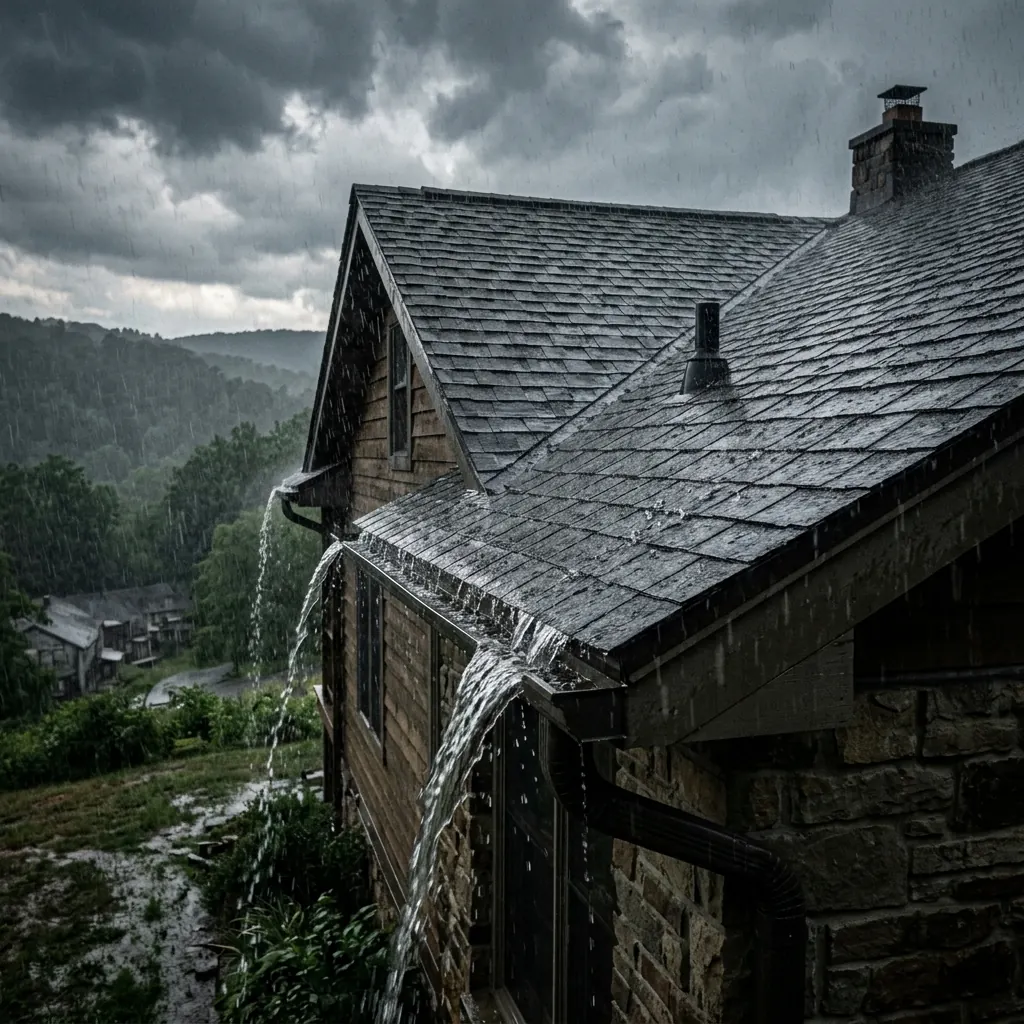
Leak in a Storm
Water is dripping through the ceiling, the rain is still falling, and nobody can get on the roof yet. The moves you make inside in the next hour decide how much damage the storm does.
Right now
Work through these in order. The first three limit the water, and the last two set up the repair.
Put a bucket under the drip and lay towels along the path of the water, so it does not spread across the floor.
Move rugs, furniture, and electronics out of the way, and lift anything on the floor that the water could soak.
If the ceiling bulges with water, call a roofer before touching it, since a bulging ceiling can come down.
Shoot every stain and drip with the date, since the record matters for the claim and the repair.
Call now, even in the storm, so the tarp goes on as soon as the rain eases and the roof can be reached.

Inside the house
A ceiling that bulges with water is holding a pool above the drywall, and the pool gets heavier with every minute of rain. Do not push on it, and do not poke a hole in it yourself. A bulging ceiling can come down in a sheet, and the water inside it needs draining by someone who knows where to cut and where to stand. Call a roofer and keep the room clear below the bulge.
The rest of the inside work is simpler. Buckets under the drips, towels along the water path, and furniture moved out of the way are the moves that limit the damage. If the water is near lights or outlets, turn off the power to that room at the breaker, since water and wiring do not mix. The storm will pass, and the inside will dry, but the water that soaks the floor and the furniture stays soaked, so the moving matters more than the mopping.
Roof leaking right now? Call and get a tarp on as soon as the rain eases.
Call (502) 922-5047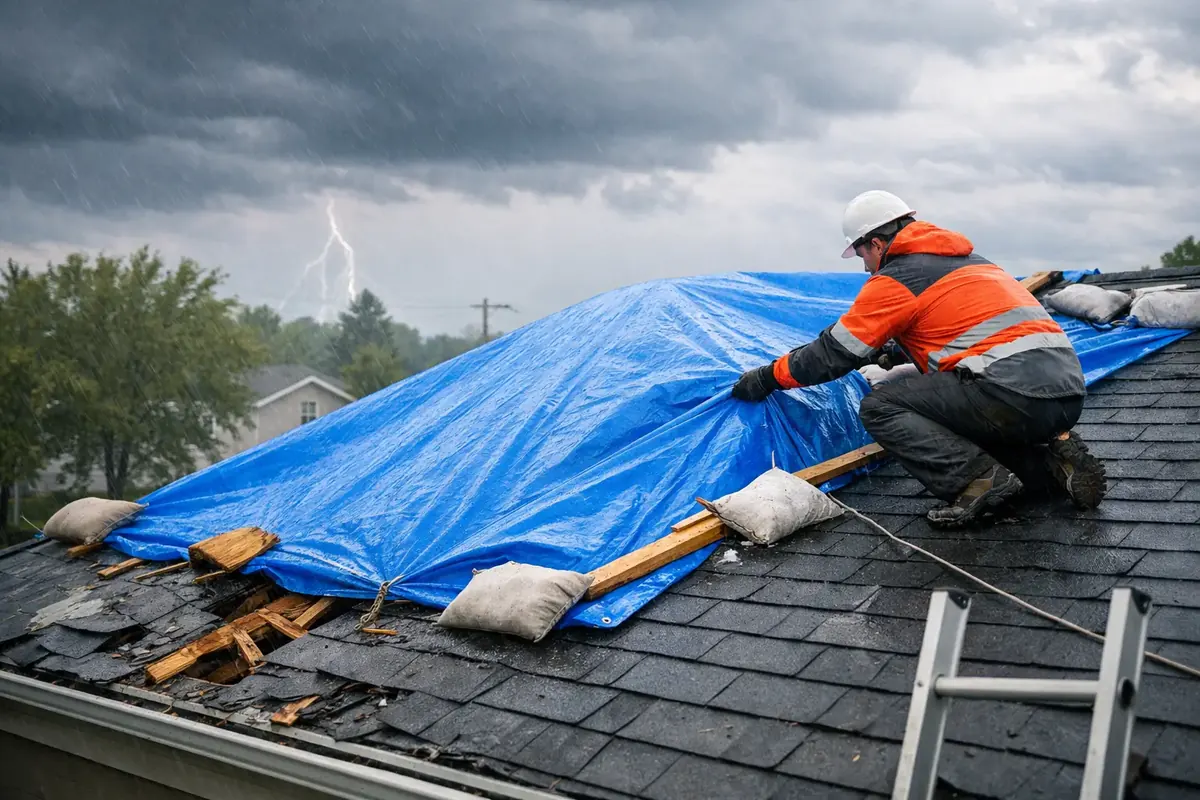
After the rain
A roofer cannot work on a roof in driving rain or lightning, and no one should climb up in a storm. The tarp goes on as soon as the rain eases and the roof can be reached safely, and the call made during the storm is what puts the roofer on the way. The tarp covers the opening and is anchored past it on all sides, so the next rain stays out while the lasting repair is planned.
After the tarp, the roofer traces the leak from inside the attic, where the stains on the rafters mark the water path back to the opening. The lasting repair waits for the roof to dry and for the adjuster to see the damage, but the tarp holds the line in between. Emergency roof repair in Louisville starts with the tarp, and the repair follows.
After the storm
The storm passes, the tarp holds, and the repair is planned. The record you made during the storm is what the next steps rest on.
Keep the photos and the dates. The stains, the drips, and the bulge, all dated, are the record of what the storm did, and they matter for the claim and for the repair plan. Walk the attic with the roofer and point out the stains, so the water path is traced to the opening, not just to the stain on the ceiling.
Do not seal the stain from inside and call it done. The stain is the last sign of the leak, and the opening above it is still there, waiting for the next rain. The repair fixes the opening, and the ceiling is fixed after the roof is dry and sound.
People also ask
Short answers on leaks during a storm, and what to do while it rains.
Water getting in is the line. A roof that is open after wind, a limb through the deck, or a drip that will not stop during rain all count, since the water is already inside. A few lifted shingles with no water inside is a repair, not an emergency, and it can wait for a dry day.
No. A wet roof is slick, and no one should climb up in driving rain or lightning. The leak is traced from inside the attic after the storm, where the stains mark the water path. Stay inside, catch the water, and call a roofer for the tarp when the rain eases.
Catch the water with a bucket, lay towels along its path, and move furniture out of the way. Do not poke a hole in a bulging ceiling yourself, and turn off the power to the room if water is near lights or outlets. The tarp on the roof is the temporary fix that stops more water coming in.
Leak going right now? Call and tell us what you see.
Call (502) 922-5047Frequently asked questions
Put a bucket under the drip, lay towels along the water path, and move rugs and furniture out of the way. Photograph the stains with the date, and call a roofer for a tarp as soon as the rain eases. Stay off the roof during the storm, and stay inside while the rain is falling.
Yes, it can come down. A ceiling that bulges is holding a pool of water above the drywall, and the pool gets heavier with every minute of rain. Do not push on it or poke a hole in it yourself. Call a roofer, keep the room clear below it, and let someone who knows where to cut drain it.
No, not on the roof itself. A roofer cannot work on a wet roof in driving rain or lightning, and the tarp goes on as soon as the rain eases. The inside work, catching the water and moving furniture, happens during the storm, and the roof work starts when the weather allows it.
Heavy rain drives water sideways under flashing and lifted shingles, where light rain runs straight down the slope. A small gap that holds in light rain lets wind-driven rain through. The leak points to a joint that has opened a little, and it is a repair while the gap is small.
Yes, if the water is near lights, outlets, or wiring, turn off the power to that room at the breaker. Water and wiring do not mix, and a leak near a light fitting is a risk. Do not touch a wet light switch or outlet, and call for help if the water is spreading near the wiring.
Do not wait. The tarp goes on as soon as the rain eases, and the lasting repair follows once the roof is dry and the adjuster has seen the damage. A leak that is left open soaks the deck a little more with every rain, and the repair grows with each storm that passes.
Keep reading
For the tarp itself, read when is emergency roof tarping the right call, and to catch the next leak early, read how to spot a roof leak before it stains your ceiling.
Call now. Catch the water inside, stay off the roof, and we will tarp it as soon as the rain eases.