Crystal Lake Subdivision roofs
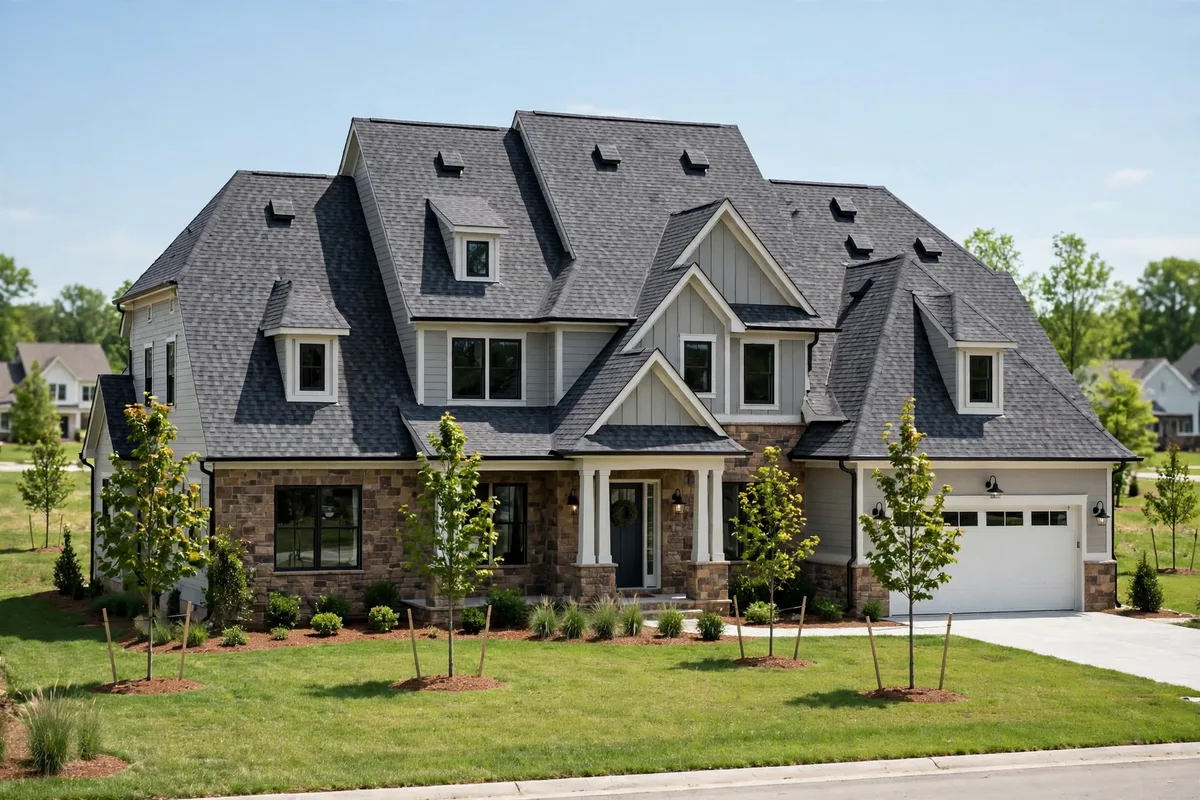
A subdivision off the main corridors, with newer homes and multi-slope roofs.
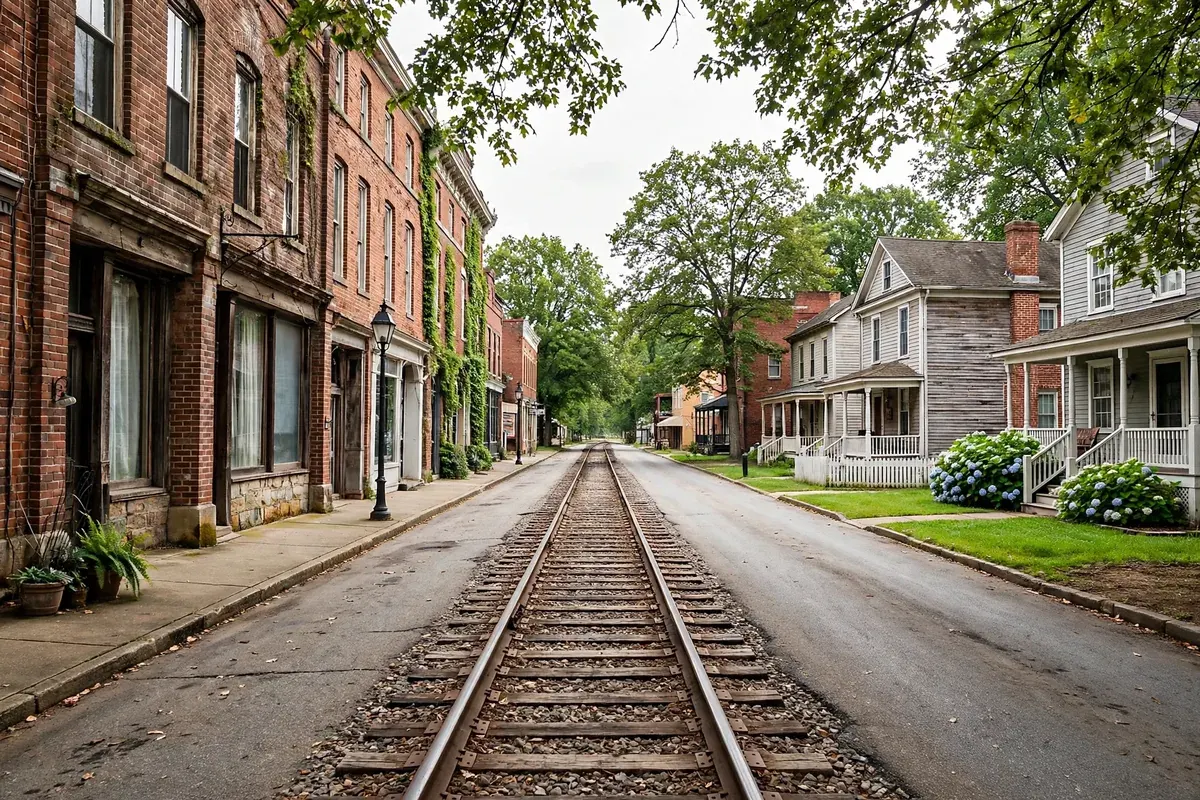
Oldham County Seat
Downtown La Grange still carries slate and standing seam metal from another era, while Summit Parks and Creekstone add multi-peaked roofs on open rolling hills. One town, two roof problems: flashing that has worked loose over decades, and valleys that wear fast on brand-new peaks.
Compare
| Roof option | Which downtown or new-build roof it suits | Oldham County wear to expect |
|---|---|---|
| Architectural shingles for new subdivisions and in-town homes | New subdivisions and in-town homes | Open rolling hills give hail a clear run, so granule loss shows early on the exposed peaks. |
| Natural slate for historic homes near downtown | Historic homes near downtown | Tiles slip on the steep in-town pitches, and the flashing at the chimneys wears faster than the stone. |
| Standing seam metal for wind-exposed builds | Historic homes and wind-exposed new builds | Wind off the open hills tests the seams, and the flashing at valleys and dormers has to be bent to fit. |
| Flat roof membrane for Main Street storefronts | Main Street storefront flat roofs | Storefront flat roofs pond water after rain, and the seams and drains are the first places it finds a way through. |
Swipe the table sideways on a phone to see the full comparison.
La Grange, KY
La Grange is the county seat of Oldham County, about thirty minutes from downtown Louisville, and it holds two roof stories at once. The historic downtown, with its Downtown La Grange Historic District and Russell Court Historic District, carries older commercial and residential roofs, and the railroad has run through downtown since the tracks were laid in 1851. The newer subdivisions, Summit Parks, L'Esprit, Reserve at L'Esprit, Creekstone, and Hampton Farms, hold large estate homes and multi-peaked new roofs that went up from the early 2020s onward.
Multi-peaked new roofs on open rolling hills are the mechanism that shapes roof work here. The Summit Parks homes share a ranch-inspired look with multi-peaked roofs, and each peak creates valleys that carry water and collect leaves. The open rolling-hill exposure gives wind and hail a clear run, and the valleys wear first. The symptom is often a valley that stays damp, a lifted tab on a windward peak, or a leak at a dormer joint. The historic homes near downtown carry a different story: slate and standing seam metal on older roofs, with flashing that has moved with the seasons for decades. We read each roof on its own terms.
Neighborhoods
A subdivision off the main corridors, with newer homes and multi-slope roofs.
Large estate homes with tall, complex roofs and long gutter runs.
Homes built from the early 2020s, sharing a ranch-inspired look with multi-peaked roofs.
Large estate homes with steep roofs and several valleys that collect leaves.
A network of streets off Smith Lane, with newer homes and open lots.
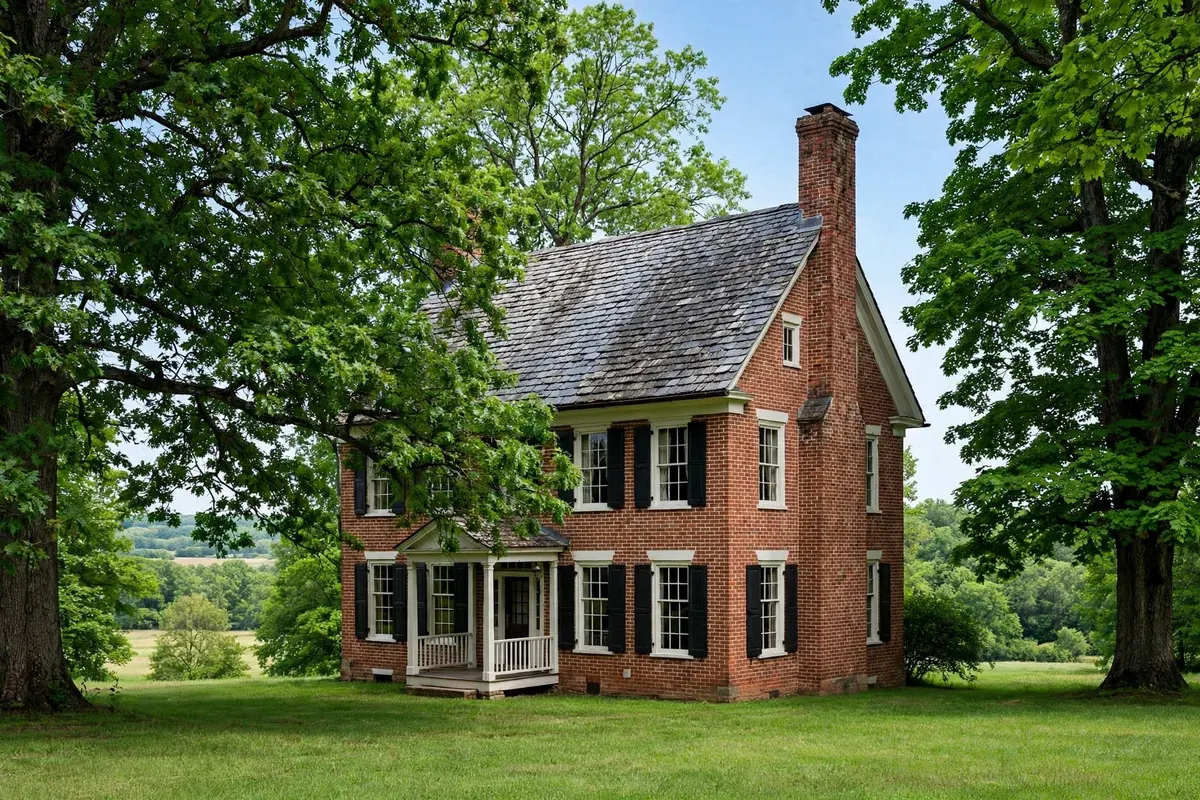
Small-town historic homes near downtown, with slate and metal roofs and older flashing.
A valley staying damp, or a slate tile slipped downtown? Call and we will read your roof on its own terms.
Call (502) 922-5047Local trouble
La Grange roofs
New homes in Summit Parks and Creekstone carry multi-peaked roofs, and each peak creates a valley. Valleys carry the most water on any roof, so they wear first and leak first, and keeping them clear of leaves is the main job.
La Grange roofs
The rolling hills around La Grange give wind and hail a clear run, and the exposed peaks take the full force of a spring storm. We feel for bruised shingles and lifted tabs after hail, before the leak starts.
La Grange roofs
The historic homes and Main Street storefronts near downtown carry slate, standing seam metal, and flat roofs, each with its own flashing story. Slate tiles slip, metal seams work loose, and flat roofs pond water, so the inspection covers each material on its own terms.
Homes & roofs
La Grange housing runs from small-town historic homes near downtown to growing luxury and new subdivisions. Summit Parks homes, built from the early 2020s, share a ranch-inspired look with multi-peaked roofs. L'Esprit and Hampton Farms hold large estate homes. Sycamore Run is a network of streets off Smith Lane. The Oldham County Courthouse sits in the 40031 ZIP. I-71 runs nearby, US Highway 42 carries the main traffic, and KY 53 runs north from I-64. The town sits about thirty minutes from downtown Louisville, and the rolling hills around it give every roof an open view of the weather.
Roof work in La Grange runs on two tracks: the old downtown and the new peaks. The new construction in Summit Parks, Reserve at L'Esprit, and Creekstone carries young roofs, but their multi-peaked shapes mean many valleys, and the open rolling-hill exposure means wind and hail hit them at full strength. The older in-town homes carry slate and standing seam metal, and their flashing has worked loose at chimneys and walls over the decades. A roof inspection here covers every valley and every flashing joint, since the new roofs have many of them and the old roofs have worn them.
Coverage
La Grange is the county seat of Oldham County, about thirty minutes from downtown Louisville, with the railroad running through downtown since 1851.
The 40031 ZIP covers La Grange; 40032 belongs to the Kentucky State Reformatory only.
Services
Downtown slate gets tiles matched by size and color, with flashing reset at the chimneys where decades of seasons have worked it loose.
Learn more →Main Street storefronts get flat and low-slope membranes with drainage that keeps water off the parapet after a hard rain.
Learn more →Valley wear on new peaks, dormer leaks on old homes, and lifted tabs on windward slopes, each fixed on its own terms.
Learn more →Summit Parks and Creekstone builds get multi-peak roofs framed and flashed for the valleys they create, with ventilation sized to the attic.
Learn more →Or ask us whether your roof is a slate job or a new-peak job.
FAQ
We do. We repair roofs across La Grange, from the historic homes near downtown to the new builds of Summit Parks, L'Esprit, and Creekstone. A repair visit starts on the roof: shingles, slate, or metal, the flashing, and the deck, then a plain-words plan for the fix. Call and tell us what you see from the ground.
Natural slate and standing seam metal suit most historic homes in downtown La Grange, since they match the original character and last a long time when they are cared for. Architectural shingles fit too, where the structure or the look calls for them. Which one suits your house comes down to the pitch and the structure, so we walk the roof before we name a material.
Valleys carry the most water on any roof, and the multi-peaked new roofs in La Grange have more valleys than a typical suburban roof. Leaves gather in the valley, the valley stays wet, and the flashing beneath it wears faster than the open slopes. We scoop the valley clear and check the flashing under it, which heads off most valley trouble.
Most Main Street storefronts carry flat or low-slope roofs, and those need membrane systems like TPO or modified bitumen, not shingles. A flat storefront roof ponds water at its seams and drains, so we check the membrane, the seams, and the drainage every time we are up there. A coating helps a healthy membrane last longer, but it cannot bring a failed one back.
Usually, yes. Slate comes in sizes and colors that can be matched closely, and a single slipped tile is a small job when the flashing under it is still sound. We lift the tiles around it, check the flashing at the chimney or wall, and set the replacement so it sits level with the rest of the slope.
Valley wear on the multi-peaked new roofs. Each peak creates a valley, and the valleys carry the most water, collect the most leaves, and wear first. The stain usually shows up inside near a valley, far from where the water got in. Clear the valley out, check the flashing and the deck beneath it, and most valley trouble never starts.
A slipped slate tile near Main Street, a damp valley in Summit Parks, or a new multi-peaked roof after hail, call or email and describe the roof, and we will tell you what we would check first.