Drain
Move water off a big roof
Large flat roofs hold far more water than a house roof, so the drains and the fall toward them decide whether the roof stays dry.
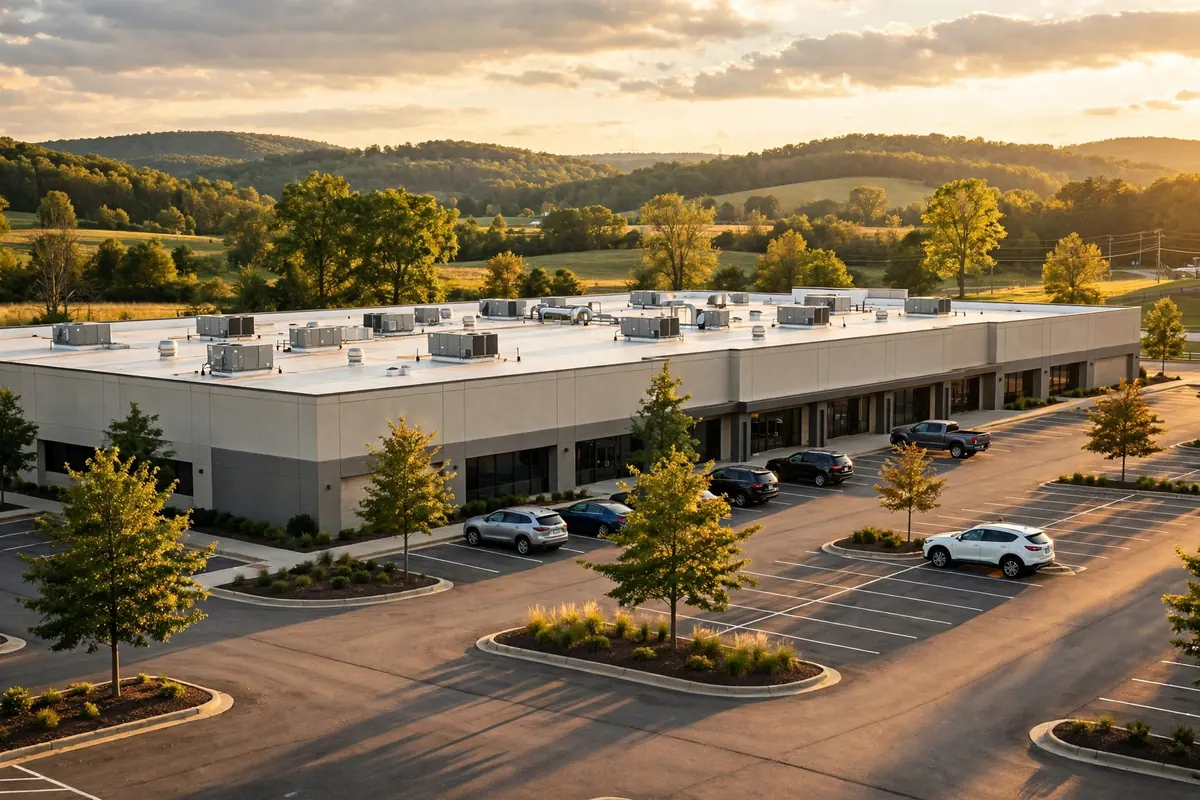
Business & Flat Roofs
A commercial roof protects a business, not just a building, so it has to be repaired and maintained without closing the doors. We work on flat roofs, shops, and warehouses across Louisville, and we plan the work around your business, not the other way around.
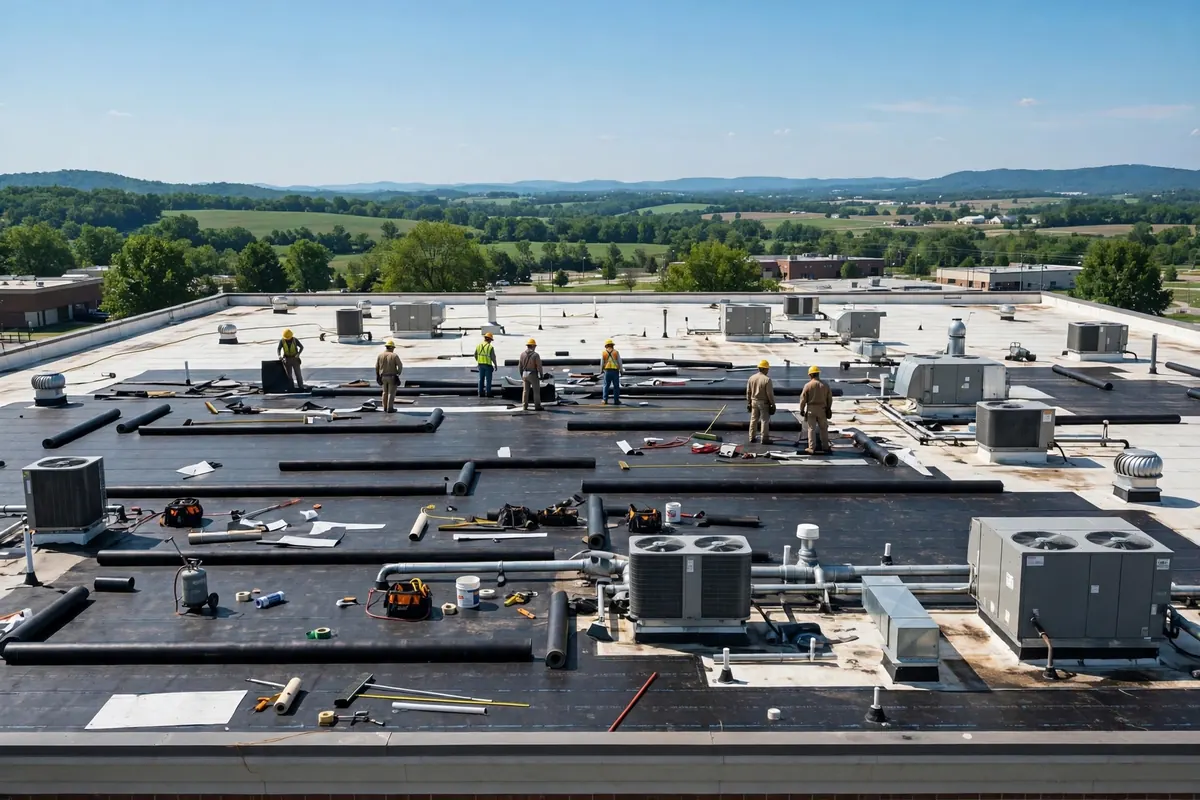
Commercial vs residential
Commercial roofs are usually flat or low-slope, far larger than a house roof, and covered with vents, pipes, and rooftop units that each need their own flashing. The membrane has to carry foot traffic from servicing those units, shed water to drains that sit far from the edges, and hold up through the same Louisville hail, humidity, and freeze-thaw cycles as any roof.
The business below the roof changes the job too. A leak over a shop floor, a warehouse, or an office cannot wait for a convenient week, and the repair has to run without closing the doors. We plan the work in sections, keep the noisy work to the hours you choose, and keep the building dry while the work runs.
TPO and EPDM on commercial flat roofs are the standard systems, with built-up roofing still serving on older buildings that already carry it. The choice follows the building: its size, its traffic, its drains, and what is already down there. A membrane that suits a small shop may not suit a warehouse, and the inspection is what settles it.
What businesses need
A house roof keeps a family dry. A commercial roof keeps a business running.
Drain
Large flat roofs hold far more water than a house roof, so the drains and the fall toward them decide whether the roof stays dry.
Traffic
Servicing vents and units means feet on the membrane. Walkway pads and tougher systems keep the traffic from puncturing it.
Access
Repairs run in sections, so the business below keeps trading while the roof above gets fixed.
Records
Photos and written reports give owners and managers a straight record of the roof, the repairs, and the plan.
A leak over your shop floor or warehouse? Call and get the roof checked without closing the doors.
Call (502) 922-5047Multi-family roofing
Multi-family roofing covers apartment buildings, townhome rows, and condos, where one roof shelters many homes and the work has to be planned around the people living under it. The roofs are often a mix: pitched shingles over the units and flat membranes over the common areas, stairs, and garages, each needing its own approach.
The planning matters as much as the roofing. Residents need notice, parking and walkways need protecting, and the noisy work needs scheduling around the people below. A written scope that names the sections, the order, and the hours keeps everyone on the same page, from the owner to the last tenant.
Ponding water on large commercial flat roofs is the most common multi-family problem, because the roofs are wide and the drains are few. A roof that holds water after rain needs its fall and its drains checked before the membrane pays for it, and roof maintenance programs for commercial properties keep those drains clear and the seams checked on a schedule, not by luck.
Most commercial repairs run in sections, with the work area tarped and the building kept dry while the crew works. A leak over a shop floor gets a temporary cover first, then a section repair, so the doors stay open. The only work that needs a closure is the kind that opens the roof to the sky, and that gets scheduled for the hours you choose.
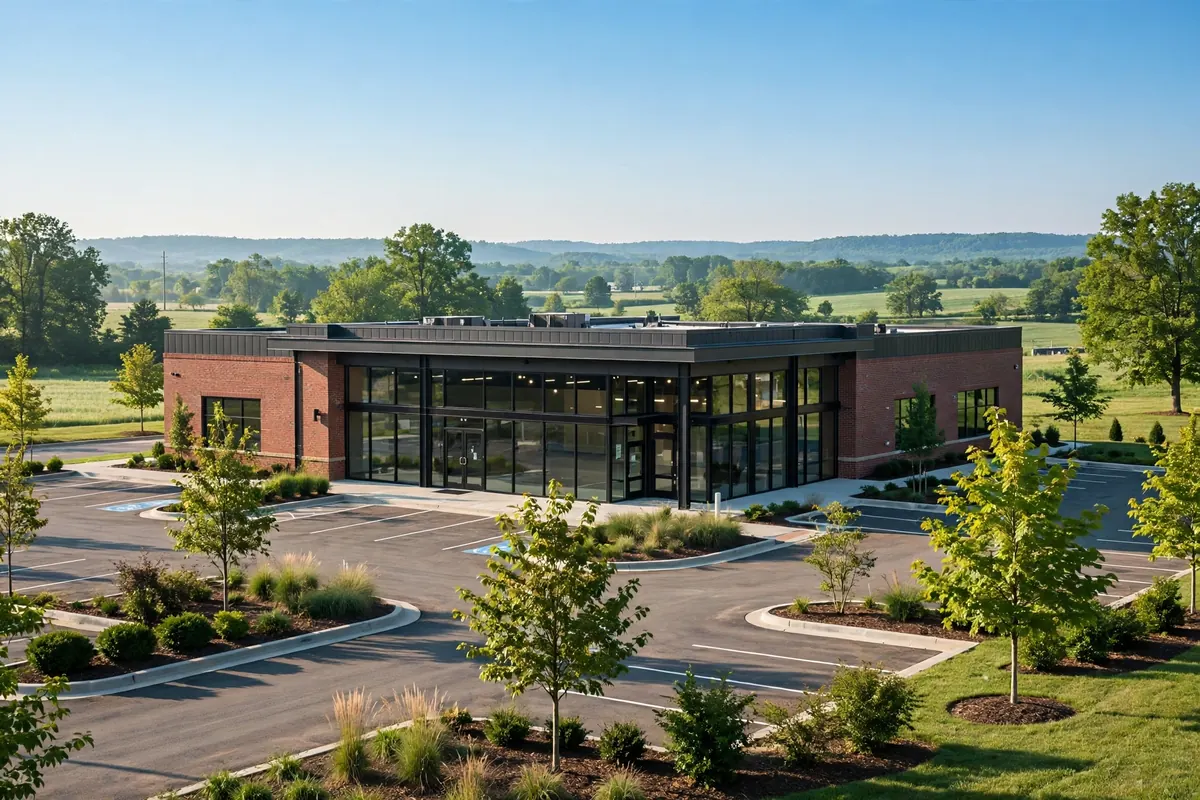
Commercial systems compared
The systems we install most on Louisville commercial buildings, and what each one suits.
| System | How it goes down | Best for | Watch out for |
|---|---|---|---|
| TPO membrane | Heat-welded sheets | Most commercial flat roofs | Seams need a skilled welder |
| EPDM membrane | Glued or taped sheets | Large roofs, moves with temperature | Seams and edges need care |
| Modified bitumen | Layered, torch-down or self-adhered | Roofs with heavy foot traffic | Heavier, needs a sound deck |
| Built-up roofing | Layered felt and asphalt | Older commercial buildings | Heavier build, needs strong structure |
| Metal, low slope | Standing seam panels | Shops with a visible slope | Needs careful flashing at joints |
Scroll sideways to see the full table.
Inspection and records
Twice a year is the sound rhythm for a commercial roof in Louisville: once in spring after winter and before the storm season, and once in fall before the cold rain sets in. Infrared and moisture-scan inspection suits commercial roofs well, because it finds wet insulation under the membrane across a large area without opening the roof, and the scan marks the wet spots for targeted repair.
Louisville Metro permit requirements for commercial reroofing need checking before the work starts, since commercial jobs touch structure and drainage more often than house jobs. The rules change with the scope, so the permit question gets answered from the written scope, not from a guess. The maker's system terms for commercial roofs follow the same logic: the system has to be installed to the maker's specification, by a certified installer, for those terms to hold.
The record a commercial roof keeps is worth as much as the roof itself. Dated photos, a written list of what was found and where, and a maintenance schedule give an owner or a property manager a straight picture of the roof year after year. Flat roofing in Louisville covers the same membranes at house scale, and a roof inspection in Louisville is the visit that starts the record.
People also ask
Short answers to the commercial questions that come up most before a repair or a reroof.
Yes, and that is how most commercial repairs run. The work area gets tarped, the section gets repaired, and the business below keeps trading. A full reroof runs in sections too, so no part of the building is open to the sky longer than the work needs.
It depends on the size of the roof and the system going on. A small shop can take a few days, while a large warehouse takes longer, with the work running in sections so the building stays dry throughout. Weather stretches the schedule, since crews do not open more roof than they can dry in the same day.
A scheduled plan for the roof: inspections twice a year, drains cleared, seams checked, and small repairs made before they grow. The program keeps a written record of the roof, so an owner or manager always knows its condition and what is coming next.
Sometimes, when the membrane is sound and only the surface has worn. A silicone or acrylic coating seals small cracks and adds a reflective skin, but it cannot fix ponding water or failed seams. When the membrane has failed in several places, a new membrane is the honest answer.
A commercial roof protects the business below it. Call and get it inspected on a schedule, not by luck.
Call (502) 922-5047Frequently asked questions
It depends on the building. TPO suits most commercial flat roofs, because its light color reflects sun and its heat-welded seams hold tight. EPDM suits large roofs that move with temperature, while modified bitumen suits roofs with heavy foot traffic. The size, the traffic, and the drains decide it.
Commercial roofs are usually flat or low-slope, far larger, and covered with vents, pipes, and rooftop units that each need flashing. The work runs in sections so the business stays open, and the record matters more: photos, written reports, and a maintenance schedule that an owner or manager can follow year after year.
Yes, in most cases. Repairs run in sections, with the work area tarped and the building kept dry while the crew works. A leak over a shop floor gets a temporary cover first, then a section repair. Only work that opens the roof to the sky needs scheduling for the hours you choose.
Twice a year: once in spring after winter and before the storm season, and once in fall before the cold rain sets in. Infrared and moisture-scan inspection suits commercial roofs well, finding wet insulation under the membrane without opening the roof, and marking the wet spots for targeted repair.
It depends on the scope. A straight membrane replacement on a sound deck usually needs no permit, while work that touches the structure, the drainage, or the deck usually does. The permit question gets answered from the written scope before the work starts, so nothing is assumed.
Keep going
Commercial roofs share systems with flat roofs and the same care as any roof. These pages follow.
Flat roofing in Louisville covers the same membrane systems at house scale, with coatings and repairs to match.
Learn more →Roof maintenance in Louisville keeps commercial drains clear and seams checked on a schedule, not by luck.
Learn more →A roof inspection in Louisville starts the record a commercial roof needs, with photos and a written report.
Learn more →Where we work
We work on commercial roofs in Louisville and the towns around it. This group covers commercial roofing in Pleasure Ridge Park KY, commercial roofing in Fairdale KY, commercial roofing in Lyndon KY, commercial roofing in La Grange KY, and commercial roofing in Shepherdsville KY, and the full list of towns we serve is on roofing across Louisville and Kentuckiana.
A leak, a reroof, or a maintenance plan for the building. Call or email and tell us about the roof and the business below it.