Coating usually fits when
- The membrane is sound with surface wear only.
- The leaks are small and at the seams.
- The drains run clear and the roof drains well.
- The deck below feels solid underfoot.
- The roof has years of life left in its base.
Flat Roof Coatings
A coating promises a new lease on a flat roof without the tear-off, and sometimes it delivers. The difference is the membrane below it: a sound membrane takes a coating well, and a worn one does not.
What a coating does
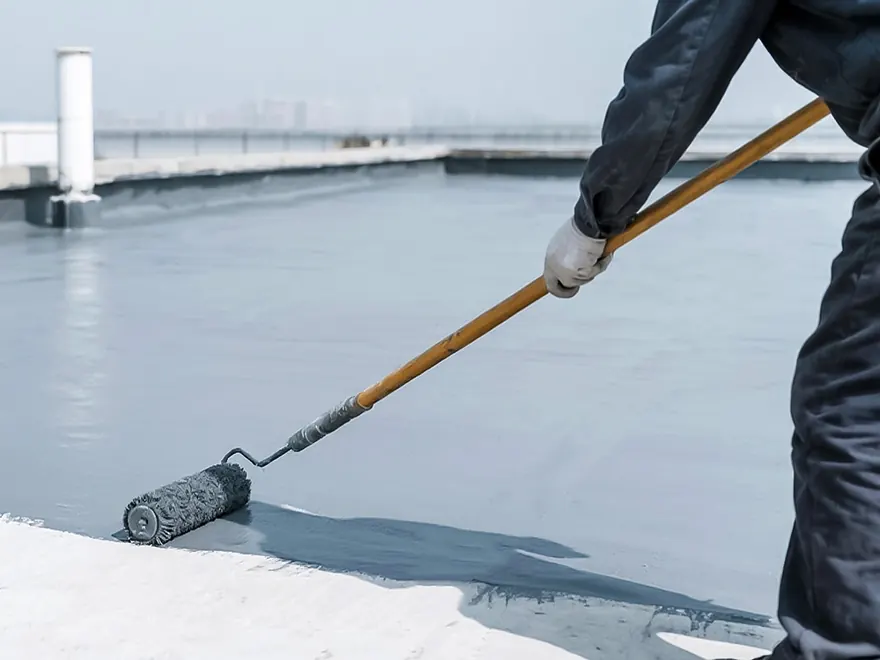
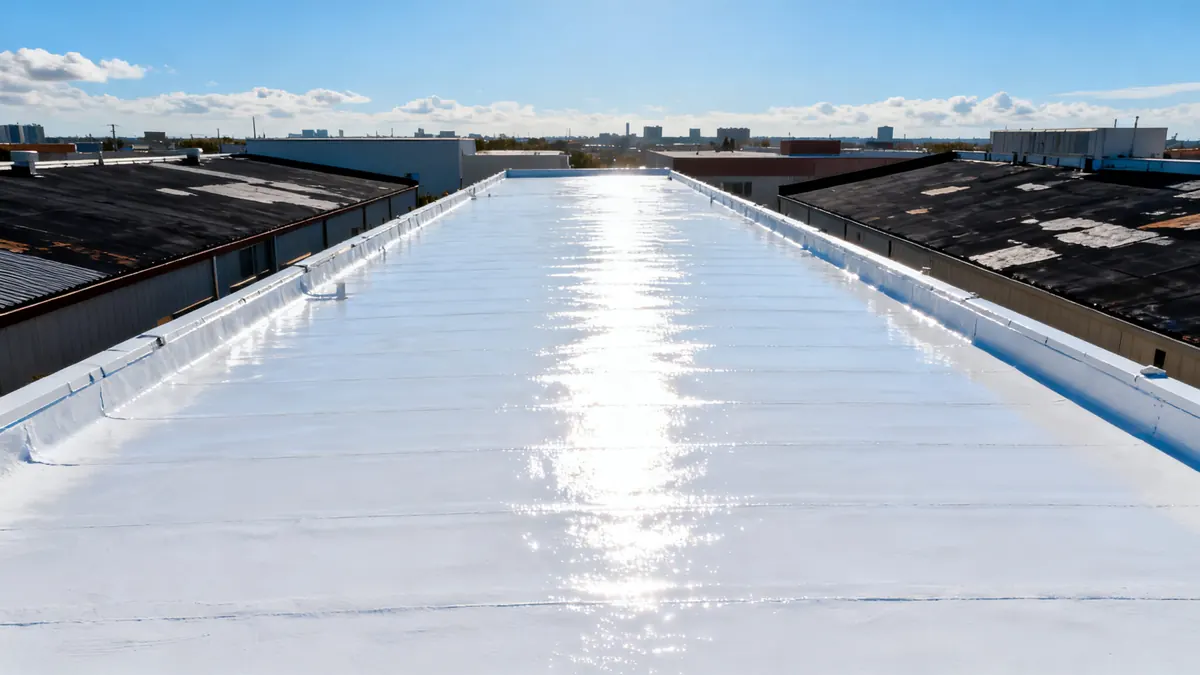
A roof coating is a thick liquid, usually silicone or acrylic, rolled or sprayed over a flat roof membrane in layers. It dries into a seamless skin that seals small cracks, covers the seams, and reflects the sun, which keeps the roof cooler in a Louisville summer. The skin is the new wearing surface, and the membrane below it becomes the base.
The coating works when the membrane below it is sound. A membrane with surface wear, small seam leaks, and a few blisters takes a coating well, since the coating seals the surface and the seams together. The roof gets years of extra life, and the work is quiet, with no tear-off and no dump trailer in the driveway.
The coating fails when the membrane below it is worn through. A membrane with seams failing in several places, a soft deck below, or standing water that never drains will not be saved by a skin on top. The coating bridges the small gaps and hides the big ones, and the water keeps working below it. A roofer should read the membrane first and say whether a coating or a replacement fits, through flat and low-slope roofing in Louisville.
Coating types
Two coatings cover most Louisville flat roofs. Each one has a strength, and the roof decides which one fits.
| Coating | Strength | Watch for |
|---|---|---|
| Silicone | Stands up to standing water, stays flexible | Needs a clean, dry surface to bond |
| Acrylic | Tough skin, good sun reflection, lower odor | Softens in standing water, needs drainage |
| Urethane | Hard wearing, good for foot traffic | Needs careful prep, shows surface flaws |
Scroll sideways to see the full table.
Flat roof wearing thin? Call and ask whether a coating fits your membrane.
Call (502) 922-5047Coat or replace
The membrane and the drainage decide it. A sound membrane with good drainage takes a coating; a worn membrane with ponding does not.
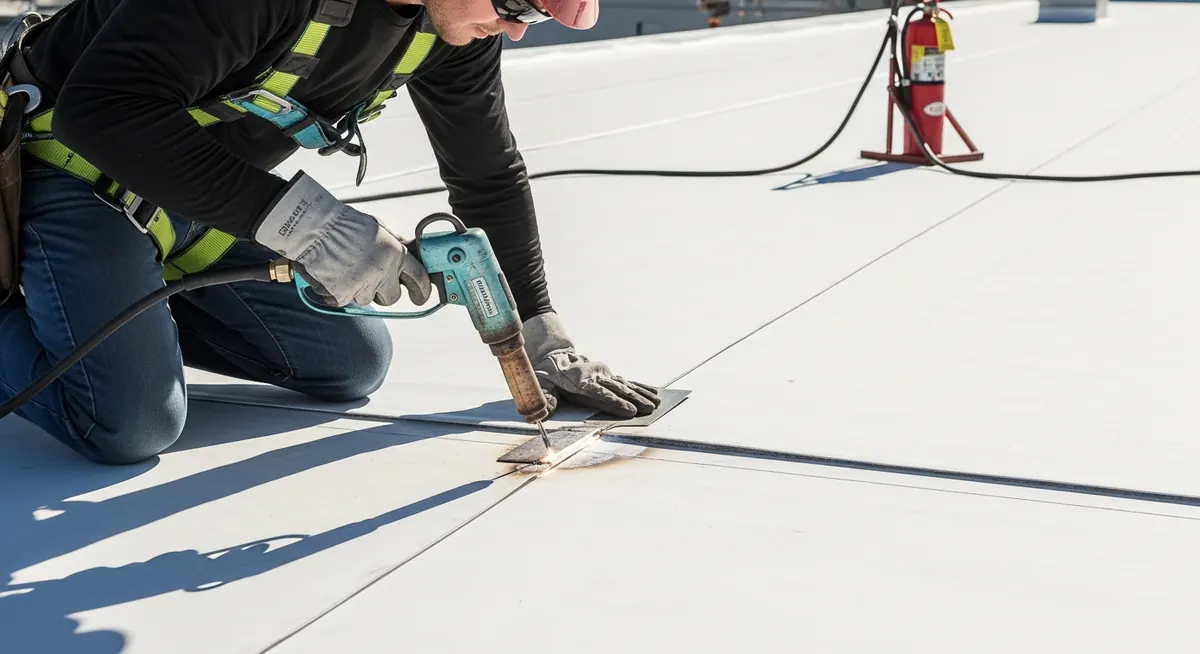
The preparation decides the result: a coating bonds only to a clean, dry membrane. The roof is washed, the seams are repaired, and the blisters are cut out before the coating goes on. A coating rolled over a dirty, wet roof peels within a season, and the money is gone with it.
Ponding
A coating can handle a roof that dries within two days of rain. It cannot handle a roof that ponds for days, since standing water works under the coating at the seams and lifts it from the membrane. Silicone stands up to ponding better than acrylic, but even silicone cannot fix a drain that does not drain or a fall that has settled flat.
The check is simple: look at the roof two days after rain. If the water is gone, the drainage works and a coating is on the table. If water still stands, the drainage needs fixing first, and the coating waits until it does. A coating sold for a ponding roof is a coating that will peel, and the roof below it will still need the drain fixed.
People also ask
Short answers on flat roof coatings, and when one can hold off a new membrane.
It can, when the membrane below it is sound and the trouble is surface wear or small seam leaks. A coating seals the surface and the seams together and adds years of life. It cannot fix a membrane that is worn through, seams failing in several places, or drains that do not drain.
A coating on a sound membrane often lasts years, with the life turning on the preparation and the drainage. A coating rolled over a clean, dry membrane with clear drains holds well, while one rolled over a dirty, wet roof peels within a season. The prep decides the result more than the product does.
It stops small leaks at the surface and the seams, when the membrane below is sound. It does not stop leaks from a worn-through membrane, a soft deck, or standing water that lifts the coating at the seams. A roofer should read the membrane first and say whether a coating or a replacement fits.
Want a straight read on your flat roof? Call and ask for a membrane check.
Call (502) 922-5047Frequently asked questions
It is a thick liquid, usually silicone or acrylic, rolled or sprayed over a flat roof membrane in layers. It dries into a seamless skin that seals small cracks, covers the seams, and reflects the sun. The skin becomes the new wearing surface, and the membrane below it becomes the base.
A roofer reads the membrane: if it is sound with surface wear and small seam leaks, and the drains run clear, a coating fits. If the membrane is worn through, the seams fail in several places, or water ponds for days, the roof needs a replacement instead. The membrane and the drainage decide it.
Yes, and the preparation decides the result. The roof is washed, the seams are repaired, and the blisters are cut out before the coating goes on. A coating bonds only to a clean, dry membrane, and one rolled over a dirty, wet roof peels within a season.
No, it needs dry weather and a dry roof, with temperatures above the range the maker calls for. A coating applied to a wet roof or in the rain will not bond, and it peels as soon as the weather turns. The work is scheduled for a dry stretch, and the roof is checked dry before the first layer goes on.
Yes, it gives the roof a clean, light-colored surface, usually white or light gray, which reflects the sun and keeps the roof cooler in summer. The seams disappear under the skin, and the roof reads as a single smooth surface. The change is visible from above and from the neighboring houses.
It turns on the coating and the roof, but a well-applied coating on a sound membrane usually runs for years before it needs attention. A yearly look at the surface and the seams tells you when the next layer is due, before the wear shows through. The re-coat is a lighter job than the first coat.
Keep reading
For flat sections on houses, read flat roofs on Highlands bungalows, and for commercial flat roofs, read commercial flat roofing in Louisville.
Call and we will read the membrane, check the drains, and tell you plainly whether a coating or a replacement fits.