Call (502) 922-5047
Commercial building with a flat roof and rooftop equipment in Louisville

Commercial Roofing

Commercial flat roofing in Louisville: what business owners should know

A commercial flat roof is a different job from a house roof: bigger, flatter, and carrying equipment, foot traffic, and drains that never stop working. The owners who plan for it spend less on it than the ones who wait for a leak.

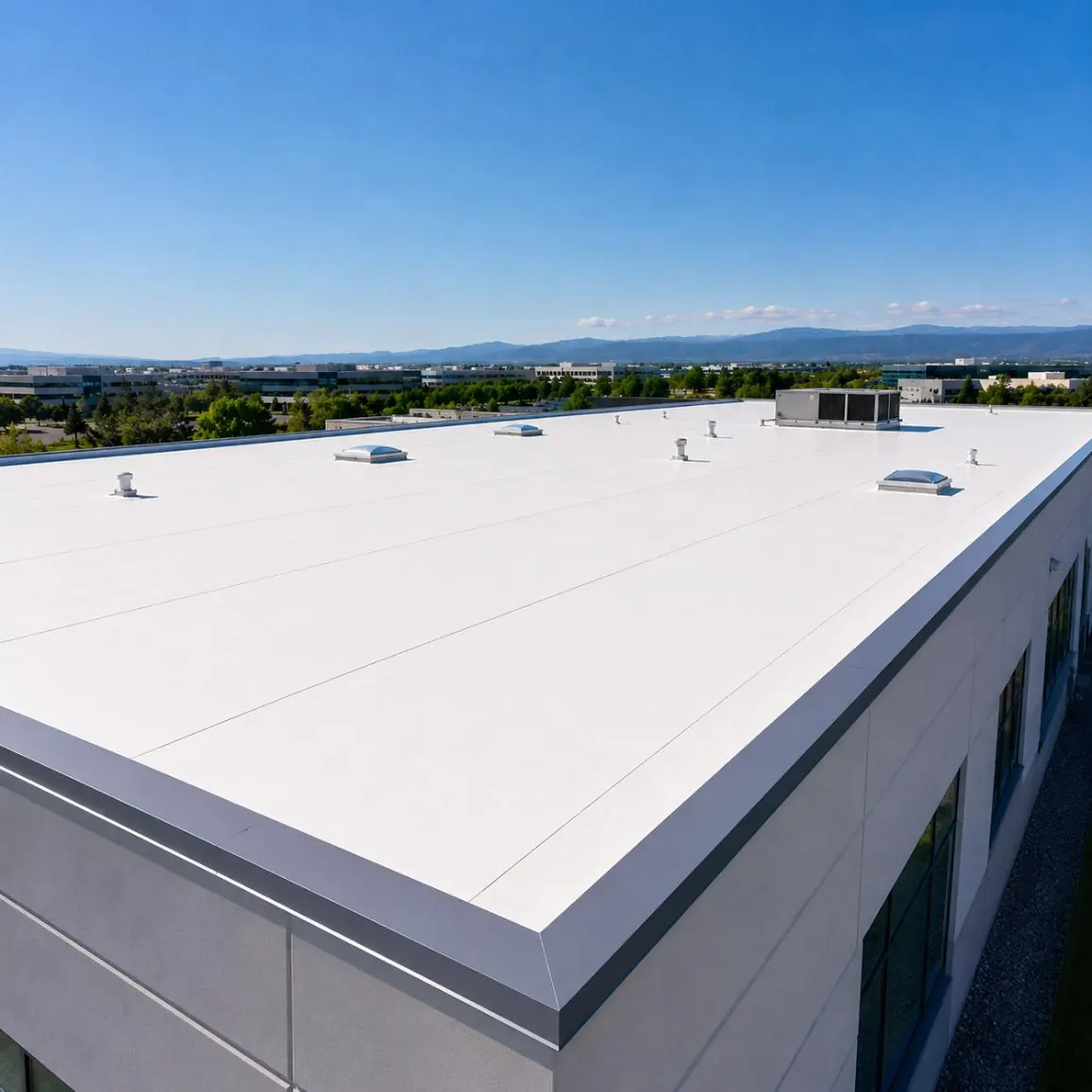
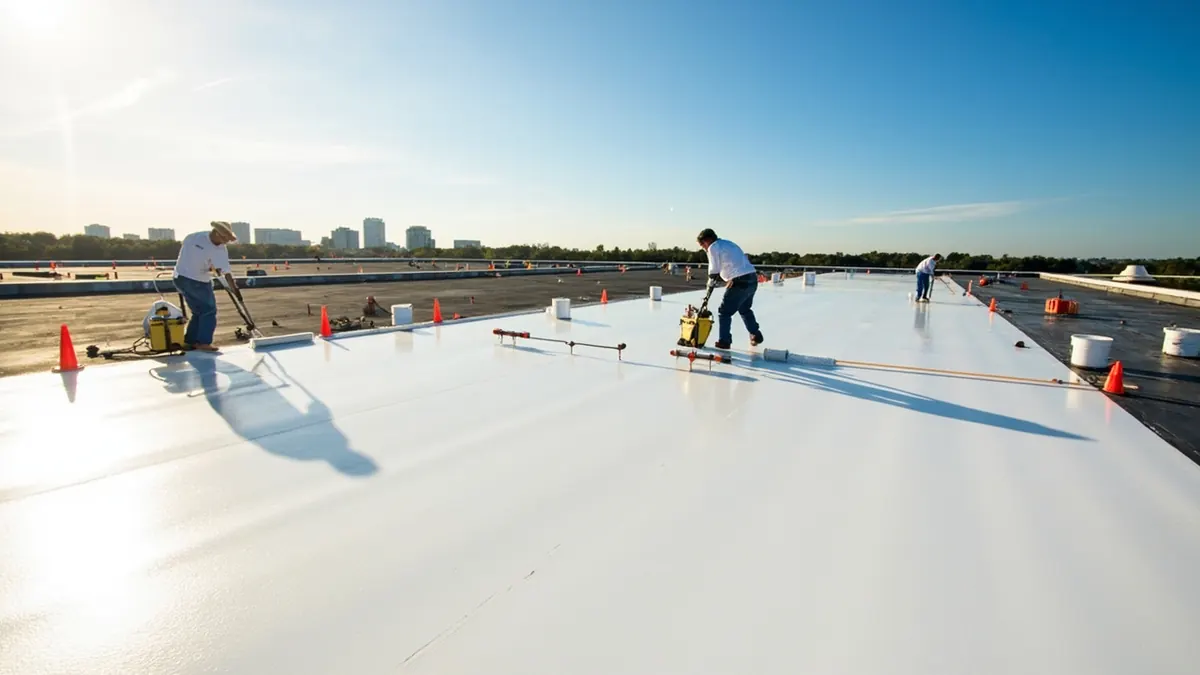
Commercial flat roof membrane with workers installing seams
Seams, drains, and rooftop equipment all share the same membrane, and each one is a joint to watch.

How it differs

A commercial roof is a system, not a surface

A house roof sheds water by slope. A commercial flat roof moves it by design: a slight fall to drains and scuppers, seams welded or glued across wide runs, and a membrane that has to stay whole under foot traffic, rooftop units, and the sun. The roof also carries the building's equipment, air handlers, vents, and pipes, and every one of them cuts a hole in the membrane that has to be sealed.

The scale changes the stakes. A leak on a house roof stains one ceiling. A leak on a commercial roof can run across a wide deck before it drops, and it can show up far from the opening, over stock, equipment, or a tenant's space. That is why a commercial roof is inspected as a system, with the drains, the seams, and the equipment curbs all read together, not as a surface alone.

Louisville weather adds its own test. Spring hail punctures membranes, summer heat expands the seams, and winter freeze and thaw opens the joints around the drains. A commercial roof on the I-65 corridor or in the riverfront districts faces the same Ohio Valley storms as a house roof, with more surface to catch them. Commercial roofing in Louisville covers the inspection and the repair of these roofs.
Materials

The membranes on Louisville commercial roofs

Three membranes cover most commercial flat roofs in Louisville. Each one has its own strengths and its own way of failing.

Commercial flat roof membranes compared
MembraneHow it worksWatch for
TPOSingle white sheet, heat-welded seamsSeam failure, punctures, sun on the surface
EPDMSingle black rubber sheet, glued seamsShrinkage at edges, seam leaks, ponding
Modified bitumenLayered asphalt sheetsSeam lifting, blisters, cracks from age
Built-up roofingLayers of felt and asphaltBlisters, surface wear, drainage trouble

Scroll sideways to see the full table.

Commercial roof in Louisville? Call and get it inspected as a system.

Call (502) 922-5047
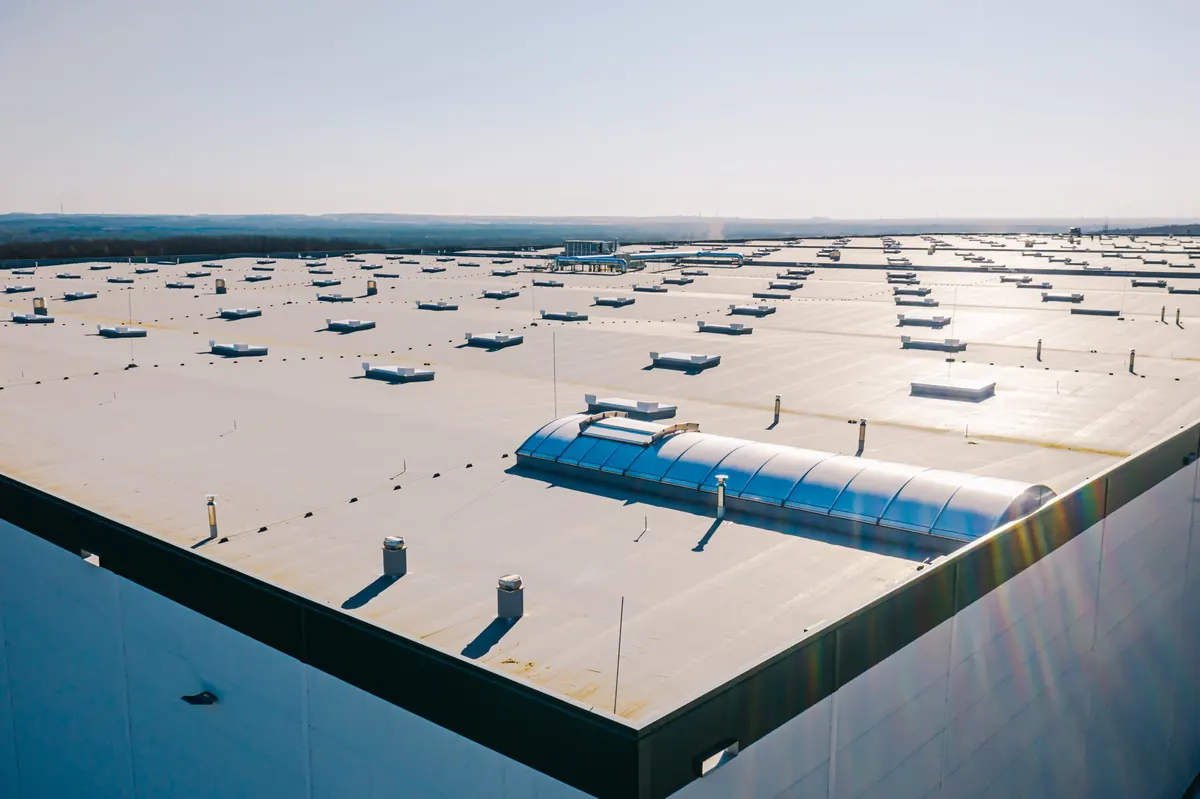
Warehouse flat roof seen from above with drains and rooftop units
A clear drain is the best protection a flat commercial roof has.

Keeping it dry

Drains and seams decide whether it leaks

A flat commercial roof lives or dies by its drains. The drains and scuppers are the only way out for the water, and when they clog with leaves and debris, the roof ponds, and every seam under standing water is a seam that will leak sooner. The check is simple and it is a seasonal job: clear the drains in fall and spring, and look for ponding two days after rain.

The seams are the second watch. TPO seams are welded, EPDM seams are glued, and both open with heat, movement, and age. A seam that has lifted a little lets water under the membrane, where it travels across the deck before it shows inside. A yearly seam check, walking the roof and reading the seams by eye and by touch, catches the lifts while they are still small.

Planning the work

Can a commercial roof be repaired without closing the business?

Usually, yes. Most commercial roof work happens while the business stays open, with the noisy work scheduled around the hours that matter.

A repair on a commercial roof is usually a section at a time, and the crew works on the roof while the business runs below. The noisy work, tear-off and welding, is scheduled for the hours that suit the business, and the crew keeps the work area clear of the entrance and the parking. A full replacement is staged the same way, in sections, so the building is never left open to the weather.

The plan that matters most is the maintenance plan. A commercial roof inspected twice a year, with the drains cleared and the seams checked, runs its full life and rarely surprises its owner. A roof that is never looked at fails at the worst moment, in a storm, over stock or a tenant. The inspection is the smaller job, and it is the one that keeps the business dry.

People also ask

Commercial flat roofing questions, in short

Short answers on commercial flat roofs, and what business owners ask first.

What roofing is best for a commercial building in Louisville?

TPO suits most Louisville commercial roofs, since its white surface reflects summer heat and its welded seams hold well. EPDM suits roofs with heavy foot traffic, and modified bitumen suits smaller roofs with many details. The roof shape, the equipment on it, and the drainage decide it more than the brochure does.

How is commercial roofing different from residential roofing in Louisville?

Scale, slope, and use. A commercial roof is flatter and bigger, carries equipment and foot traffic, and drains through internal drains rather than gutters. A leak can travel far across a wide deck before it shows inside. The inspection reads the drains, the seams, and the equipment curbs together.

How often should a commercial roof in Louisville be inspected?

Twice a year, in spring and in fall, and after any hailstorm or stretch of high wind. A commercial roof that is inspected twice a year runs its full life and rarely surprises its owner, while a roof that is never looked at fails at the worst moment, in a storm.

Want a straight read on your commercial roof? Call and book an inspection.

Call (502) 922-5047

Frequently asked questions

Plain answers to commercial flat roofing questions

Usually, yes. Most commercial roof work runs in sections while the business stays open, with the noisy work set for the hours that matter least. The crew keeps the work area clear of the entrance and the parking, and the building is never left open to the weather.

The fall toward the drains has settled, or the drains are clogged with leaves and debris, so the water has nowhere to go. A flat roof needs a slight slope to its drains, and when that slope flattens out, water ponds in the low spots. Clearing the drains helps at once, and a settled fall needs a roofer's look.

A commercial membrane often lasts about 20 to 30 years here, and its life turns on drainage and seam checks. A roof that drains well and gets its seams checked twice a year runs longer than one that ponds after every rain. Standing water at the seams is what shortens it most.

A twice-yearly routine: an inspection in spring and in fall, with the drains cleared, the seams checked, and the flashing at the equipment curbs looked at. Small fixes are done at the visit, and the written findings tell the owner what to plan for. It is the routine that keeps a commercial roof dry.

It can, when the membrane is sound and the trouble is surface wear or small seam leaks. A coating cannot fix a membrane that is worn through, seams that fail in several places, or drains that do not drain. A roofer should read the membrane first and say whether a coating or a replacement fits.

Yes, usually, since a commercial reroof often touches the structure or the drainage, and the building code sets how the work is done. The roofer pulls the permit and is named on it. Confirm the current rules with Louisville Metro Planning and Design Services before work starts, since rules can change.

Keep reading

Read next: coatings and flat sections on homes

For the coating question, read can a roof coating save your flat roof, and for flat roofs on houses, read flat roofs on Highlands bungalows. Flat and low-slope roofing in Louisville covers the residential side.

Commercial flat roof in Louisville?

Call and we will inspect the drains, the seams, and the equipment curbs, and tell you plainly what the roof needs.