Call (502) 922-5047
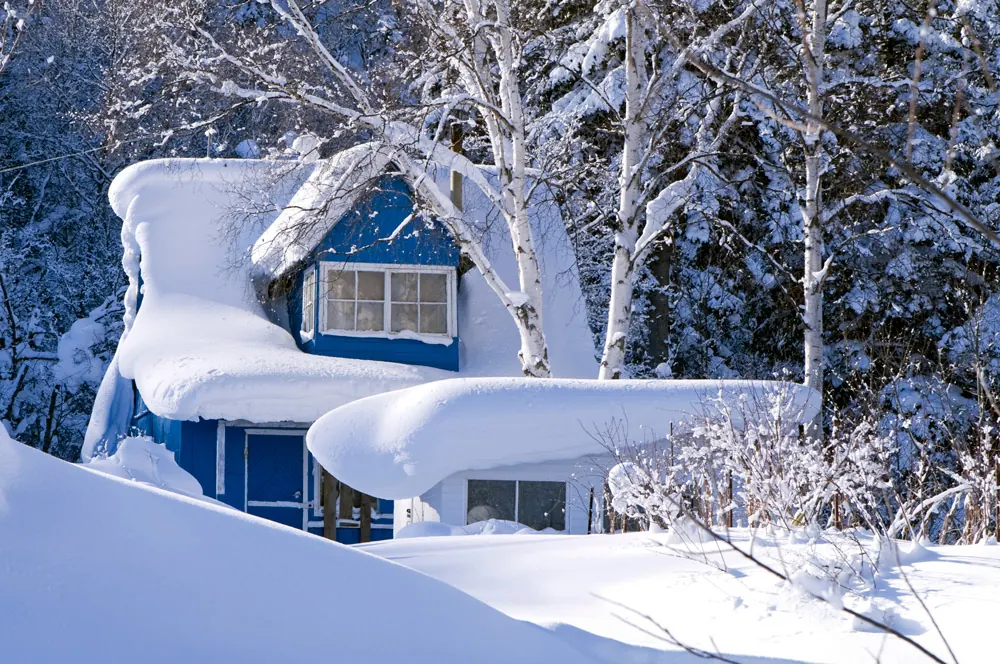
Snow covered house roof in winter with icicles on the gutters

Winter Wear

How freeze-thaw winters wear down a Louisville roof

Louisville winters rarely stay cold. They swing above and below freezing in the same week, and each swing works water into the roof and widens it as ice. That cycle is the quietest way a roof wears out here.

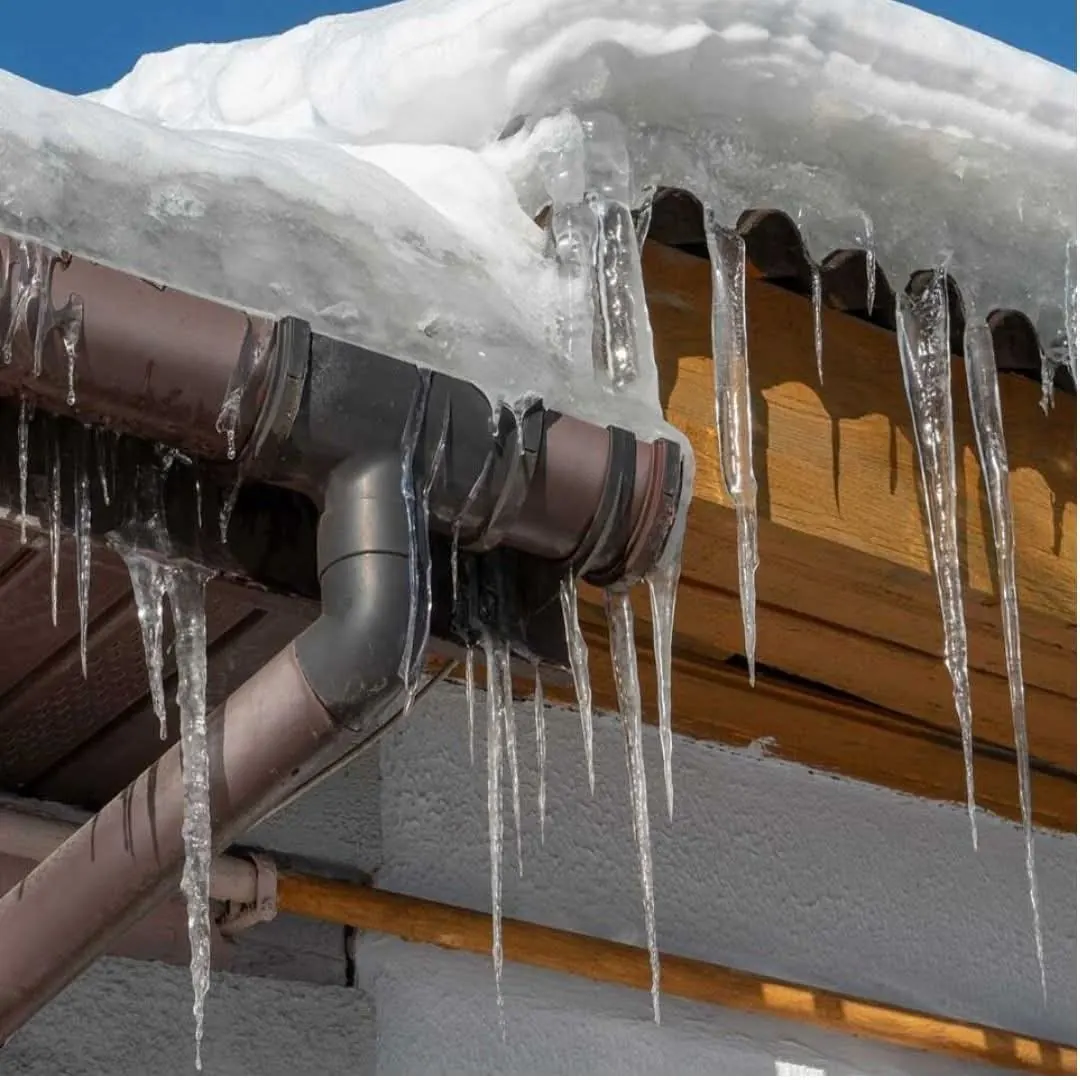
Frozen gutter with icicles on a house in winter
Each freeze widens the gaps that the thaw filled, and the roof opens a little more each time.

The cycle

Water gets in, ice widens it, and the cycle repeats

The freeze-thaw cycle is simple and relentless. Rain or meltwater works into a small gap around a nail, a shingle edge, or a flashing joint. Night falls, the temperature drops below freezing, and the water turns to ice, widening the gap a little as it expands. Day comes, the ice melts, and more water works into the wider gap. Each swing opens the roof a little more, and the gaps that were hairline in November are open joints by March.

Louisville is built for this cycle. The city sits in the Ohio Valley, where winter days swing above freezing and nights drop below it, often several times in one week. A roof in a colder climate stays frozen all winter, and a roof in a warmer one never freezes at all. Louisville roofs freeze and thaw again and again, and that repetition is what wears them down.

The damage shows first at the joints. Flashing around the chimney lifts a little each cycle, the sealant around pipe boots cracks, and shingle edges curl as the water below them freezes. The roof looks fine from the street, and the openings are small, but each one is a path for the next rain. Roof repair in Louisville after winter is mostly the repair of these small openings.
Where it hits

What freeze and thaw does to each part of the roof

The cycle does not hit the roof evenly. The joints and the edges take the worst of it, while the open field holds up longer.

Freeze-thaw damage by roof part
Roof partWhat the cycle doesWhat to look for
ShinglesLifts edges, cracks tabs, sheds granulesCurling, cracked tabs, granules in gutters
FlashingLifts and cracks at jointsGaps at chimney and valleys, rust
Pipe bootsCracks the rubber sealCracked boots, stains below vents
GuttersIce blocks the trough, pulls it from the fasciaSagging gutters, ice dams at eaves
DeckSoaks and softens where water gets inSoft spots underfoot, stains in attic
Chimney brickCracks mortar joints, spalls the brick faceCracked mortar, loose brick at the top

Scroll sideways to see the full table.

Winter left its marks on your roof? Call and get the spring check done.

Call (502) 922-5047
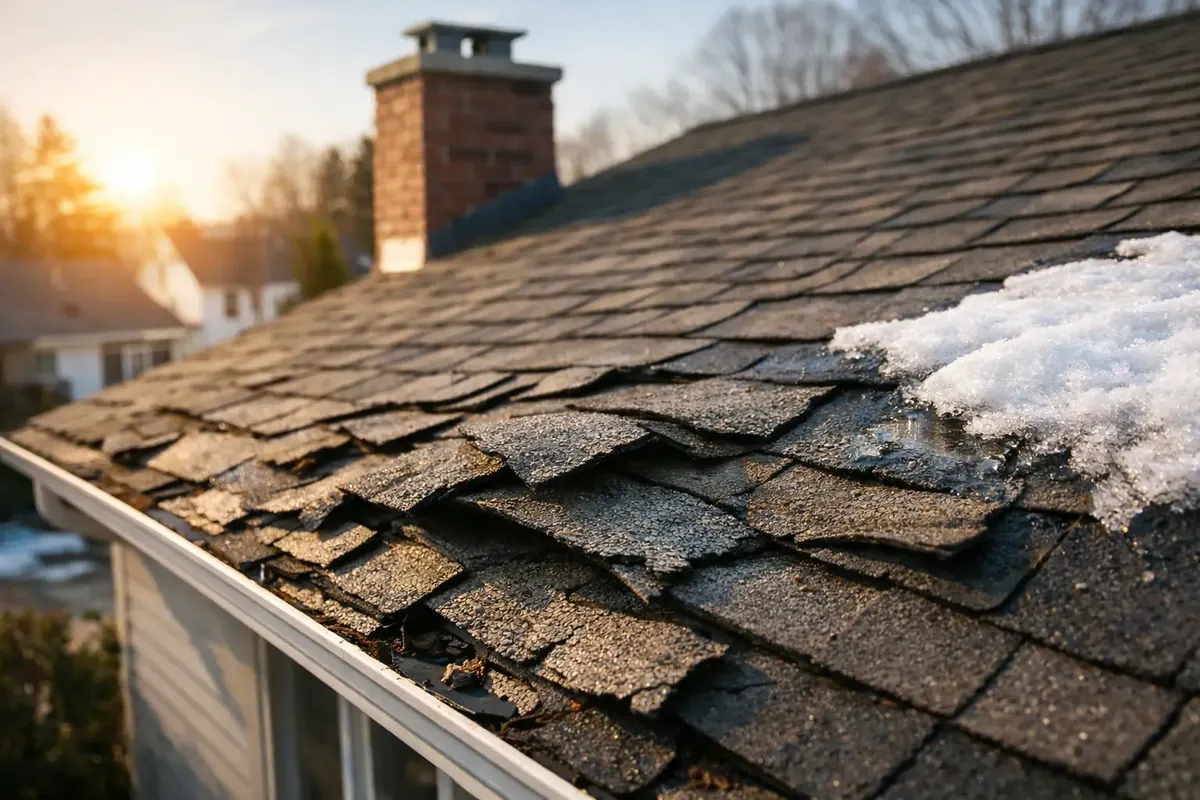
Cracked asphalt shingles on a winter roof
Cracked tabs and curled edges are the first signs the freeze-thaw cycle has been at work.

The shield

Ice and water shield guards the edges

The best defense against the cycle is a sticky membrane called ice and water shield, laid along the eaves, in the valleys, and around chimneys and skylights. It seals around nail holes and stops water that backs up under the shingles, which is exactly what happens when ice dams form or wind pushes rain uphill. It is laid during a reroof, not added to an old roof, and it protects the edges where the cycle hits hardest.

The rest of the defense is the attic. A vented attic keeps the roof near the outside temperature, so the snow stays still instead of melting and refreezing at the eaves. Sealing the air leaks into the attic and keeping the soffit vents open are the winter jobs that matter, and they are the same jobs that stop ice dams.

After winter

The spring check that finds the winter damage

The damage from a freeze-thaw winter is small and easy to miss, and the spring check is built to find it before the storm season.

Walk the roof line from the ground with binoculars in early spring, and look for curled shingle edges, cracked tabs, and flashing that has lifted at the chimney and the valleys. Check the gutters for granules, which say the shingles shed their shield over winter, and look inside the attic for fresh stains on the rafters. Each of these is a small fix in spring, and each one becomes a leak in the first summer storm if it is left.

The houses that suffer most are the older ones, with thin insulation and old flashing, and the ones with low-slope sections where water sits instead of running off. A spring inspection catches the winter damage on those roofs while it is still small, and the repair list from a spring check is usually short.

People also ask

Freeze-thaw winters: questions worth asking

Short answers on freeze-thaw winters, and how they wear a roof down.

Can freeze-thaw cycles crack a roof in Louisville?

Yes. Water works into small gaps around nails and flashing, freezes overnight, and widens the gap as the ice expands. Each swing opens the roof a little more, and the gaps that were hairline in November are open joints by March. Louisville winters swing above and below freezing often, which is why the cycle wears roofs here.

What is ice and water shield, and does my roof need it?

It is a sticky, self-sealing membrane laid along the eaves, in the valleys, and around chimneys and skylights. It seals around nail holes and stops water that backs up under the shingles, which is what happens when ice dams form. It is laid during a reroof, and it protects the edges where freeze and thaw hit hardest.

Do gutters make freeze-thaw damage worse?

A clogged gutter does, since it holds water at the eaves where it freezes into a block of ice that pulls the gutter from the fascia. A clear gutter drains before the freeze, so the eaves stay dry. Clearing the gutters before winter is one of the simplest ways to limit freeze and thaw damage.

Want the winter damage found before spring storms? Call and book the spring check.

Call (502) 922-5047

Frequently asked questions

Straight answers on freeze-thaw winters

Water works into small gaps around nails, shingle edges, and flashing joints, then freezes and widens the gap as the ice expands. Each cycle opens the roof a little more, and the gaps become paths for rain. The damage shows first at the joints, where the flashing lifts and the sealant cracks.

Louisville winters swing above and below freezing in the same week, often several times, so roofs freeze and thaw again and again. A roof in a colder climate stays frozen all winter, and a roof in a warmer one never freezes. Louisville roofs get the repetition, and the repetition is what wears them down.

The flashing at the chimney and valleys, the rubber pipe boots, and the shingle edges suffer most, since they are joints and edges where water collects. The gutters suffer too, when ice blocks the trough and pulls it from the fascia. The open field of shingles holds up longer than the joints around it.

Yes, a little. Shingles seal more slowly when it is cold, and crews work around ice and short days, so a winter repair takes longer than the same job in spring. A leak that is letting water in should not wait, since the water keeps soaking the deck. A planned replacement waits for steadier weather.

Keep the gutters clear before winter, so water drains instead of freezing at the eaves. Seal the air leaks into the attic and keep the soffit vents open, so the roof stays cold and the snow stays still. And get a spring check, so the small openings winter made are fixed before the storm season.

They come from the same winter pattern, but the cause is attic heat, not the cycle alone. Warm air melts snow on the upper roof, and the meltwater refreezes at the cold eaves into a dam. Freeze and thaw widens the gaps the dam then leaks through. Both are winter problems, and both are fixed in the attic.

Keep reading

Read next: ice dams and winter preparation

Freeze-thaw winter wearing on your roof?

Call and we will check the flashing, the shingles, and the deck after winter, and tell you plainly what needs fixing.