How they form
Warm air melts snow from below
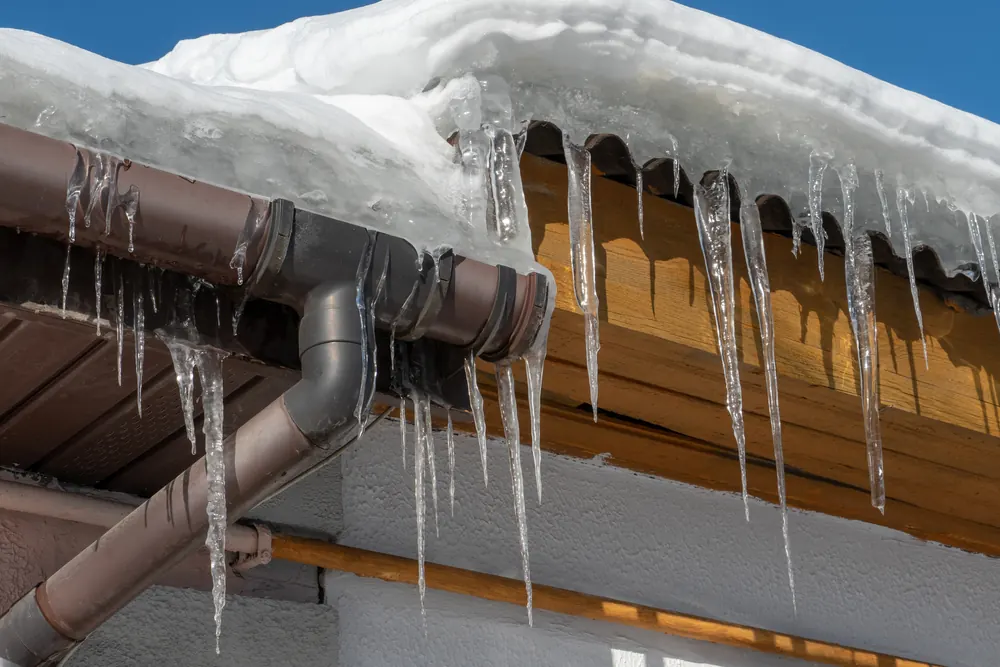
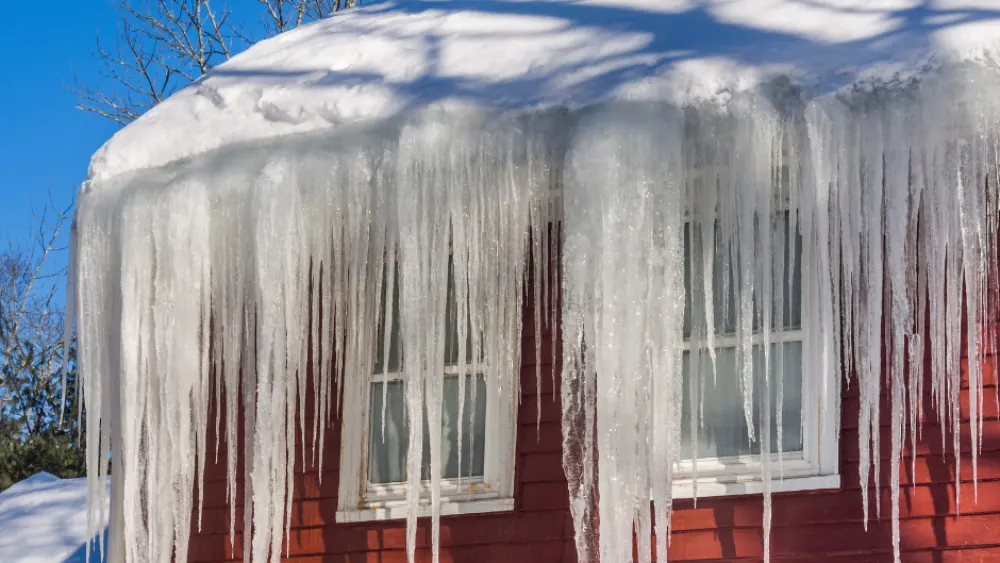
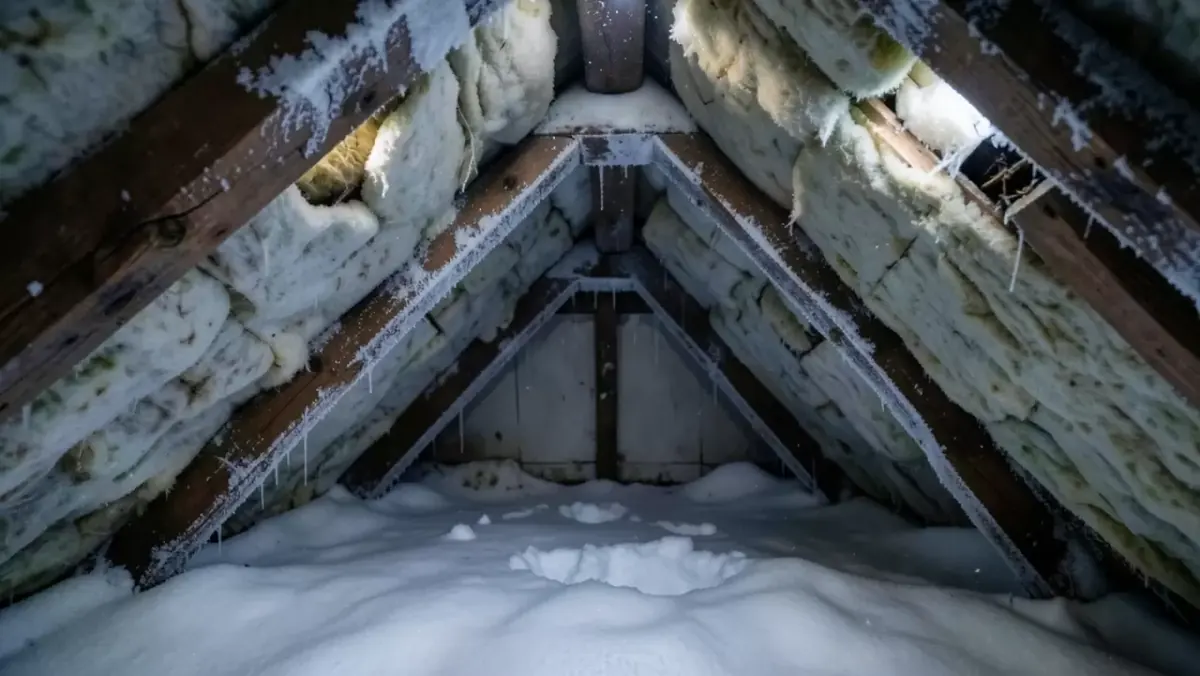
An ice dam starts in the attic, not on the roof. Warm air from the house rises into the attic, warms the roof deck, and melts the snow on the upper slopes from below. The meltwater runs down to the eaves, which sit past the warm house wall and stay cold, and it freezes there into a ridge of ice. More meltwater runs down behind the ridge, pools against it, and backs up under the shingles, where it soaks the deck and drips into the house.
Louisville winters are built for this pattern. The city swings above and below freezing in the same week, so snow melts and refreezes again and again, and each cycle adds another layer to the dam. A roof with a warm attic and a cold eave is a dam waiting to happen, and the icicles along the gutter are the sign that the cycle is already running.
The leak that follows is easy to mistake for a roof failure. The shingles are fine, the flashing is fine, and the water still comes in, because it is coming from below the shingle edge, not through it. That is why patching the roof does not stop an ice dam leak, and why the fix has to reach the attic. Attic ventilation in Louisville is the work that breaks the cycle.
Why the eaves freeze first
The eaves hang past the warm wall of the house, so they get no heat from below and stay at the outside temperature. The upper roof sits over the warm attic and melts snow, while the eave stays cold enough to freeze the runoff. That temperature split, warm above and cold below, is the whole engine of an ice dam.