Call (502) 922-5047
Roofing paperwork and material samples on a table

Reading a Quote

How to read a roofing quote: what each line means

A roofing quote is a list of lines that all sound alike until you know what each one means. This guide translates the lines one by one, so you can compare scopes and agree to work with your eyes open.

Line by line

The lines on a roofing quote, translated

Every line on a quote names a layer, a part, or a job. Here is what each one means, in plain words.

Tear-off
Removing the old shingles down to the deck, and hauling them away. The tear-off is what lets the roofer see the deck.
Decking
The plywood or boards below the shingles. The quote should say how bad boards are swapped and what happens if more show up.
Underlayment
The sheet laid over the deck before the shingles go on. When wind pushes rain under the shingles, this layer is the one that keeps the deck dry.
Ice and water shield
A sticky membrane at the eaves, valleys, and around chimneys. It seals around nails and stops backed-up water.
Drip edge
A thin metal strip fitted along the eaves and the rakes. It sends rainwater into the gutter and stops it running back under the shingles at the edge.
Flashing
Thin metal that seals the joints at chimneys, walls, skylights, and valleys. Most leaks start at flashing, so the line matters.
Ventilation
The intake and exhaust that move air through the attic. The quote should name the ridge vent and the soffit vents.
Ridge cap
The shingles that cover the peak. They are a separate line because they are cut and laid by hand along the ridge.
Cleanup
The magnet sweep of the yard and driveway, and the hauling of debris. A clean yard at the end of the day is part of the job, not an afterthought.
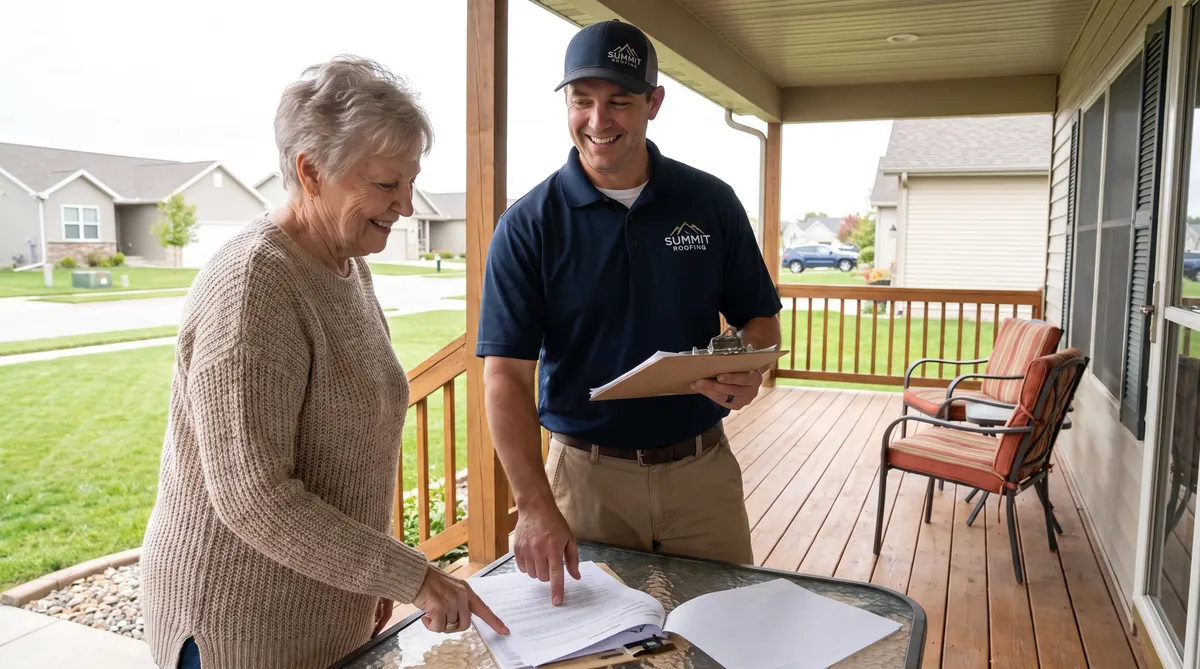
Roofer explaining documents to a homeowner at a kitchen table
A scope that lists the layers is a scope you can compare. A single line is not.

Comparing quotes

Compare the lines, not just the bottom line

Two quotes can look alike at the bottom and describe different jobs. One lists tear-off, decking, underlayment, ice and water shield, flashing, ventilation, and cleanup, while the other lists a single line that reads like a headline. The first is a job you can hold the roofer to. The second leaves every decision to the day of the work, and the decisions made on the day are rarely the ones you would have chosen.

The lines to compare first are the ones that decide how long the roof lasts: the decking plan, the underlayment, the flashing, and the ventilation. A quote that leaves out the flashing is not the same job as one that includes it, and a quote that leaves out ventilation is a roof that will age fast. Read those lines before the bottom line, and the comparison becomes clear.

Ask about any line you do not understand, and ask what happens if hidden damage shows up once the old roof comes off. A roofer who answers plainly is a roofer who has thought the job through. A roofer who waves the question away has not. Roof inspection in Louisville is often the first step, since the scope should rest on what the roof actually needs.

Got a quote you want to understand? Call and talk through the lines with a roofer.

Call (502) 922-5047
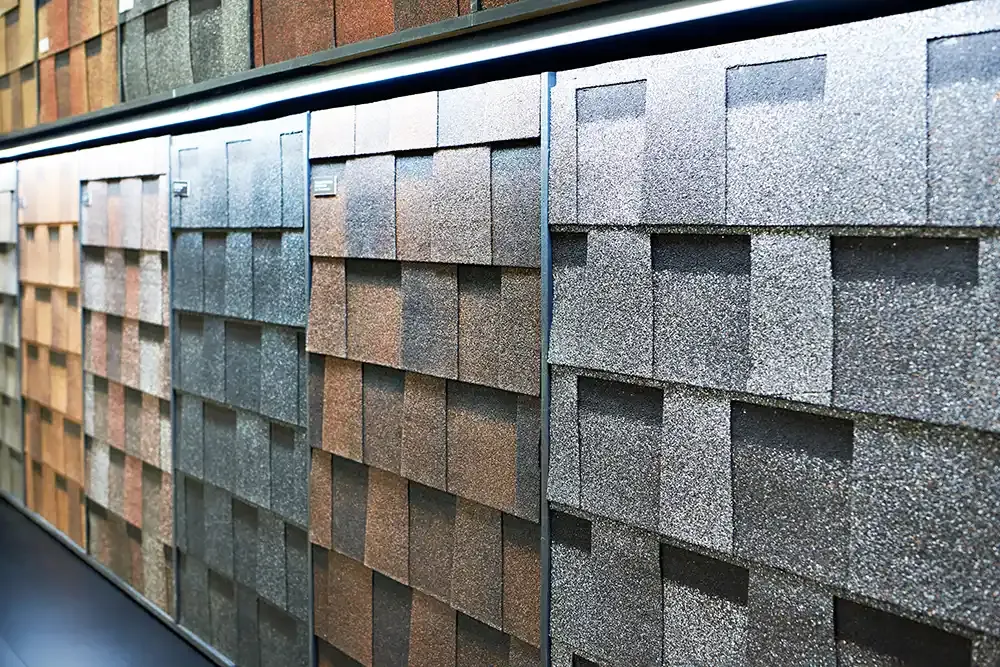
Roof shingle samples and material swatches on a table
The shingle type, the underlayment, and the flashing metal should all be named, not left vague.

The fine print

What the small print should say

The small print should name the materials: the shingle by type and color, the underlayment by kind, the flashing metal, and the ventilation parts. It should say what happens if hidden damage shows up, and who pulls the permit where one applies. It should say how the yard gets cleaned, and whether a magnet sweep is part of the job.

It should also say what the roofer does not cover. A quote that promises everything and excludes nothing is a quote that has not been thought through. The honest scope names its limits, and the limits are where the surprises hide. Read the small print as carefully as the lines, and ask until every term is clear.

Manufacturer paperwork

The paperwork that comes with the shingles

Shingle makers publish installation instructions, and the roofer who follows them is the roofer whose work the maker stands behind.

Every shingle has a maker, and every maker publishes how the shingle should be nailed, sealed, and flashed. A roofer who follows those instructions lays a roof the maker recognizes, and the maker's paperwork for the installation rests on that. A roofer who nails by habit, or who skips the underlayment the maker calls for, lays a roof the maker would not recognize.

Ask the roofer whether they are certified by the maker of the shingle being laid. Certification means the maker has trained the roofer to lay that material to its instructions, and it is easy to confirm with the maker. It is one more check alongside insurance and local references, and it is the one that ties the roof to the material in it.

People also ask

The reading a roofing quote questions that follow

Short answers on reading a roofing quote, line by line.

What should a roofing quote include?

It should list the materials, the layers, the flashing, the ventilation, and what happens if hidden damage shows up once the old roof comes off. It should name the shingle by type, the underlayment, the decking plan, and the cleanup. A scope that lists none of these is not a scope you can compare or hold anyone to.

Why do roofing quotes differ so much?

Because the scopes differ. One quote lists tear-off, decking, underlayment, flashing, and ventilation, while another lists a single line. The materials differ too, and so does the flashing work. Compare the lines, not just the bottom line, since a quote that leaves out the flashing is not the same job.

Should I get more than one roofing quote in Louisville?

Yes, two or three scopes from local roofers give you a real comparison, since each one lays out the materials and the layers differently. Compare them line by line, not just at the bottom, and ask about any line you do not understand. The roofer who answers plainly is the one to trust.

Want a second read on a quote you received? Call and talk it through.

Call (502) 922-5047

Frequently asked questions

Reading a roofing quote questions from Louisville homeowners, answered

It means removing the old shingles down to the deck, and hauling them away. The tear-off matters because it lets the roofer see the deck, swap soft boards, and lay the new underlayment on a clean base instead of over hidden trouble. A quote without a tear-off line is roofing over the old roof.

It is the water-resistant sheet rolled over the deck under the shingles, and it is the backup layer when wind drives rain under the surface. The quote should name the kind, since old felt underlayment tears with age while modern synthetic sheets hold up longer and lay flatter.

Because flashing is the metal that seals every joint on the roof, at chimneys, walls, skylights, and valleys, and it is the work that decides whether the roof leaks. A quote that folds flashing into a single line hides the most skilled part of the job. The flashing line should name the metal and the joints it covers.

A square is a roofer's measure of roof area: one square covers 100 square feet. It is how roof size gets described on a written scope, and it is the unit the materials are counted in. Knowing the term helps you read the scope and ask better questions about it.

Ask how the roofer handles decking, flashing, and ventilation, and what happens if hidden damage shows up once the old roof comes off. Ask who pulls the permit where one applies, and how the yard gets cleaned. Get the answers in writing as part of the scope, before any work starts.

It should say so. Where a permit applies, the roofer pulls it and is named on it, and the quote should name who pulls it. A quote that says nothing about the permit leaves the question open, and the permit question should be settled before the tear-off, not after.

Keep reading

Read next: the repair decision and the claim

Reading a roofing quote for your Louisville home?

Call and we will walk through the lines with you, in plain words, and put the scope in writing before any work starts.