Stop the water first
Tarp any open area and put buckets under active drips. The tarp goes on at once, before any paperwork.
Claim Basics
A roof claim feels like a maze the first time: storm dates, photos, adjusters, and policy words that all sound alike. The steps are simpler than they look, and this guide walks through them in order.
The claim in order
Five steps, in order. The first two protect the house and the record, and the last three are the conversation with your insurer.
Tarp any open area and put buckets under active drips. The tarp goes on at once, before any paperwork.
Photograph the hailstones, the dents, and the stains, and write down the storm date and time.
Report the storm date and the damage, and ask what the next step is and what they need from you.
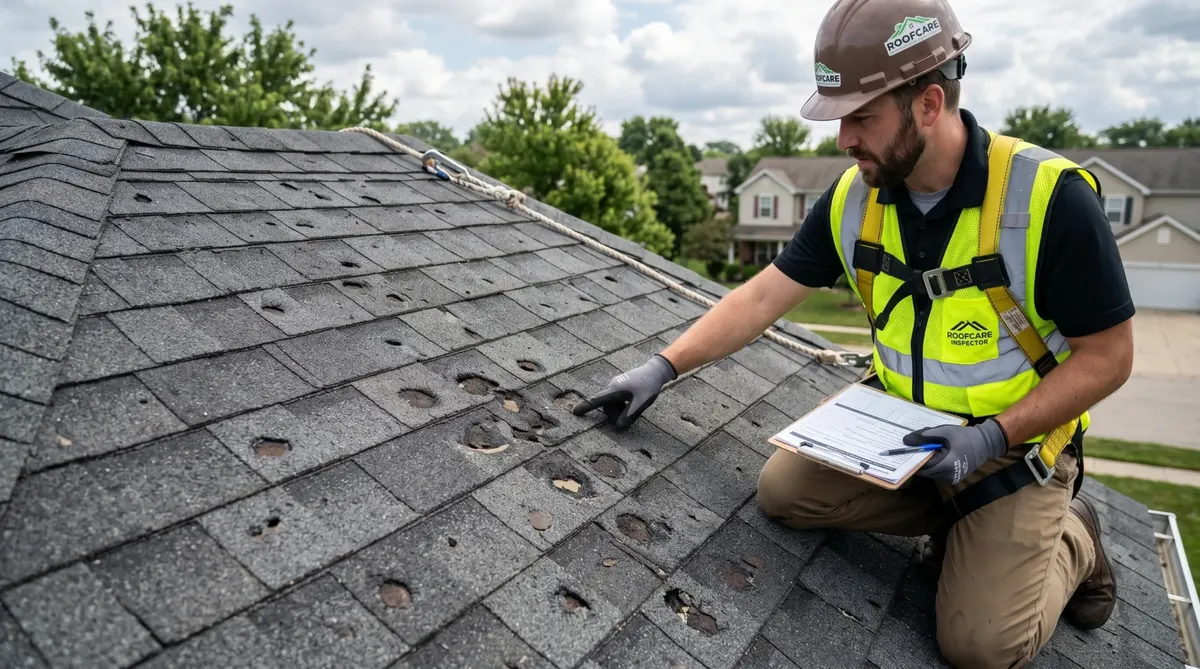
Walk the roof with them, point out the dents and bruises, and have your roofer present if you can.
Read the agreed scope before work starts, and ask your agent about anything that is unclear.
The record
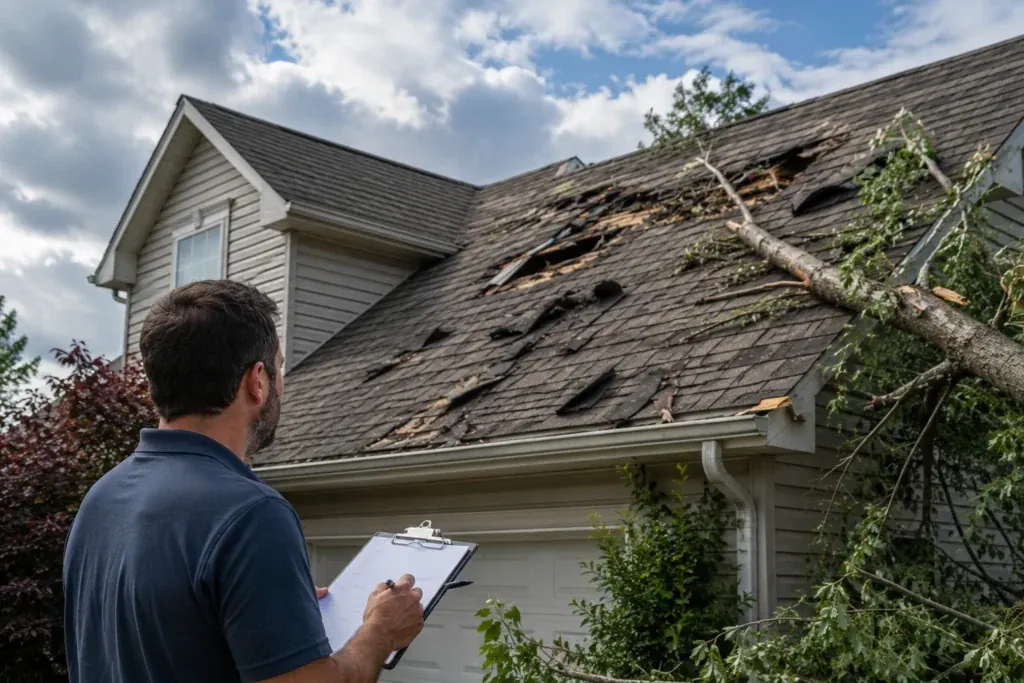
A roof claim in Kentucky usually turns on two things: the storm date and the photos. The storm date ties the damage to one named event, and the photos show what the storm did. Without the date, the damage could be from any year, and without the photos, the bruises are hard to prove, since hail bruises hide under the granules.
Write the storm date down as soon as the storm passes, with the time if you remember it. The National Weather Service office in Louisville keeps storm reports for the area, and those reports back up the date. Photograph the hailstones next to a coin for scale, the dents on the vents and gutters, the bruised slopes, and every stain inside the attic and on the ceilings, all dated.
Your roofer adds the third piece: a written record of the damage slope by slope, with photos of the bruises found by touch. That record is the clearest account of what the storm did, and it is what the adjuster works from. Insurance claim help in Louisville starts from that record, and a thin record makes the conversation harder.
Storm damage and a claim to make? Call and get the damage recorded properly first.
Call (502) 922-5047Policy words
Two policy terms decide what a claim is worth. They sound alike, and the difference between them is the heart of most claims.
Actual cash value, or ACV, is what the roof is worth today, with age taken into account. A 20 year old roof has a lower ACV than a new roof, since it has already given 20 years of service. Replacement value, or RCV, is what it takes to put a new roof on today, without the age taken off. The difference between the two is the part of the claim that most homeowners ask about, and it is set by the policy, not by the roofer.
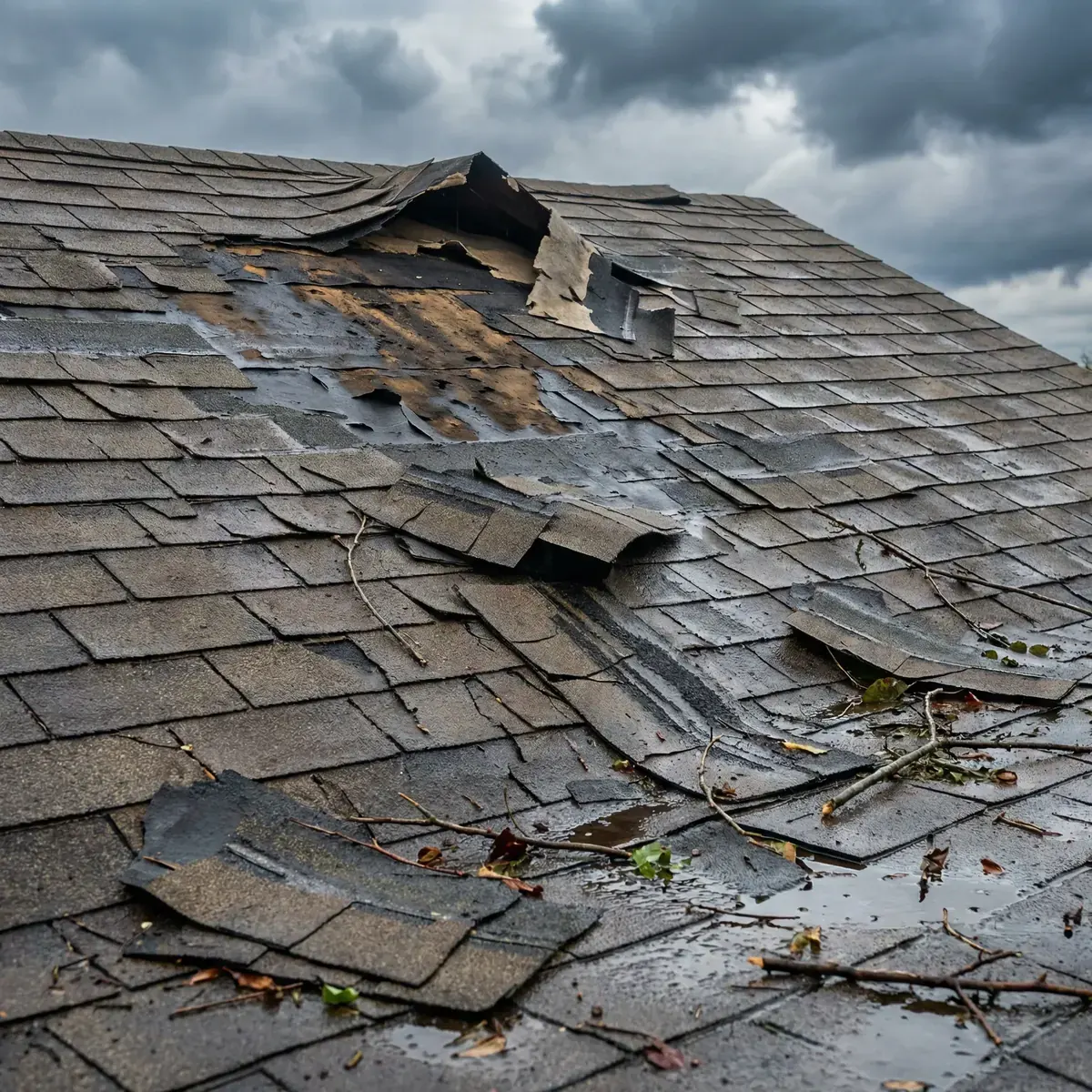
Your policy also sets what is covered at all. Sudden storm damage, such as hail bruising shingles or wind tearing them off, is often covered, while wear from age is usually excluded. The adjuster reads the roof for the signs of one or the other: bruises and dents point to a storm, while curling and granule loss across whole slopes point to age. That is why the storm date and the photos matter so much, since they show which story the roof tells.
Read your policy before the adjuster comes, and note what it says about the roof, the deductible, and the claim steps. If a term is unclear, ask your agent before work starts, since the insurer is the one who decides what the policy covers. A roofer can document the damage and lay out the repair, but the coverage decision belongs to the insurer.
If it is denied
A denial is not always the end of the claim. Ask the insurer in writing what was found and why the claim was denied, and read the reasons against your photos and the storm date. If the denial rests on the damage being wear, ask for a second look on the roof with your roofer present, so the soft bruises can be shown by touch, not just by sight.
Bring the record to the second look: the dated photos, the storm date, the roofer's written record slope by slope, and the National Weather Service storm report for the date. A denial that was based on a look from the ground can change when the bruises are shown up close. If the second look still denies the claim, talk with your agent about the options the policy gives you, and keep the record for your files either way.
People also ask
Short answers on roof claims, and how the process runs in Louisville.
Sudden hail damage is often covered, while wear from age is usually not, but every policy reads differently and the details matter. Note the storm date, photograph the dents and the bruises, and read the policy before work starts. The insurer decides what the policy covers, so talk with your agent about the claim.
Actual cash value is what the roof is worth today, with age taken into account. Replacement value is what it takes to put a new roof on today, without the age taken off. The difference between the two is set by the policy, and it is the part of the claim most homeowners ask about.
Gather your dated photos, the storm date, and the roofer's written record of the damage slope by slope. Walk the adjuster to the dents on the vents first, since metal shows hail plainly, then point out the bruised slopes. Having your roofer present helps, since bruises are found by touch.
Need help with the claim record? Call and we will document the damage with you.
Call (502) 922-5047Frequently asked questions
You tell your insurer the storm date and the damage, an adjuster visits to look at the roof, and the insurer decides what the policy covers. The roofer documents the damage slope by slope and lays out the repair. The tarp goes on at once, and the lasting repair waits until the scope is agreed.
The adjuster visit usually happens within days of the report, and the decision follows once the inspection is written up. The time varies with the size of the storm, since a big hailstorm brings many claims at once. The repair itself is scheduled once the scope is agreed, and the tarp holds the line until then.
It helps. A roofer tarps the open area at once and records the damage slope by slope, so you call your insurer with the storm date, the photos, and a written record in hand. The adjuster then has a clear account to work from, and the damage is protected while the claim runs.
Ask the insurer in writing why the claim was turned down, and read the reasons against your photos and the storm date. Ask for a second look on the roof with your roofer present, so the bruises can be shown by touch. Bring the dated photos and the storm report to the second look.
That is a question for your agent, since it turns on your policy and your claim history. Some homeowners ask their agent about the effect before filing, and some file and ask after. Your agent knows the policy and can say what the claim means for it.
Yes, in most cases you choose the roofer, and the insurer agrees the scope with you. The roofer should be local, with recent jobs you can drive past and a written scope that lists the materials and the layers. The insurer decides what the policy covers, and you decide who does the work.
Keep reading
For the first moves after a storm, read what to do after a hailstorm hits your Louisville roof, and for the written scope itself, read how to read a roofing quote. Storm and hail damage repair in Louisville covers the repair work.
Call and we will tarp the damage, record it slope by slope, and give you a clear record to show your insurer.