Stains in several rooms
Water showing up in more than one room means the roof is leaking in more than one place, and the trouble is spread across the system.

Repair or Replace
Every Louisville homeowner with a tired roof faces the same fork in the road: fix the bad spots or start over with a new roof. The right call comes from the pattern of the damage, not from a guess, and this guide walks through it.
The deciding question
Age matters, but it is only one of three things that point to repair or replacement. The other two are the pattern of the damage and the condition of the deck.
A repair fits when the trouble is local. One leak near a pipe boot, a few lifted shingles on one slope, a cracked flashing detail around a chimney: these are single points of failure on a roof that is otherwise sound. Fix the point, and the rest of the roof keeps doing its job for years. The repair makes sense because the cause is one thing, and fixing it removes it.
A replacement fits when the trouble is spread out. Granule loss across whole slopes, curling on every side, leaks in several rooms at once: these say the roof system is wearing out together, not failing at one point. Repairing one slope while the others keep failing means chasing the same trouble from slope to slope, and the roof keeps asking for attention.
The deck settles the close calls. A roofer walks the roof and feels for soft or spongy spots underfoot, which mean the decking below has rotted or weakened. A few soft boards can be swapped during a repair, but soft decking across several areas means the base itself is failing, and a new roof over a weak base will not hold. That is why a decision made from the driveway, without anyone walking the roof, is a guess.
A shingle roof in Louisville often runs about 20 to 30 years, and a roof in the first half of that run usually rewards a repair. A roof past the middle of its run deserves a harder look, since the shingles, the underlayment, and the flashing are all aging together. But a well vented 25 year old roof can outlast a 12 year old roof that baked in a sealed attic, so age alone never decides it.
Side by side
Read down both lists and see which one matches your roof. Most roofs lean clearly one way once the signs are laid out.
One stain on one ceiling points to one failure, and a repair can end it. Stains in several rooms at once point to a roof that is failing in several places, and patching one room leaves the others waiting their turn.
Walk the roof, or have a roofer walk it, and feel for boards that give underfoot. A firm deck takes nails and holds shingles. Soft boards in more than one area mean the base is going, and a new layer over a soft base will not hold.
Stand back and look at every slope, not just the one that leaks. Granule loss and curling spread across whole slopes say the shingles are wearing out together. A roof that looks tired everywhere is a roof near the end of its run.
A roof patched once can still have years in it. A roof patched twice on the same slopes is telling you the patches are holding a system that is done. Each new repair buys less time than the one before it.
When the signs point both ways, a roof inspection in Louisville puts the facts in front of you before you spend on either path.
Not sure which way your roof leans, repair or replacement? Call and talk it through with a roofer.
Call (502) 922-5047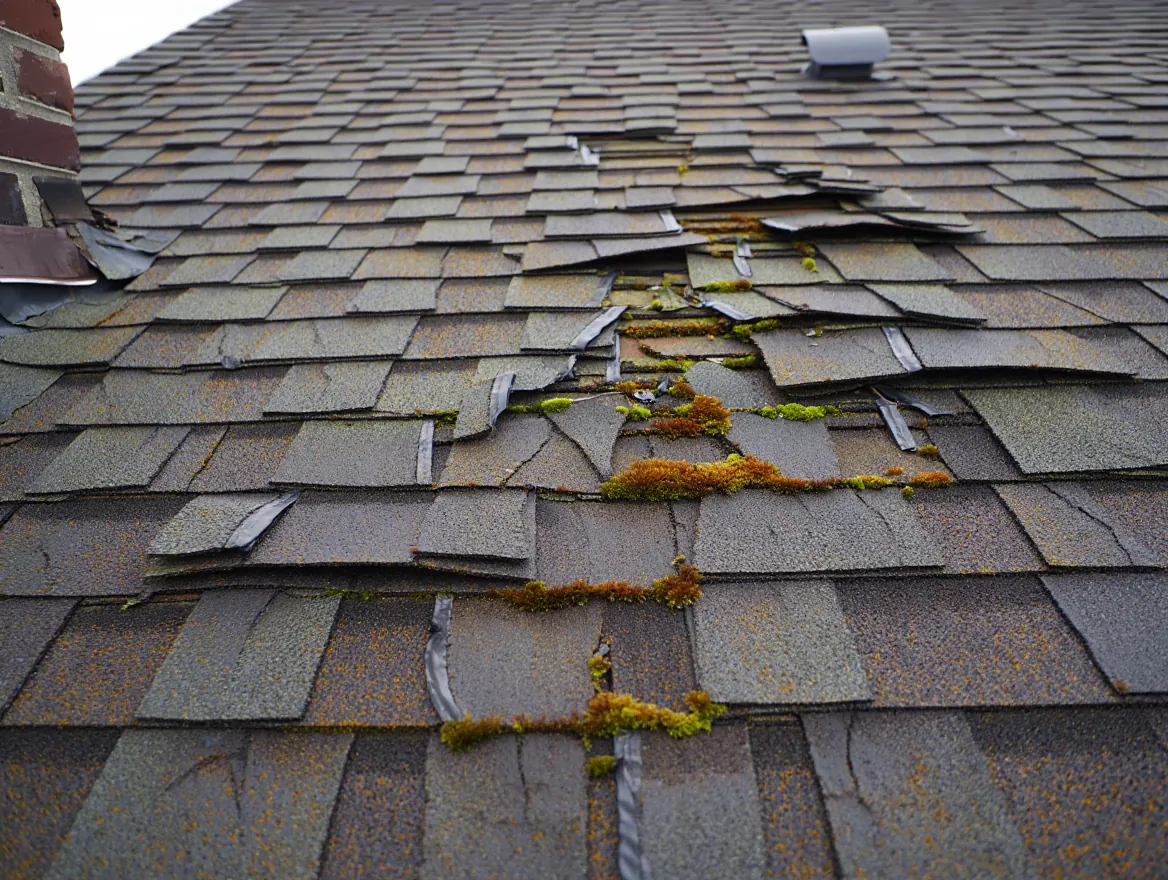
Under the shingles
The deck is the plywood or plank base every layer nails into, and it decides whether a repair can hold. When decking rots, nails pull out, shingles lift in the wind, and the roofline can sag between the rafters. A roofer finds soft decking by walking the roof and by looking at it from inside the attic, where rot shows as dark, soft wood around the leak.
Louisville weather is hard on decking. Humid summers trap moisture in a poorly vented attic, winter freeze and thaw opens small gaps around nails, and spring storms drive rain under lifted shingles. Over years, that slow wetting rots the boards from the top down. If the deck is sound, a repair has something solid to nail into. If it is not, the honest call is a replacement that swaps the bad boards first, through roof replacement in Louisville.
Warning signs
One sign alone may mean a simple fix. Several together usually mean the roof is near the end of its run.
Water showing up in more than one room means the roof is leaking in more than one place, and the trouble is spread across the system.
Heavy granule loss says the shingles have lost their shield against the sun, and they will age fast from here on.
Shingles curling on all sides, not just the sunny one, say the whole field is wearing out together.
Pinpricks of light in the attic mean holes in the roof, and the deck around those holes is often soft.
A wavy ridge or a dip between rafters points to weak decking or structure trouble below, and it needs a look soon.
A roof that has been patched twice on the same slopes is telling you the patches are holding a system that is done.
People also ask
Short answers on the repair-or-replace decision, and how owners make it.
Yes, when the damage is local to one slope or one detail, such as a valley or a pipe boot. A partial repair works when the rest of the roof is sound and the deck below is solid. It stops working when the same trouble shows up on several slopes at once.
A repair on a sound roof often holds for years, since it fixes the cause at one point of failure. A repair on a roof that is wearing out everywhere holds for a shorter time, because the next weak spot fails soon after. The condition of the rest of the roof sets the answer.
A tear-off lets the roofer see the deck, swap bad boards, and lay the new system on a solid base. Roofing over old shingles hides the deck and adds weight, and it can trap moisture. Most Louisville homes are better served by a tear-off when the old roof is near the end of its run.
Still weighing repair against replacement? Ask a roofer to walk the roof first.
Call (502) 922-5047Frequently asked questions
Read the pattern across the whole roof. Wide granule loss, curling on whole slopes, soft decking, or leaks in several rooms usually point to a replacement. One leak or a few lifted shingles usually point to a repair. The attic and the deck settle it, since the surface alone rarely tells the whole story.
It can, when the trouble is local and the deck is solid. A 20 year old roof with one bad flashing detail is a repair, not a replacement. The same roof with curling across every slope and granule loss in the gutters is a different story, and a repair there only buys a short time.
The crew tears them off down to the deck, loads them into a dump trailer, and hauls them away. Tearing off matters because it lets the roofer see the deck, swap soft boards, and lay the new underlayment on a clean base instead of over hidden trouble.
Yes, repairs go ahead in cold weather, though shingles seal more slowly when it is cold and crews work around ice and short days. A leak that is letting water in should not wait for spring. A planned replacement is better scheduled when the weather is steadier, so the tear-off and the dry-in happen in one stretch.
A repair blends in best when the shingles are still made in the same color and style, which is true for most roofs under ten years old. On an older roof the new shingles may read a shade darker at first, since the old ones have faded in the sun. The difference fades with time as the new shingles weather.
You do. A roofer should show you what they found, explain the pattern, and lay out both paths with what each one includes. The decision is yours, and it should rest on the condition of the shingles, the deck, and the flashing together, not on a guess from the driveway.
Keep reading
Once you know which way you lean, read how long a roof lasts in Louisville to see where your roof sits in its run, then how to read a roofing quote so you know what each line of the written scope means. The service pages for roof repair in Louisville and roof replacement in Louisville carry the full detail on each path.
Tell us what you see, and we will walk the roof, check the deck, and lay out both paths plainly so you can choose with facts.