Damp insulation
Insulation that is damp or matted down has been wet, and it stops insulating once it is soaked.
Leak Detection
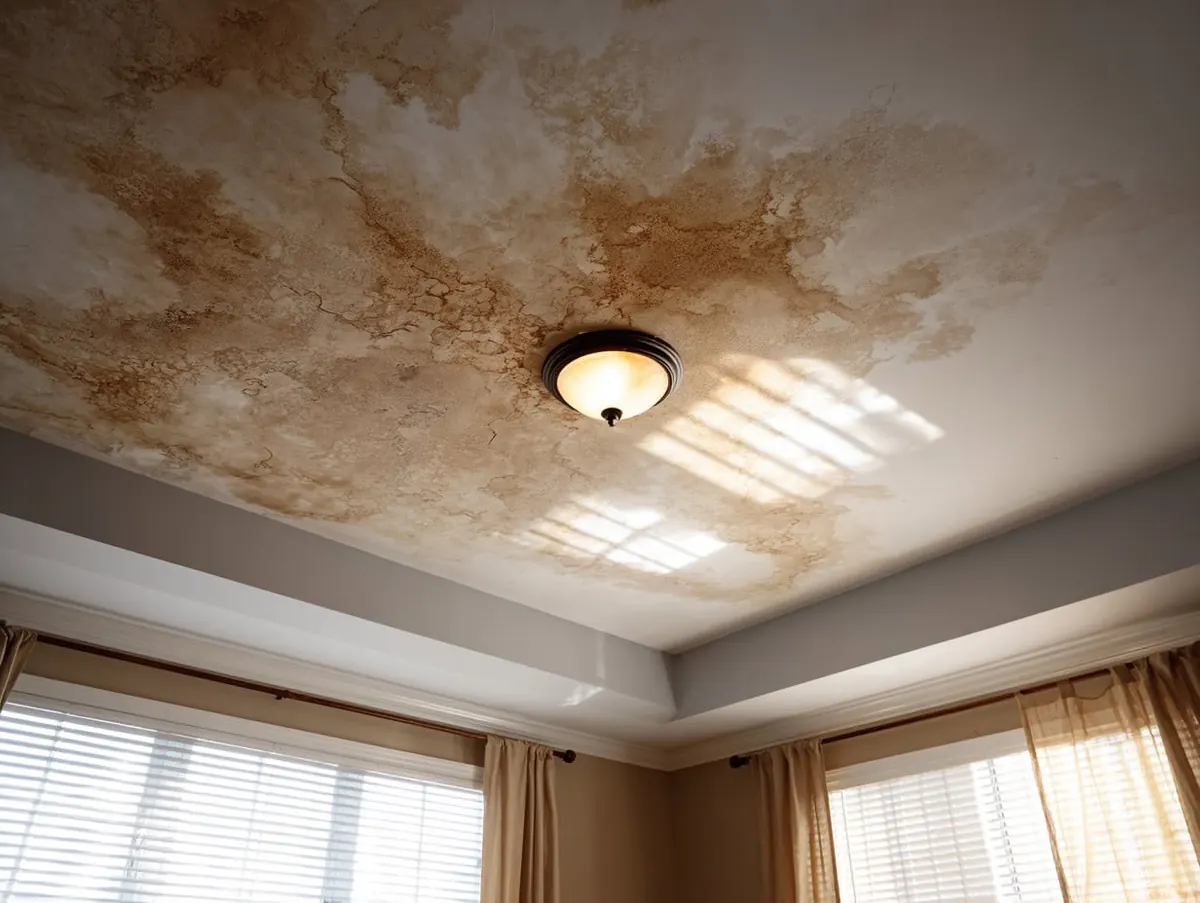
A ceiling stain is the last sign of a roof leak, not the first. By the time the stain shows, the water has already soaked the deck and the insulation. The early signs are in the attic, and they are easy to find.
In the attic
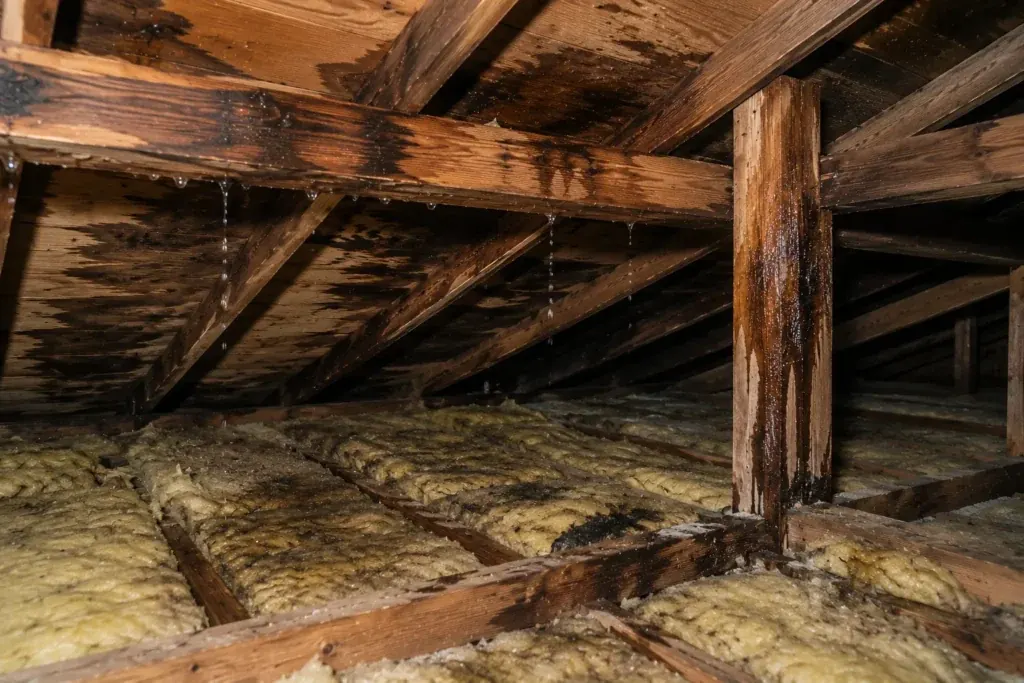
A roof leak starts small, and the attic is where it shows first. Go in on a bright day and look for pinpricks of daylight through the deck, which mean holes in the roof where light, and rain, get in. Then look for dark stains on the rafters and the deck, and for insulation that is damp or matted down. A stain that was not there last season is a fresh leak, and the roof above it is where the water is getting in.
The smell tells the story too. A damp, musty smell in the attic means moisture has been sitting there, even when no stain is visible yet. Run a hand along the deck under the valleys and around the chimney, and feel for damp wood. The deck is the first thing the water touches, and it stays damp long after the rain stops, so a damp deck in dry weather is a leak that has been working for a while.
The leak is rarely above the stain. Water travels along rafters and decking before it drops, so a stain in one room can start at a leak two rooms away. That is why a roofer traces the water path instead of fixing the roof above the stain, and why a roof inspection in Louisville looks at the whole attic, not just the stained corner.
Early signs
Each of these shows up before the ceiling stains. Two or more together mean the roof needs a look soon.
Insulation that is damp or matted down has been wet, and it stops insulating once it is soaked.
Dark stains on the rafters mark where water has run, even when the ceiling below is still clean.
Pinpricks of light mean holes in the roof, and rain follows light through the same opening.
A damp smell means moisture has been sitting there, even with no stain visible yet.
Heavy granule loss says the shingles are wearing thin, and the surface below is exposed.
Edges that curl up let rain under the shingle, and the leak starts at the lifted edge.
Found a damp spot in the attic? Call and get the leak traced before it stains.
Call (502) 922-5047
Common sources
Valleys carry the most water on the roof, since two slopes drain into one corner, and they wear first and leak first. A valley with worn flashing or lifted shingles lets water under the surface, and the leak shows up in the attic below the valley, often far from where the water enters. The pipe boots are the second usual source: the rubber boot around a vent pipe dries and cracks with the sun, and the crack lets rain run straight down the pipe into the attic.
The chimney flashing is the third. Step flashing and counterflashing seal the joint where the roof meets the brick, and when the sealant cracks or the metal lifts, water runs behind the flashing and down the chimney into the house. All three are small fixes when they are caught early, and all three become deck repairs when they are left for a season. Roof repair in Louisville starts at these three joints more often than anywhere else.
After rain
A ten-minute check after a storm catches a leak while it is still a small fix. Make it a habit, and the ceiling stays clean.
After a big rain, walk the rooms under the roof and look at the ceilings, not just the ones that stained before. A new stain, even a faint one, is a fresh leak, and a stain that grows after each rain means the opening is still letting water in. Then go into the attic with a flashlight and look at the deck under the valleys and around the chimney, where the water enters first.
Do the same check after a hailstorm, even when the roof looks fine from the street. Hail bruises hide under the granules, and the first leak from a bruise can take weeks to show. A roof that is checked after every storm rarely surprises its owner, and the leaks that are caught early stay small.
People also ask
Short answers on spotting a leak before it stains the ceiling.
Look in the attic first, where the water shows before the ceiling stains. Follow the stains on the rafters and the deck back to their highest point, and check the valleys, pipe boots, and chimney flashing above it. Water travels along rafters before it drops, so the leak is often far from the stain.
Yes, when the trouble sits in one place. A leak at a single valley or a single pipe boot can be fixed on its own, while the rest of the roof keeps working. The repair stops making sense when the same trouble appears on several slopes, since the roof is wearing out together, not failing at one point.
Yes. In light rain the water runs straight down the slope and past a small gap, but in heavy rain the wind drives it sideways under flashing and lifted shingles. A gap that holds in a drizzle lets a storm through, so the leak points to a joint that has opened and needs a repair while it is small.
Think water is getting in? Call and ask for a leak check.
Call (502) 922-5047Frequently asked questions
At the valleys, the pipe boots, and the chimney flashing, in that order. Valleys carry the most water, pipe boots dry and crack with the sun, and chimney flashing lifts as the roof moves. All three are joints, not open field, and most leaks start at a joint rather than in the middle of a slope.
Months, when the water soaks the deck and the insulation before it reaches the ceiling. A stain shows only when the water has saturated the layers above it and finally drips through. The attic shows the leak first, which is why a look inside the attic catches it while it is still small.
Photograph it with the date, and note where it sits in relation to the valleys and the chimney. Put a bucket below it if it is dripping, and call a roofer to trace the water path. Do not seal the stain from inside, since the water keeps coming in above it and the deck keeps soaking.
Yes. A clogged gutter spills water back onto the eaves, and the water soaks the fascia and the deck edge, then shows up inside as a stain near the outside wall. A sagging gutter does the same. Clearing the gutters and checking the fascia is part of tracing any leak near the eaves.
Water travels along rafters and decking before it drops, so a leak at a valley can show up as a stain two rooms away. The water follows the slope of the wood until it finds a joint or a low point, and that is where it drips through. Tracing the path back to its highest point finds the source.
No. A wet roof is slick, and the leak is found in the attic first, where the stains and the damp wood mark the path. A roofer walks the roof and presses for soft spots, which is how the opening is found. Stay off the roof and let the attic do the talking.
Keep reading
To see what a full look covers, read what a roof inspection actually covers, and for a leak that starts during rain, read what to do when your roof leaks during a storm.
Call and we will trace the water path in the attic, find the opening, and tell you plainly what it needs.