Call (502) 922-5047
Roofer in a hard hat kneeling on a shingle roof to inspect it

Roof Inspections

What a roof inspection actually covers

A roof inspection sounds simple, but a good one looks at more than the shingles. The deck, the flashing, the attic, and the gutters each tell part of the story, and the report ties them together.

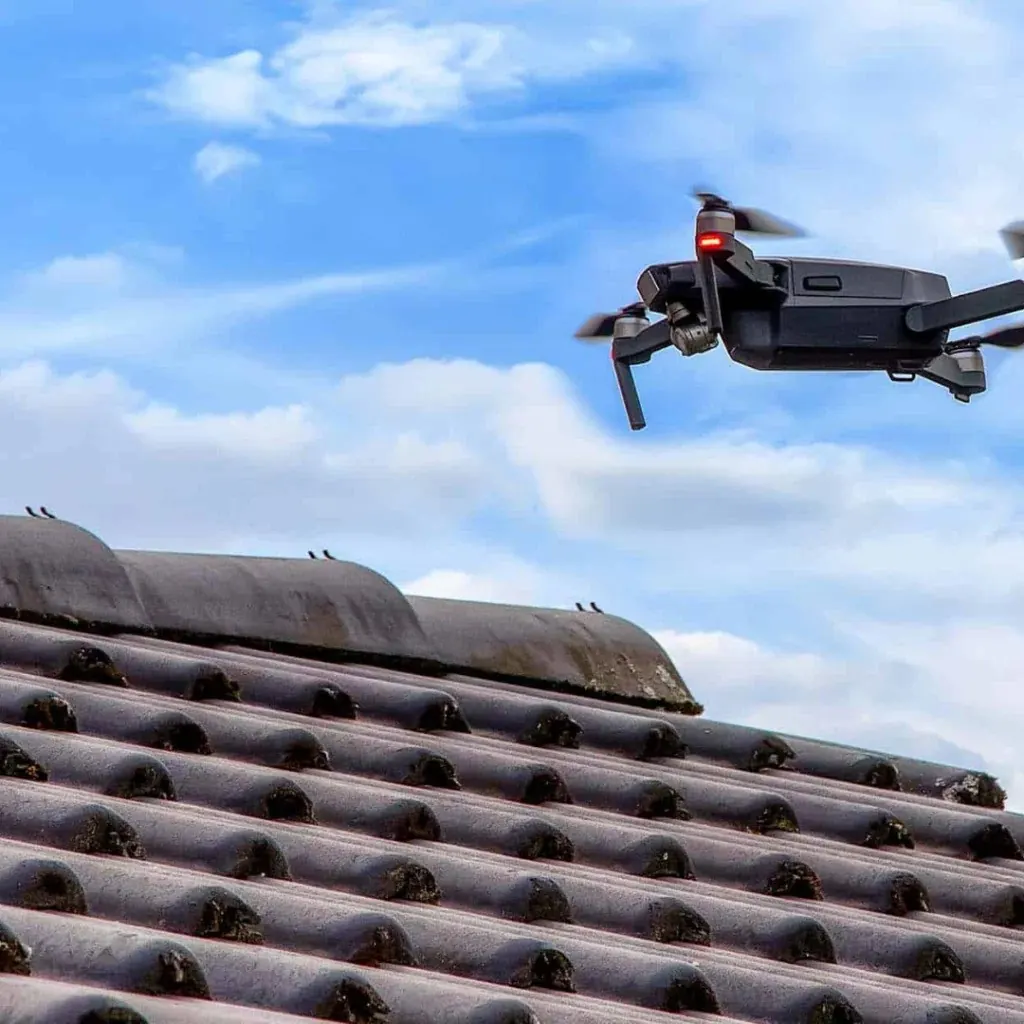
Drone flying over a house roof during an inspection
A drone look covers the steep slopes and the far ridges without a ladder on the roof.

On the roof

The shingles, the flashing, and the deck

An inspection starts on the roof itself, slope by slope. The inspector looks at the shingles for granule loss, curling, lifted tabs, and hail bruises, and presses for soft spots where the mat has been crushed. Each slope is read on its own, since the south slope ages faster than the north, and the storm side carries more bruises than the sheltered side.

The flashing comes next, and it gets the closest look. Step flashing at the chimney, counterflashing at the walls, valley flashing where the slopes meet, and the pipe boots around every vent: each joint is checked for cracks, lifting, and rust. Most leaks start at a joint, not in the open field, so the flashing is where an inspection earns its keep.

The deck is read by foot and by eye. The inspector walks the roof and feels for soft or spongy spots underfoot, which mean the decking below has rotted or weakened. From inside the attic, the same deck is read again, from below, where rot shows as dark, soft wood. A deck that is sound underfoot and clean from below is a deck that will hold a new roof or a repair.

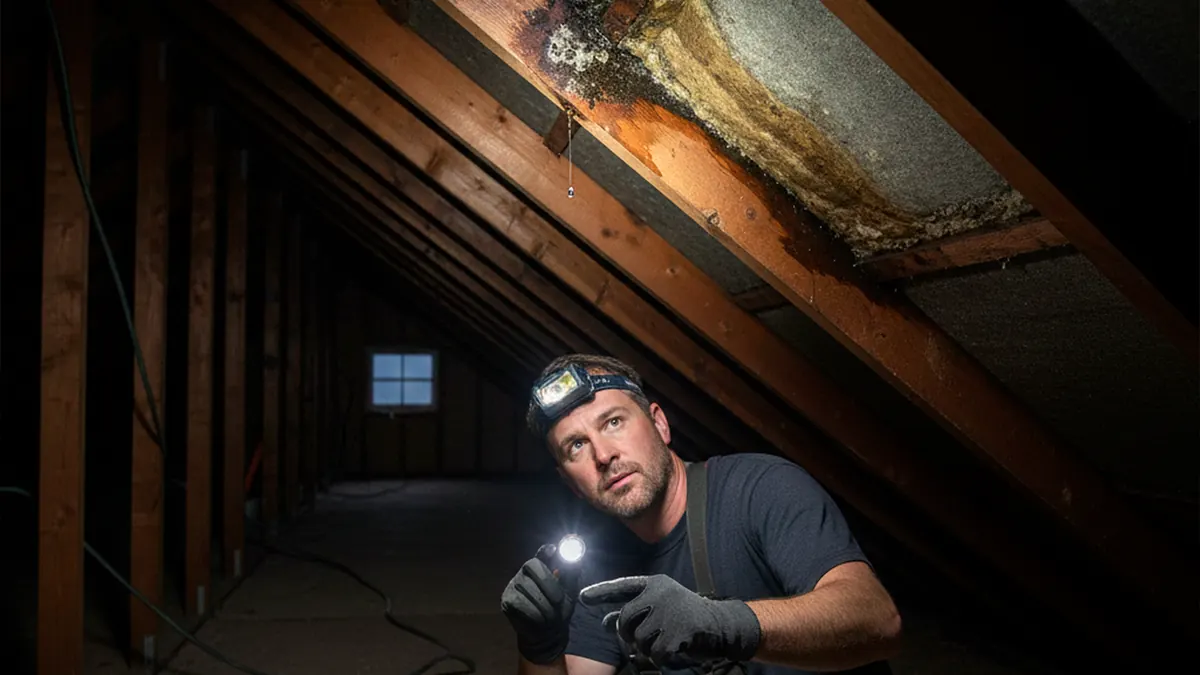
Roof inspection in an attic with a flashlight looking at rafters
The attic shows the leaks first, and the deck from below tells whether it will hold nails.

Inside the house

The attic and the gutters complete the picture

The attic is the second half of the inspection, and it is where the leaks show first. The inspector looks for stains on the rafters and the deck, damp insulation, daylight through the boards, and the musty smell that means moisture has been sitting there. The ventilation is checked at the same time: the soffit vents, the ridge vent, and the baffles that keep the air path open.

The gutters finish the picture. Granules in the trough say the shingles are shedding their shield, a sagging gutter says the fascia is soft, and a clogged downspout says the water is backing up onto the eaves. The gutters are part of the roof system, and an inspection that skips them misses half the water story. Roof inspection in Louisville covers all four: the roof, the attic, the flashing, and the gutters.

Wondering what your roof would show? Call and book an inspection.

Call (502) 922-5047

The report

What the inspection report should tell you

A good report is written in plain words, with photos, and it separates what needs fixing now from what to watch. Here is what to expect in it.

What a Louisville roof inspection report covers
PartWhat is checkedWhat you get
ShinglesGranule loss, curling, bruises, lifted tabsCondition by slope, with photos
FlashingChimney, valleys, skylights, pipe bootsCracks and lifting, joint by joint
DeckSoft spots, rot, sagging, daylightSound or soft, by area
AtticStains, damp insulation, ventilationMoisture signs and vent balance
GuttersGranules, sagging, clogs, downspoutsFlow and condition, by run

Scroll sideways to see the full table.

When to get one

When a Louisville roof needs an inspection

Once a year is the rhythm for most homes, and always after a storm. Three other moments call for one too.

The first is after a hailstorm or a stretch of high wind, even when the roof looks fine from the street. Hail bruises hide under the granules, and a lifted shingle can look flat from the ground. The inspection catches the damage while the signs are fresh and the record is clear.

The second is when you are buying or selling a home. A roof inspection tells the buyer what the roof is and what it needs, and it tells the seller what to fix before the sale. The third is when a stain appears on the ceiling, since the stain is the last sign, not the first, and the inspection finds the opening that made it.

People also ask

More roof inspections questions owners ask

Short answers on roof inspections, and what one actually covers.

How often does a Louisville roof need a close look?

Most Louisville homes need a close look once a year, and another after hail or a long stretch of high wind. The spring look finds winter wear before the summer storms, and the fall look finds loose flashing before cold rain. Between those looks, a glance from the ground after heavy weather is enough.

What is the difference between a roof inspection and a roofing quote?

An inspection is a diagnosis: it looks at the roof and writes down what is sound and what needs attention. A quote is a scope of work: it lists what will be done, with the materials and the layers. The inspection comes first, since the scope should rest on what the roof actually needs.

Should I get a roof inspection after a storm in Louisville?

Yes, even when the roof looks fine from the street. Hail bruises hide under the granules, and a lifted shingle can look flat from the ground. A close look after the storm catches the damage while the signs are fresh, and the written record is the clearest account of what the storm did.

Ready for a straight read on your roof? Call and book the inspection.

Call (502) 922-5047

Frequently asked questions

The roof inspections questions, settled

It looks at the shingles, the flashing, the deck, the attic, and the gutters, slope by slope. The inspector checks for granule loss, curling, hail bruises, cracked flashing, soft decking, attic stains, and gutter trouble, and writes it down with photos. The report separates what needs fixing now from what to watch.

For most single-family homes, the roof and attic visit runs under an hour, and the report follows after. A large or steep roof takes longer, since the slopes need a careful walk and the attic a full read. The report itself takes the most time, since it is written in plain words with photos.

It includes the attic, which is where the leaks show first, and the ceilings below the roof where stains appear. The inspector does not open walls or move furniture, and the look inside is limited to the attic and the rooms under the roof. The stains on the ceilings are noted and traced back to the roof above.

Yes, that is the main reason to get one after a storm. Hail bruises hide under the granules and are found by touch, pressing for soft spots on the shingles. A look from the ground misses them, and the inspector walks the roof to find them, slope by slope, with the damage written down.

It helps, since the inspector can show you what they found and answer questions on the spot. If you cannot be there, the written report with photos covers it, and a call after the visit walks through the findings. Either way, the report is yours to keep.

The report separates what needs fixing now from what to watch, and the roofer lays out the repair or the replacement with a written scope. Nothing is fixed without your word, and the inspection itself does not commit you to any work. The findings are facts, and the decision is yours.

Keep reading

Read next: spotting leaks and the repair decision

To spot trouble yourself between inspections, read how to spot a roof leak before it stains your ceiling, and for what the findings mean, read roof repair or roof replacement: how Louisville homeowners decide.

Book a roof inspection in Louisville

Call and we will look at the shingles, the flashing, the deck, the attic, and the gutters, and give you the findings in plain words.