Walk the yard first
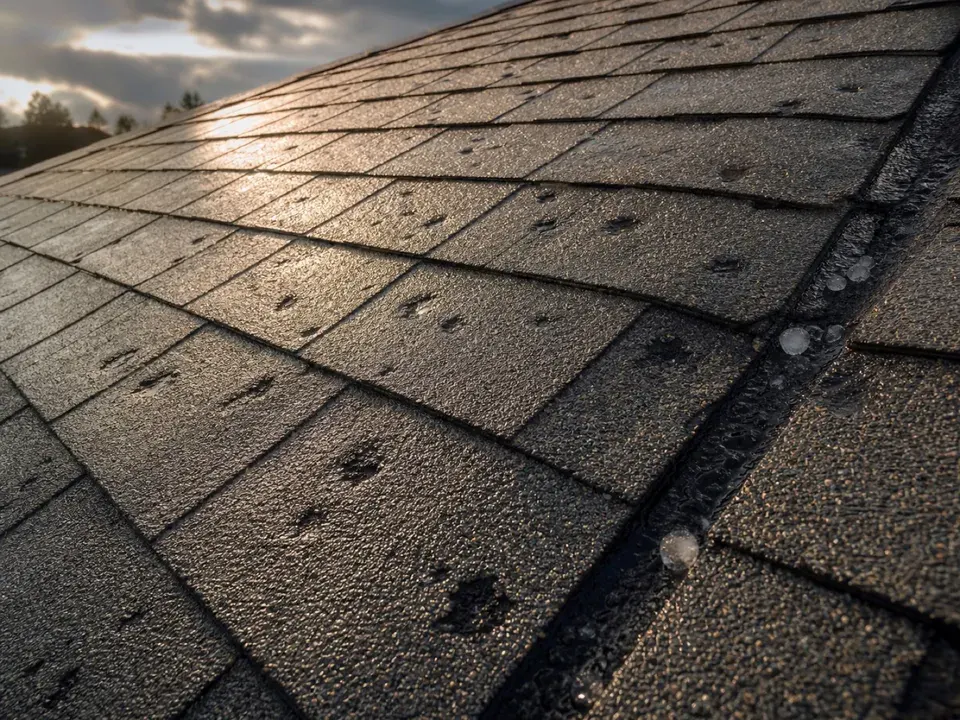
Look for hailstones, shingle pieces, and granules on the ground. The size of the stones left behind tells you how hard the roof was hit.
Storm Damage Signs
A Louisville hailstorm can hurt your roof while leaving it looking fine from the street. The bruises hide under the granules, and they show up months later as leaks and bare patches. Here is how to tell what the storm really did.
The hidden bruise
Hail damage on a Louisville roof usually starts as a bruise, not a hole. A hailstone strikes the shingle, knocks the granules loose, and dents the mat underneath. From the driveway the roof looks normal, but the bruised spot has lost the layer that shields it from sun and rain, and it wears down faster from that day on.
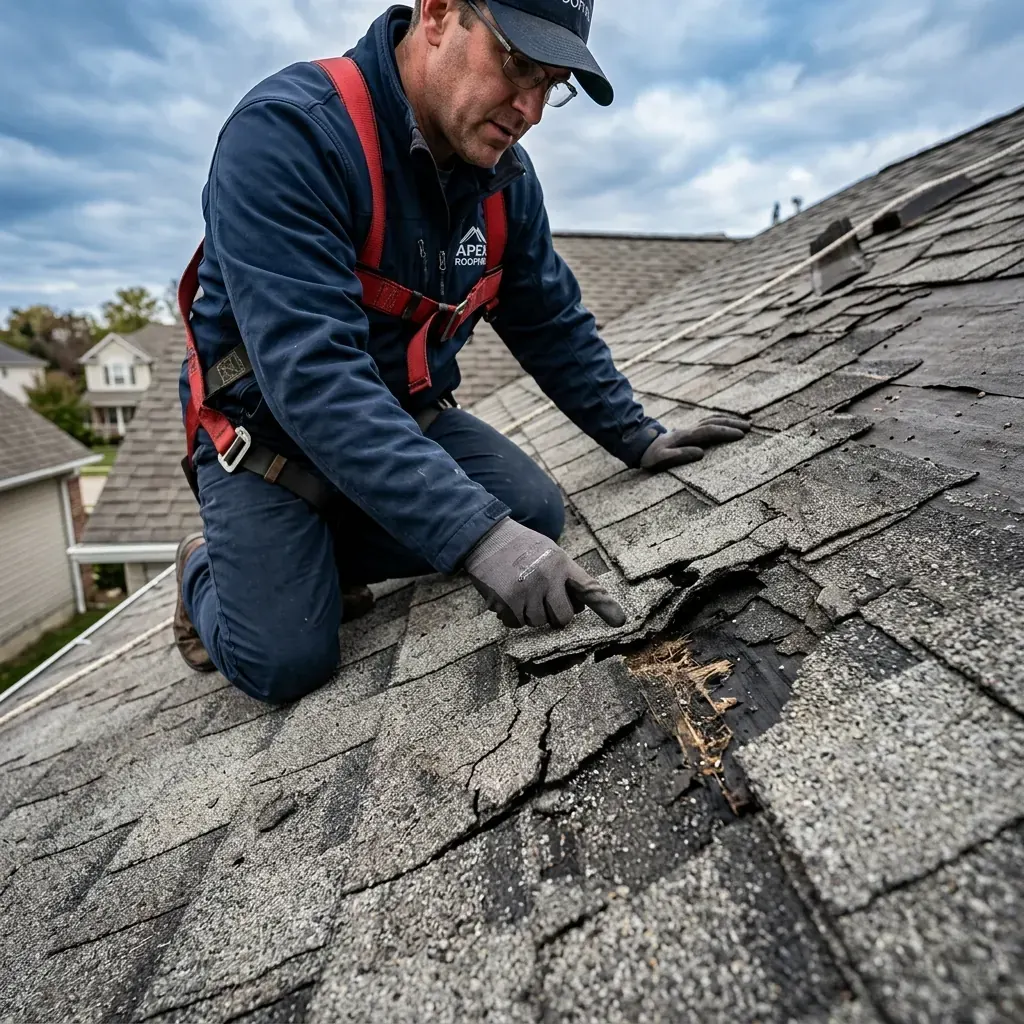
The way to find a bruise is by touch. A roofer runs a hand over the slope and presses gently, feeling for soft spots where the mat has been crushed. Bruises often gather in a random pattern across one slope, the side the storm came from, while the sheltered slopes stay firm. If you climb up to look yourself, stay off the roof and use binoculars from the ground instead, since a wet slope after a storm is slick and a bruised shingle tears easily underfoot.
Granules tell the same story from below. After a hailstorm, check the gutters and the ground where the downspouts drain. A sudden pile of coarse, sand-like granules means the storm stripped them off in quantity. A few granules are normal wear, but a heavy wash of them right after a storm points to fresh impact damage, and it is worth a closer look through storm and hail damage repair in Louisville.
Soft metal shows hail plainly. Look at the roof vents, the flashing around the chimney, and the gutters for round dents. If the metal is dented, the shingles took the same hits, and the shingles hide it better. Dented vents and flashing are the clearest ground-level clue that a storm was strong enough to bruise the roof.
By material
Hail does not hit every roof the same way. The material decides whether the damage shows at once or stays hidden until the next season.
| Material | What hail does | What to look for |
|---|---|---|
| Architectural shingles | Bruises the mat and knocks granules loose | Soft spots, dark round marks, granules in gutters |
| Three-tab shingles | Cracks and tears at the thin tabs | Split tabs, missing corners, torn edges |
| Standing seam metal | Dents panels and seams | Round dents along the seams and flat runs |
| Slate | Chips edges and cracks tiles | Chipped corners, cracked slates, slate pieces on the ground |
| Flat roof membrane | Punctures and bruises the surface | Round punctures, soft spots, seam damage near drains |
Scroll sideways to see the full table.
Found dents on the vents or granules in the gutters? Call and get the roof checked properly.
Call (502) 922-5047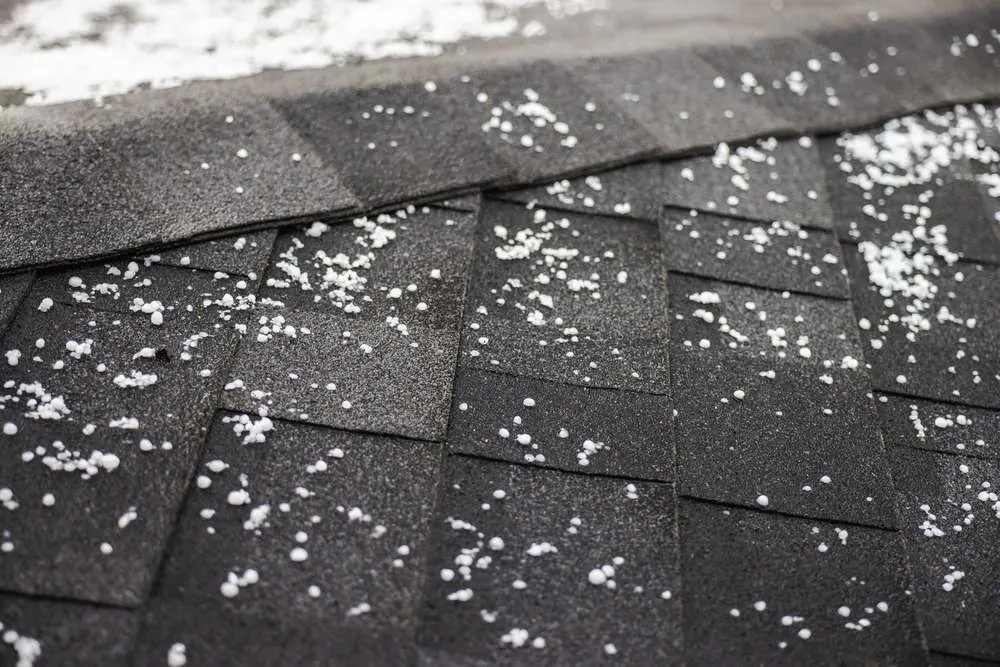
Inside the house
Damage does not always wait for rain to show itself. Go into the attic on a bright day and look for pinpricks of daylight through the deck, damp insulation, and dark stains on the rafters. A stain that was not there before the storm is a fresh leak, and the roof above it is where the hail broke through. Take a photo of every stain with the date, since that record matters later if you talk with your insurer.
Inside the living rooms, look at the ceilings under the roof, not just under the obvious slopes. Water travels along rafters and decking before it drops, so a stain in a bedroom can start at a bruise two rooms away. A stain that grows after each rain means the opening is still letting water in, and the roof needs a roof inspection in Louisville before the next storm widens it.
After the storm
Work through these five moves in order, and stay off the roof at every step. The ground and the attic tell you most of what you need.
Look for hailstones, shingle pieces, and granules on the ground. The size of the stones left behind tells you how hard the roof was hit.
Look for dark round marks, missing tabs, and dents on vents and flashing. Note which slope faces the storm and which looks worst.
A heavy wash of granules in the gutters means the storm stripped the shingle surface. Dented gutters confirm the stone size.
Search for daylight through the deck, damp insulation, and fresh stains on the rafters. Photograph anything new with the date.
A roofer walks the roof, presses for bruises, and writes down what the storm did, slope by slope, so you have a clear record.
People also ask
Short answers on hail damage, and how to tell it from ordinary wear.
Yes. Press a shingle with a fingertip and feel for a soft spot where the mat has broken under the granules. Look for dark patches where granules have gone, and dents on the soft metal of vents and gutters, which hail marks first. The eye misses what the hand finds.
Check the ground and the attic within a day or two, while the signs are fresh and the hailstones are still visible in the yard. A roofer should walk the roof within the same week, before the next rain washes the granules away and blurs the pattern of the hits.
No. Light bruising on one slope often calls for a repair on that slope alone, while wide bruising across several slopes points the other way. The pattern decides it: the number of slopes hit, the depth of the bruises, and the age of the shingles together.
Still unsure what the storm did to your roof? Talk it through with a roofer.
Call (502) 922-5047Frequently asked questions
It looks like dark round marks where granules are missing, soft spots you can press with a thumb, and sometimes cracked or torn tabs. On a gray or brown roof the marks read as darker circles against the shingle surface, and they often cluster on the slope that faced the storm.
You can check a lot from the ground with binoculars, and from inside the attic with a flashlight. Stay off the roof itself, since wet shingles are slick and bruised shingles tear underfoot. A roofer does the walk on the roof, where the bruises are found by touch.
Hail knocks the granules off the shingle surface, and rain washes them down into the gutters. A small amount is normal wear, but a heavy wash right after a storm means the hail stripped the surface in quantity, and the shingles lost part of their shield against the sun.
Yes, soft metal dents plainly, so vents, flashing, and gutters show round dents after a hailstorm. That makes metal a useful gauge: if the vents are dented, the shingles took the same hits, even when the shingles hide the bruises better than the metal does.
Photograph the hailstones next to a coin for scale, any shingle pieces in the yard, the dents on vents and gutters, and every stain inside the attic and on the ceilings. Date the photos, since the storm date and the visible damage together form the record you need.
A bruised shingle can hold for weeks or months before the granule loss lets water through, and the first leak often shows up in a later storm. The delay is the trap: the roof looks fine while the bruise wears down, so a check soon after the storm is what keeps a small bruise from turning into a leak.
Keep reading
If the storm just passed, read what to do after a hailstorm hits your Louisville roof for the first moves in order, then how hail size affects roof damage to see why the size of the stones matters. For the repair itself, see storm and hail damage repair in Louisville.
Tell us what the storm did and what you see from the ground. We will check the roof up close and tell you plainly what it needs.