Stay off the roof
Wet shingles are slick, and bruised shingles tear underfoot. Look from the ground and from inside the attic instead.
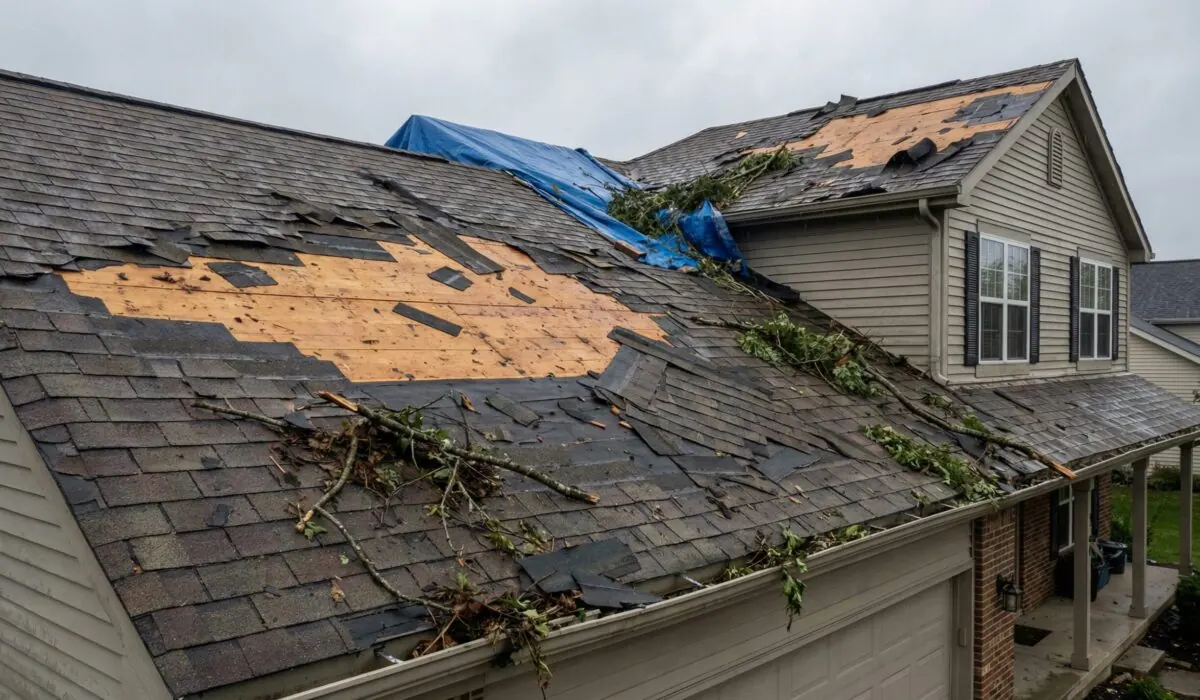
After the Hailstorm
The hail has stopped, the yard is white with ice, and your roof may be hurt in ways you cannot see from the ground. What you do in the next few days decides whether the damage stays small or turns into a leak.
First moves
Work through these in order. The first three protect the house, and the last two protect your record of the damage.
Wet shingles are slick, and bruised shingles tear underfoot. Look from the ground and from inside the attic instead.
Put buckets under active drips, move rugs and furniture out of the way, and lay towels along the path of any water.
Shoot the hailstones next to a coin, the dents on vents and gutters, and every stain inside. Date each photo.
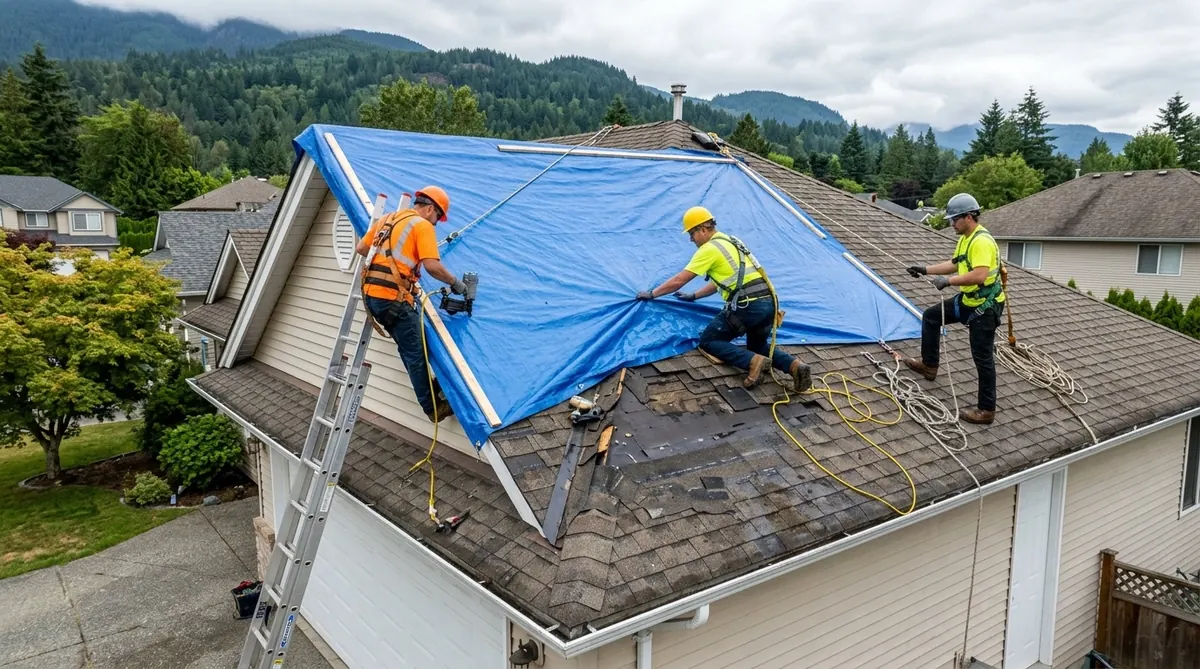
If shingles are missing or a section is open, a roofer tarps it so the next rain does not soak the deck.
A roofer walks the roof, presses for bruises, and writes the damage down slope by slope for your records.
Your record
After a hailstorm, the damage is clearest in the first days, and it blurs fast. Rain washes granules out of the gutters, sun dries the stains, and the hailstones in the yard melt. Photographing early locks the evidence in: the size of the stones, the pattern of the hits on the roof, and the stains inside. Put a coin next to a hailstone in the photo for scale, and keep the photos dated.
Write the storm date down too, with the time if you remember it. The National Weather Service office in Louisville keeps storm reports for the area, and the storm date ties your damage to a named event. When you talk with your insurer later, the date and the photos together show that the damage came from one storm, not from years of wear. Insurance claim help in Louisville starts from that record, and a thin record leaves more for the insurer to question.
A roofer walks the roof and records the damage slope by slope: how many bruises per slope, how deep they are, which vents and flashing are dented, and whether the deck feels soft anywhere. That written record, with photos, is the clearest account of what the storm did, and it is the document your insurer will want to see.
Hail just hit your roof? Call and get it checked while the signs are fresh.
Call (502) 922-5047The adjuster visit
An adjuster visits to see the damage and decide what the policy covers. Your job is to make the damage easy to see.
Before the visit, gather your photos, the storm date, and the roofer's written record. Walk the adjuster to the dents on the vents and the flashing first, since metal shows hail plainly, then point out the bruised slopes and the granules in the gutters. If you have a roofer present, they can point out the soft spots on the shingles that a look from the ground misses, since bruises are found by touch.
Ask the adjuster what they found and what happens next, and write their answers down with the date. Policies differ, and the person who decides what the policy covers is your insurer, so talk with your agent before any work starts. The repair itself should wait until the inspection is done and the scope is agreed, except for the tarp, which goes on at once to keep the next rain out. For the repair work itself, see storm and hail damage repair in Louisville.
After a big hailstorm, crews from outside Louisville appear fast, knocking on doors the same week. A local roofer with local jobs you can drive past is the safer choice, since they will still be here when the work needs a second look. Check that any roofer you hire has local references and a written scope before work starts.
Do not do these
Each of these feels like helping, and each one makes the damage or the record worse.
Wet shingles are slick and bruised shingles tear underfoot. A fall hurts more than the roof, and foot traffic can turn bruises into tears.
Rain washes the granules away and blurs the pattern of the hits. The damage is clearest in the first days after the storm.
Washing the roof hides the granule loss and the bruise pattern, and it can push water under lifted shingles. Leave the roof as the storm left it.
A knock on the door the day after a storm is not the time to agree to work. Get a written scope from a local roofer first, and read it before signing.
People also ask
Short answers on the hours after a hailstorm, and what to do first.
Dated photos from the day of the storm make a hail claim far stronger, since they tie the damage to one storm date. Photograph the dents and the bruises before anything is moved or covered, and keep the storm date with them. The insurer decides what the policy covers, so talk with your agent before work starts.
Open areas need a tarp at once, so the next rain does not soak the deck. The lasting repair waits until the adjuster has seen the damage and the scope is agreed. A tarp buys time, but it is not a repair, and it should not stay up for a season.
Yes, and soon. A hail bruise hides under the granules, and it takes months to show as granule loss or a soft patch, long after the storm date fades from memory. A check now puts the damage on record with dated photos, while a check next year leaves the storm date open to doubt.
The National Weather Service office in Louisville tracks severe storms across the Ohio Valley and keeps reports on hail size and storm paths. Its storm reports help tie roof damage to a named event, which is why writing down the storm date matters for your record.
Need a roofer to look at the damage? Call and tell us what the storm did.
Call (502) 922-5047Frequently asked questions
Start inside: put buckets under active drips and move furniture out of the way. Outside, stay off the roof and look from the ground for missing shingles or dented vents. Then photograph the damage and call a roofer to tarp any open area and check the deck.
Photograph the hailstones next to a coin, the dents on vents and gutters, the bruised slopes, and the stains inside, all dated. Add the storm date and the roofer's written record of the damage slope by slope. Together they show the damage came from one storm.
Call a roofer first to tarp any open area and record the damage, since water keeps coming in while you wait. Then call your insurer with the storm date and the photos in hand. The roofer's written record gives the adjuster something clear to work from.
An open area cannot wait, since the next rain soaks the deck and the damage grows. A tarp holds the line through winter, but the lasting repair should happen once the adjuster has seen the damage. Bruised shingles also wear faster in winter, so waiting a season often widens the repair.
No. Light bruising on one slope often calls for a repair on that slope alone. A new roof comes into the picture when the bruising is wide, across several slopes, and the shingles are already near the end of their run. The pattern of the damage decides it, not the storm alone.
Ask them to walk the roof with your roofer, so the soft bruises can be shown by touch, not just by sight. Bruises hide under granules and are easy to miss from the ground. Your dated photos and the storm date help show the damage came from one event, not from years of wear.
Keep reading
To learn the signs themselves, read how to tell hail damaged your Louisville roof, and for why stone size matters, read how hail size affects roof damage. For the claim itself, see insurance claim help in Louisville.
Call now and we will tarp the open areas, record the damage slope by slope, and tell you plainly what comes next.