Call (502) 922-5047
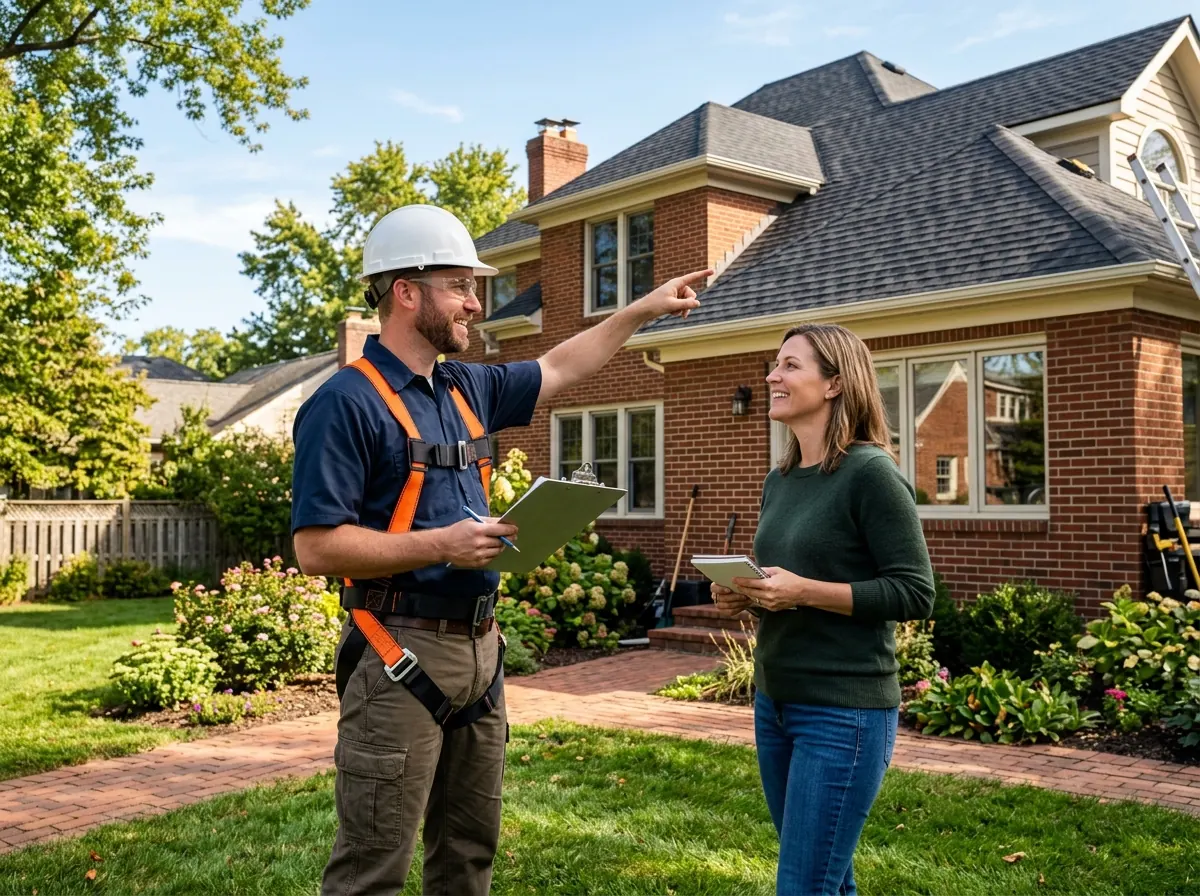
Homeowner talking with a roofer in a driveway, pointing up at the roof

Hiring a Roofer

Kentucky does not license roofers: how to vet one in Louisville

Kentucky issues no state roofing license, so the paper that proves a roofer in other states does not exist here. That makes the local checks matter more, and this guide walks through them one by one.

Roofer on a ladder inspecting the edge of a house roof
A roofer who welcomes questions about insurance and past work is the one to trust.

The Kentucky rule

No state license means local checks carry the weight

In many states, a roofing license is the first thing a homeowner asks for, and the state keeps a list of who holds one. Kentucky has no such license for roofers, so there is no state list to check and no license number to look up. The absence of a license is not a warning sign by itself: it is the law here, and every roofer in Louisville works under the same rule.

What replaces the license is a set of local checks, and they are stronger than a license number when they are done properly. Proof of insurance, recent local jobs you can drive past, manufacturer certification for the material being laid, and a written scope that lists the materials and the layers: these four together say more about a roofer than any single paper could.

The checks matter most after a storm, when out-of-town crews appear fast and knock on doors the same week. A local roofer with local jobs to show will still be here when the work needs a second look, and that is the difference that counts. Roof inspection in Louisville is a good first meeting with a roofer, since it shows how they work before any larger job starts.

Before you hire

A vetting checklist for Louisville homeowners

Tap each item as you complete it. A roofer who answers all eight plainly is a roofer worth hiring.

Vetting a roofer right now? Call and ask us the same questions on this list.

Call (502) 922-5047
Roofing contractor talking with a homeowner outside a house
A straight answer in plain words beats a smooth sales line every time.

The conversation

The questions that reveal a good roofer

Ask how the roofer handles decking. The answer should mention walking the roof, feeling for soft boards, and swapping bad boards during the tear-off, with a clear statement of what happens if more bad decking shows up than expected. A roofer who waves the question away, or who says the deck is never a problem, has not looked at enough Louisville roofs.

Ask about flashing and ventilation in the same breath. Flashing around the chimney, the skylight, and the valleys is where most leaks start, and the attic ventilation decides how long the shingles last. A roofer who talks about both without being asked is a roofer who thinks in systems, not in shingles alone.

Ask for two recent local jobs and drive past them. Look at the flashing lines, the valleys, and the yard, not just the shingles from the street. A roof that was laid well shows it in the details, and a roofer who will not name a recent job is a roofer to pass by.

Warning signs

Four warning signs to walk away from

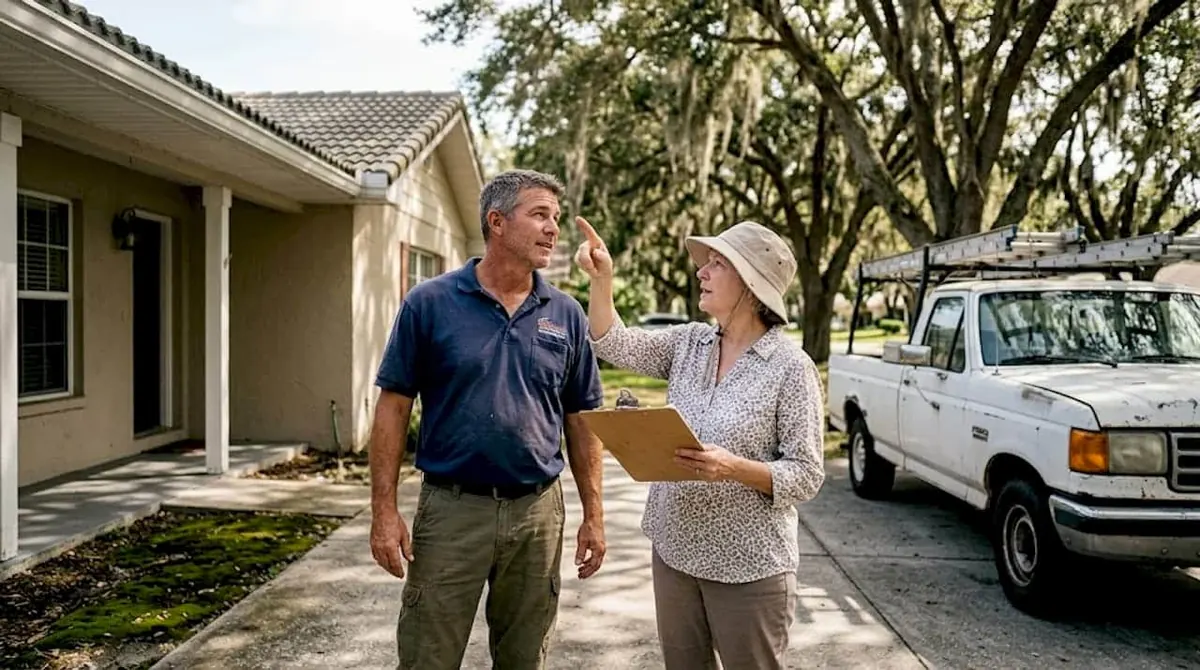
Each of these is a reason to stop the conversation, not a reason to negotiate. A good roofer never needs any of them.

The first is pressure to sign on the day. A roofer who says the offer ends tonight, or who asks for a signature at the door, is selling urgency, not roofing. A roof is a job you choose with a written scope in hand, and any roofer worth hiring gives you time to read it.

The second is a scope that says nothing. A single line that reads like a headline, with no materials, no layers, and no mention of decking or flashing, is not a scope. It is a promise with nothing behind it, and it leaves every decision to the day of the work.

The third is asking you to pull the permit. Where a permit applies, the roofer pulls it and is named on it. A roofer who asks the homeowner to pull it is passing the responsibility to the person who knows the least about the work.

The fourth is no local jobs to show. A roofer who has worked in Louisville should be able to name two recent jobs in the area. A roofer who cannot, especially one who appeared right after a storm, is a roofer to pass by.

People also ask

Owners also ask about vetting a Louisville roofer

Short answers on vetting a roofer where no state license exists.

Does a roofer in Louisville need a license at all?

Kentucky issues no state roofing license, so there is no state license to ask for. Where a job needs a building permit, the contractor has to hold a current Louisville license and be named on the application. That local license is the one that matters, and it only applies where a permit applies.

What is manufacturer certification for a roofer?

It means the shingle or metal maker has trained the roofer to lay that material to its instructions, and the maker stands behind the installation when it is done that way. Certification is easy to confirm with the maker, and it is a useful check alongside insurance and local references.

What should I compare when two roofing scopes differ?

Compare the scopes line by line, not just the bottom line, since a scope that leaves out decking or flashing is not the same job as one that includes them. Look at the materials and the layers each one names, and ask about any line you do not understand. The roofer who answers plainly is the one to trust.

Want a roofer who answers these questions plainly? Call and ask us anything on the list.

Call (502) 922-5047

Frequently asked questions

Vetting a Louisville roofer: the questions that matter

Ask to see current proof of insurance for the crew that will actually work on your roof, and keep a copy with your records. The proof should name the company doing the work, not a different business, and it should be current for the dates of the job. If the roofer hesitates to show it, that is an answer in itself.

It should list the materials, the layers, the flashing, the ventilation, and what happens if hidden damage shows up once the old roof comes off. It should name the shingle or metal by type, the underlayment, the decking plan, and the cleanup. A scope that lists none of these is not a scope.

Be careful. Out-of-town crews appear fast after a big storm, and a knock on the door is not a reference. Ask for two recent local jobs you can drive past, proof of insurance, and a written scope, and give yourself time to check them. A local roofer will still be here next week.

Where a job needs a building permit, the contractor has to hold a current Louisville license and be named on the permit application. The license is local, not state, and it only applies where a permit applies. It is one check among several, not a substitute for insurance and references.

Ask for recent jobs in your part of town and drive past them, and ask how long they have worked in the Louisville area. A local roofer knows the streets, the housing stock, and the weather patterns, and they have jobs nearby you can see. A roofer who cannot name a local job is not local.

Read the scope carefully before agreeing to anything, and be wary of a roofer who asks for the full amount up front. A written scope should spell out the terms in plain words, including what is owed when, and what happens if hidden damage shows up. If the terms are unclear, ask until they are clear.

Keep reading

Read next: permits and insurance claims

Permits are the other half of hiring well. Read does a Louisville reroof need a permit for where the line sits, and how roof insurance claims work in Louisville for the claim side of storm work. About Louisville Roofing Quote says how we work.

Vetting a roofer in Louisville?

Call and ask us the questions on this list. We will answer them plainly, show you recent local work, and put the scope in writing.