What the streaks are
The streaks are algae, not dirt
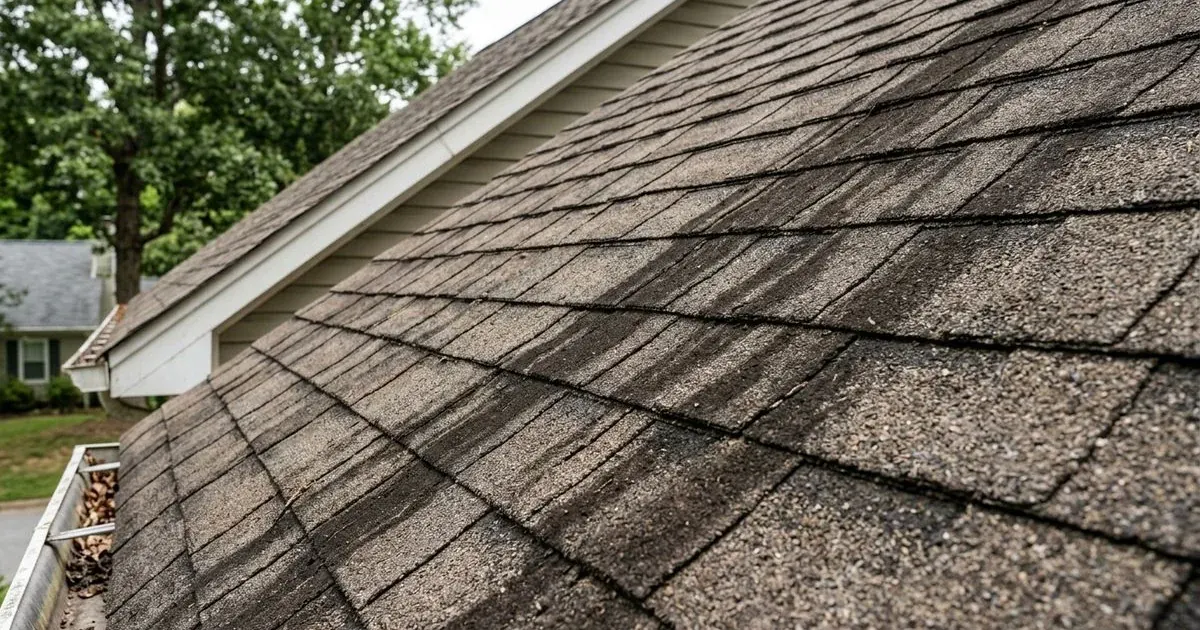
The black streaks on a Louisville roof are Gloeocapsa magma, a blue-green algae that feeds on the limestone filler inside asphalt shingles. It arrives as spores on the wind, settles on the roof, and grows in the damp shade. The dark color is the algae's own shield against the sun, and it is what you see running down the slope in vertical streaks.
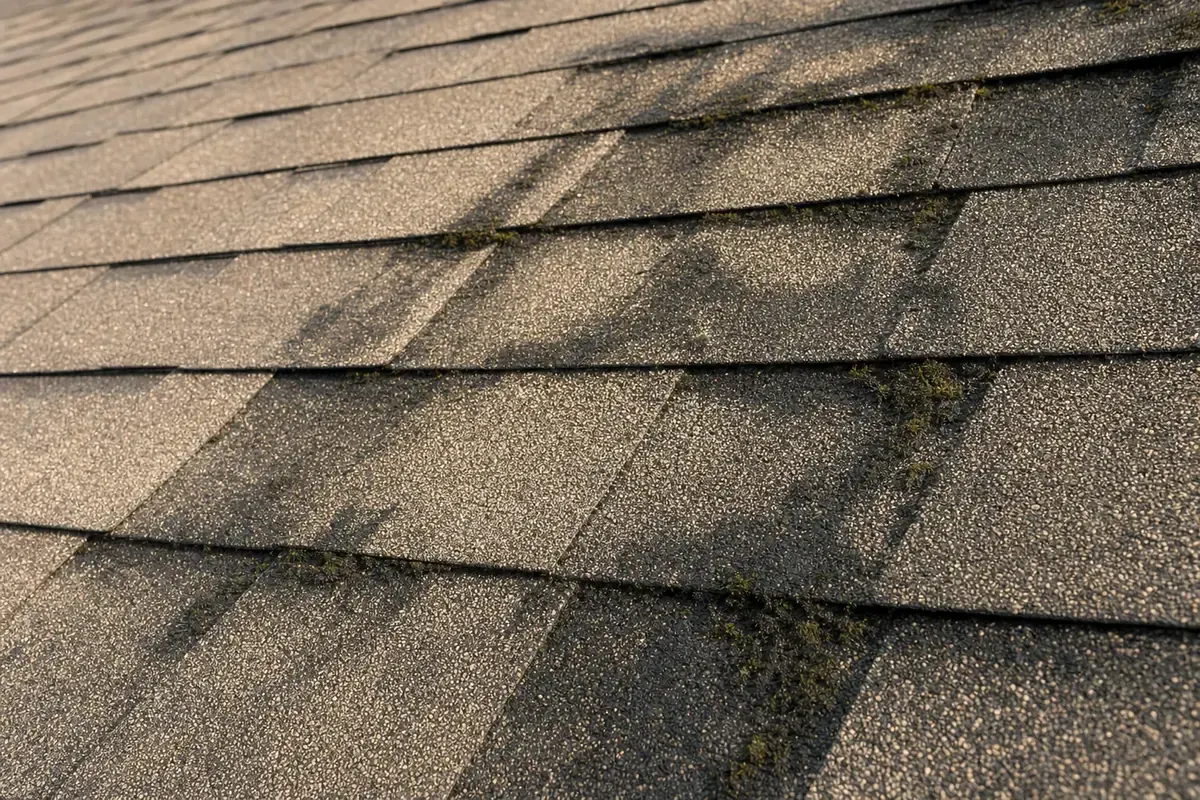
The streaks follow water. Rain washes the spores down the slope, so the algae grows in lines along the path the water takes, and it gathers most on the north-facing slopes that stay shaded and damp the longest. A roof under heavy tree cover, or one that faces away from the sun, gives the algae shade and moisture for most of the day, and the streaks spread faster there.
The streaks are more than a looks problem. The algae holds moisture against the shingle surface, and that damp layer wears the granules down and feeds moss and lichen behind it. A roof with heavy streaking ages faster than a clean roof of the same age, and the streaks hide the bruises and cracks underneath, so a stained roof is harder to read. Roof maintenance in Louisville includes a look at the streaks and what is growing under them.
Why Louisville grows them so well
Louisville humidity is the fuel. Warm, damp summers and shaded streets keep roofs wet long after the rain stops, and the Ohio Valley air carries the spores everywhere. A roof in a dry climate stays clean for years, while a Louisville roof under maples can streak within a few seasons of going on.